
4 Days Serengeti National Park Safari – Hail Tours Tanzania
The best short Serengeti safari package is the 4 Days Serengeti National Park Safari, a short big five safari in Tanzania taking you to the wildlife capital of the world, Serengeti National Park.
 Tanzania’s Serengeti National Park is one of the most outstanding and popular safari destinations in Africa. This UNESCO World Heritage Site is popular for featuring in most wilderness documentaries and films, for its annual wildebeest migration, and for its untouched landscapes where different kinds of animals roam.
This protected area is situated on the northern side of the country with a total area of about 14,763 square kilometers.
When you talk of wildlife experiences inclusive of the Big Five Wildlife, Serengeti National Park is simply unstoppable with a variety of animals that are sought-after during African safaris.
Serengeti National Park animals spotted during game drives on its endless plains include the common elands, African striped weasels, Grant’s gazelles, warthogs, East African wild dogs, Masai giraffes, wildebeests, elands, impalas, black-backed jackals, African golden wolves, caracals, olive baboons, vervet monkeys, pangolins, aardwolves, kongoni, side-striped jackals, spotted and striped hyenas, black and white colobus monkeys, and Olive baboons, to mention but a few.
The Big Five animals spotted here include leopards, lions, elephants, buffaloes, and rhinos. This abundance of iconic wildlife makes this park a standout destination, offering the best African wildlife experience.
This African savannah park is not just a wonderful wildlife viewing destination but also a birding hot spot boasting over 500 species, making it a prime destination for birding in Tanzania. Serengeti birds include cattle egrets, secretary birds, sacred ibis, Egyptian geese, guineafowls, crowned cranes, and many others.
4 Days Serengeti National Park Safari at a Glance
| Feature | Details |
|---|---|
| Duration | 4 Days / 3 Nights |
| Destination | Serengeti National Park |
| Safari Type | Wildlife Safari |
| Activities | Game Drives, Walking Safari, Maasai Cultural Visit |
| Accommodation | Luxury, Mid-range & Budget |
| Starting Point | Arusha Town or Arusha Airport |
| Ending Point | Arusha Town or Arusha Airport |
| Best Time to Visit | Throughout the Year |
| Main Attraction | Big Five Wildlife & Great Wildebeest Migration |
4 Days Serengeti National Park Safari Brief Itinerary
- Day 1: Arusha Town/Airport to the central part of Serengeti National Park.
- Day 2-3: Wildlife encounter through Central Serengeti National Park
- Day 4: Leave Central Serengeti National Park for Arusha Airport/Town
Detailed itinerary for the 4 Days Serengeti National Park Safari
Day 1: Arusha Town/Airport to Home of the Great Wildebeest Migration, Serengeti.
Our 4 Days Tanzania safari officially starts on this day with breakfast at the Hotel in Arusha, followed by pick-up from the private safari driver for a 5-6 hours’ road trip to the Central part of Serengeti National Park. Get treated to a game drive on arrive and while on the way to the Safari Lodge/Tented Camp for lunch.
The remarkable Serengeti National Park is the country’s first and undeniably most famous Protected Area sheltering one of the highest concentrations of animals.
It is a UNESCO World Heritage Site with views of Cape buffaloes, kongoni, impalas, wildebeests, African bush elephants, gazelles, Topis, lions, leopards, cheetahs, striped and spotted hyenas, zebras, warthogs, and so much more. The day ends with a sumptuous dinner and overnight at the Safari Lodge or Tented Camp.
Accommodation;
- Four Seasons Safari Lodge or Serengeti Serena Safari Lodge (luxury).
- Dunia Camp or Kati Kati Tented Camp (standard).
- Serengeti Safari Camp or Siringit Serengeti Camp (basic).
Meals: Lunch and Dinner.
Day 2-3: Game Viewing within Central Serengeti National Park
The next two days are dedicated to unraveling the mysteries of Tanzania’s oldest and most popular safari destination in three safari activities: game drives, guided walking safaris, and community visits.
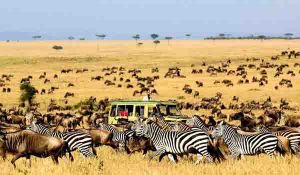
Big cats in Serengeti and other animal-rich areas such as the Wagakuria area will be explored during this expedition with the hope of encountering a variety of wildlife species. Serengeti game drives bring you t close encounters with herds of buffaloes, lions, Masai giraffes, leopards, Kongoni, cheetahs, black and white colobus monkeys, vervet monkeys, warthogs, impalas, Defassa waterbucks, olive baboons, Topis, African bush elephants, cheetahs, and many others.
This is also a wildebeest migration viewing safari, offering adventurers a chance to witness this natural wonder during their two days in this iconic African safari park. You should also look forward to experiencing the culture, lifestyle, and traditions of the pastoralist Masai people. After exploring the Park, a delicious dinner and comfortable overnight stay await you at the lodge/tented camp.
Accommodation;
- Four Seasons Safari Lodge or Serengeti Serena Safari Lodge (luxury).
- Dunia Camp or Kati Kati Tented Camp (standard).
- Serengeti Safari Camp or Siringit Serengeti Camp (basic).
Meals: Lunch and Dinner.
Day 4: Leave Central Serengeti Park for Arusha Airport/Town
With fresh memories from the previous days’ expeditions, you will be treated to a mouth-watering breakfast at the Safari Lodge/Camp.
Embark on another game viewing encounter, then continue to Arusha Town/Airport. This is sadly the end of our wonderful 4 days Serengeti National Park Safari.
End of the 4 days Serengeti National Park Safari.
What’s included on the 4 days Serengeti National Park package
- Park entry fees
- Unforgettable game viewing experiences.
- A private safari driver.
- Bottled water for all the four days of the Serengeti Safari.
- Relevant government imposed taxes.
- 3 nights’ accommodation as indicated in the itinerary.
- Airport transfers as long as it is within the itinerary days.
- Visit to the Masai community.
- Walking safari.
- Meals per the itinerary
What’s excluded on the 4 days Serengeti National Park safari?
- Personal expenses such as souvenirs, travel and medical insurance, shopping, laundry, telephone bills, to mention but a few).
- Tanzanian Visa.
- Domestic and International flights.
- Additional activities not stipulated on the itinerary.
- Gratuities to the safari driver, Park Rangers, waiters/waitresses, to mention but a few.
Tanzania Packing List to Consider for this Safari
How Much Does a 4 Days Serengeti National Park Safari Cost?
The cost of a 4 Days Serengeti National Park Safari depends on the travel season, accommodation category, and the number of travelers.
Budget Serengeti Safari
A budget safari generally costs between $900 and $1,500 per person sharing. These packages usually include budget camps, transportation, meals, park fees, and game drives.
Mid-range Serengeti Safari
A mid-range safari typically costs between $1,600 and $2,500 per person. Travelers enjoy comfortable tented camps, excellent meals, professional guides, and enhanced safari experiences.
Luxury Serengeti Safari
Luxury safaris start from approximately $2,800 and can exceed $5,000 per person depending on the lodge selected. Luxury packages include premium lodges, exceptional services, fly-in safari options, and personalized game drives.
The safari cost usually includes accommodation, park entrance fees, transportation, meals, bottled drinking water, and professional guide services.
Why Visit Serengeti National Park?
Serengeti National Park is one of the most famous wildlife destinations in the world and a UNESCO World Heritage Site renowned for its endless plains and exceptional wildlife.
Reasons to visit Serengeti National Park include:
- Witnessing the Great Wildebeest Migration.
- Seeing the Big Five animals.
- Experiencing world-class game drives.
- Exploring breathtaking African savannah landscapes.
- Enjoying cultural interactions with the Maasai people.
- Birdwatching among over 500 bird species.
- Capturing incredible wildlife photography.
A safari in Serengeti offers one of the most authentic African wildlife experiences available anywhere on the continent.

How many gates are in Serengeti National Park?
There are six main entrance gates to Serengeti National Park:
-
Naabi Hill Gate – The most popular and main entry point, near Ngorongoro.
-
Ndabaka Gate – Western Serengeti access, ideal from Mwanza.
-
Fort Ikoma Gate – Northern access point near Grumeti and Ikoma areas.
-
Klein’s Gate – Northeast entrance near the Kenyan border.
-
Bologonja Gate – Northernmost gate toward the Maasai Mara.
-
Handajega Gate – Newer gate near the southern Ikoma area.
These gates help manage tourism and conservation in different regions of the park.
Which is better: Masai Mara or Serengeti?
Both are incredible safari destinations, but each has unique advantages:
| Feature | Masai Mara (Kenya) | Serengeti (Tanzania) |
|---|---|---|
| Size | ~583 sq mi (1,510 km²) | ~5,700 sq mi (14,763 km²) |
| Great Migration | Best from July–October | Best from December–July |
| Wildlife Density | Higher due to smaller area | Vast and less crowded |
| Accessibility | Easier to reach (fly or drive from Nairobi) | More remote; often accessed from Arusha or Kilimanjaro |
| Experience | More condensed, often cheaper | More immersive, iconic landscapes |
Verdict:
-
Choose Masai Mara for a shorter, more accessible safari with high wildlife density.
-
Choose Serengeti for a longer, deeper safari experience and wider landscapes.
Both parks are exceptional, and combining them gives the best of East African safaris.
Wildlife You Can Expect to See in Serengeti National Park
Serengeti National Park supports one of the largest concentrations of wildlife in Africa.
Big Five Animals
Visitors have excellent chances of spotting:
- Lions
- Leopards
- African Elephants
- Cape Buffaloes
- Black Rhinos
Predators
The park is famous for its predators including:
- Cheetahs
- Spotted Hyenas
- Striped Hyenas
- African Wild Dogs
- Jackals
Herbivores
Large herds of herbivores roam the Serengeti plains:
- Wildebeests
- Zebras
- Impalas
- Thomson’s Gazelles
- Grant’s Gazelles
- Elands
- Topis
- Hartebeests
- Masai Giraffes
Primates
You may also encounter:
- Olive Baboons
- Vervet Monkeys
- Black-and-White Colobus Monkeys
Witness the Great Wildebeest Migration
The Great Wildebeest Migration is one of the most spectacular wildlife events on Earth. Every year, more than 1.5 million wildebeests, accompanied by hundreds of thousands of zebras and gazelles, move across the Serengeti ecosystem in search of fresh grazing grounds.
Best Times to Witness the Migration
January to March – Calving Season
The southern Serengeti becomes the birthing ground for thousands of wildebeest calves, attracting predators such as lions, cheetahs, and hyenas.
June to July – Grumeti River Crossings
Large herds move northward and face crocodile-infested river crossings.
July to October – Mara River Crossings
This is the most famous phase of the migration, featuring dramatic river crossings and predator action.
November to December – Return Migration
The herds begin their journey back to the southern Serengeti plains.
Big Five Safari Experience in Serengeti
Serengeti National Park is one of Africa’s top destinations for Big Five safaris.
The park’s vast landscapes provide excellent opportunities to observe:
- Lion prides hunting on the plains.
- Leopards resting in acacia trees.
- Massive elephant herds.
- Cape buffaloes grazing in large groups.
- Rare black rhinos in protected areas.
Game drives through Central Serengeti are particularly rewarding for spotting predators and other iconic African wildlife.
Birdwatching in Serengeti National Park
Besides wildlife viewing, Serengeti National Park is a paradise for bird lovers, with more than 500 bird species recorded.
Popular bird species include:
- Secretary Bird
- Kori Bustard
- African Fish Eagle
- Grey Crowned Crane
- Ostrich
- Lilac-breasted Roller
- Martial Eagle
- Saddle-billed Stork
- Egyptian Goose
- Sacred Ibis
The green season from November to April is particularly rewarding for birdwatchers as migratory birds arrive in large numbers.
Best Time to Visit Serengeti National Park
The Serengeti can be visited throughout the year, with each season offering unique experiences.
June to October
- Best wildlife viewing
- Dry weather conditions
- Excellent predator sightings
- Ideal for river crossings
January to March
- Calving season
- Spectacular predator activity
- Beautiful green landscapes
November to December
- Fewer tourists
- Excellent birdwatching
- Great photographic opportunities

FAQs About Serengeti National Park Safari
Is Serengeti National Park worth visiting?
Absolutely. Serengeti National Park is widely considered one of the best wildlife destinations in the world due to its incredible wildlife density, migration spectacle, and stunning landscapes.
How many days are enough for Serengeti National Park?
Four days provide sufficient time to explore the central Serengeti, enjoy multiple game drives, and experience the park’s major attractions.
Can I see the Big Five in Serengeti?
Yes. Serengeti National Park is one of the best places in Africa to see all Big Five animals.
What is the best month to visit Serengeti?
The best months are generally June through October for wildlife viewing and January through March for the wildebeest calving season.
Is Serengeti safe for tourists?
Yes. Serengeti National Park is considered very safe when traveling with licensed safari operators and experienced guides.
Which airport is closest to Serengeti National Park?
Most travelers arrive through Arusha before connecting by road or domestic flights to various Serengeti airstrips.
Can I combine Serengeti with Ngorongoro Crater?
Yes. Many visitors combine Serengeti National Park with Ngorongoro Crater, Tarangire National Park, and Lake Manyara National Park for a complete Tanzania safari experience.
Conservation Efforts in Serengeti National Park
Serengeti National Park plays a critical role in conserving Africa’s wildlife and ecosystems. Revenue generated through tourism helps fund anti-poaching programs, wildlife monitoring, habitat protection, and community development initiatives.
By visiting Serengeti National Park, travelers contribute directly to the conservation of one of the world’s most important wildlife ecosystems.
Contact Us to Book your 4 Days Serengeti National Park Safari today and experience Uganda’s most iconic wildlife destination.