
7 Days Uganda Rwanda Wildlife Safari 2026 — Gorillas, Chimps & Wildlife
Two countries. One extraordinary week. The 7 Days Uganda and Rwanda Wildlife Safari is one of East Africa’s most compelling itineraries — combining chimpanzee tracking in Uganda’s Kibale National Park, a spectacular game drive and boat cruise in Queen Elizabeth National Park, tree-climbing lion sightings in the Ishasha Sector, mountain gorilla trekking in Rwanda’s Volcanoes National Park, golden monkey tracking in the Virunga Mountains, a deep cultural immersion at Iby’Iwacu Cultural Village, and a Kigali city tour — all within seven carefully structured days.
This is not a standard Uganda safari with Rwanda bolted on as an afterthought. The 7 days Uganda Rwanda Wildlife Safari is an architecturally coherent journey through two of Africa’s most wildlife-rich and scenically beautiful countries, designed so that every day builds on the last and every transition between destinations is logical, comfortable, and scenically rewarding.
Whether you are a first-time visitor to East Africa or a returning traveller looking to deepen your experience of the region, this safari delivers the full spectrum of what Uganda and Rwanda uniquely offer.
To explore all available itinerary options before booking, browse the complete Uganda safaris collection and Rwanda safaris page from Hail Tours Uganda.
Why Combine Uganda and Rwanda in One Safari?
Uganda and Rwanda share a border, a mountain range, and a population of mountain gorillas — but their wildlife experiences are complementary rather than repetitive.
Rwanda’s Volcanoes National Park is the world’s premier destination for mountain gorilla trekking, with 13 habituated gorilla families, compact park access from Kigali, and an infrastructure specifically built around the gorilla experience.
Uganda’s wildlife parks offer something different: the raw, unmanicured savannah drama of Queen Elizabeth National Park with its tree-climbing lions and Kazinga Channel hippos, and the primate-saturated forests of Kibale National Park, home to the largest concentration of chimpanzees in East Africa.
Combining both countries eliminates the need to choose between them. In seven days, you experience chimpanzee tracking in Uganda, game drives and boat safaris on the Kazinga Channel, mountain gorilla trekking in Rwanda’s Virunga Mountains, and golden monkey tracking — four of Africa’s most distinctive wildlife encounters — in a single itinerary that costs less and covers more than running two separate trips.
7 Days Uganda Rwanda Safari — Highlights at a Glance
- Track chimpanzeesthrough Kibale National Park’s ancient rainforest at Kanyanchu Tourist Centre — home to over 1,500 chimps and 13 primate species
- Drive the Kasenyi Plainsof Queen Elizabeth National Park for buffalo, elephant, lion, and warthog in their natural open savannah habitat
- Cruise the Kazinga Channelby boat for hippos, crocodiles, and over 600 recorded bird species in Queen Elizabeth National Park
- Witness the extraordinary sight of tree-climbing lionsresting in fig and acacia trees in the Ishasha Sector
- Trek with mountain gorillasin Volcanoes National Park, Rwanda — one of the most profound wildlife encounters on earth, with fewer than 1,063 mountain gorillas remaining in the world
- Track the rare and beautiful golden monkeysthrough the bamboo forests of the Virunga Mountains
- Immerse yourself in Rwandan culture at Iby’Iwacu Cultural Villagewith traditional dance, storytelling, and community heritage
- Explore Kigali— one of Africa’s cleanest and most organised capital cities — including the Genocide Memorial and Presidential Palace Museum
7 days Uganda Rwanda Wildlife Safari – Brief Itinerary Overview
| Day | Destination | Key Activity |
| Day 1 | Kampala → Kibale National Park | Scenic drive via Fort Portal |
| Day 2 | Kibale → Queen Elizabeth NP | Chimpanzee tracking + afternoon transfer |
| Day 3 | Queen Elizabeth NP | Kasenyi Plains game drive + Kazinga Channel cruise |
| Day 4 | Ishasha → Volcanoes NP, Rwanda | Tree-climbing lions + border crossing |
| Day 5 | Volcanoes National Park | Mountain gorilla trekking + Iby’Iwacu Cultural Village |
| Day 6 | Volcanoes National Park | Golden monkey tracking + Twin Lakes visit |
| Day 7 | Volcanoes NP → Kigali | Kigali city tour + departure |
Detailed 7 Days Uganda Rwanda Wildlife Safari Itinerary
Day 1: Kampala to Kibale National Park — The Journey West Begins
Your 7-day Uganda Rwanda safari begins in Kampala with an early morning briefing from your Hail Tours Uganda driver-guide over tea or coffee. By 7:00am you are on the road heading southwest — a journey of approximately six hours that follows the equator line through the lush agricultural heartland of western Uganda, climbing gradually through tea estates and banana plantations toward the Rwenzori foothills.
Lunch is enjoyed in Fort Portal, one of Uganda’s most charming highland towns and the gateway to the Kibale–Rwenzori tourism circuit. Fort Portal’s position at the foot of the Mountains of the Moon gives it an almost permanently cool, clear atmosphere quite different from Kampala, and the crater lakes that dot the surrounding landscape make the late afternoon drive to Kibale National Park genuinely scenic.
You arrive at Kibale National Park, Kabarole District, in the late afternoon — enough time to settle into your accommodation, meet the lodge team, and receive your briefing on tomorrow’s chimpanzee tracking activity.
Accommodation Options: – Budget: Chimpanzee Guesthouse – Mid-range: Primate Lodge, Chimpanzee Forest Camp – Luxury: Papaya Lake Lodge, Kyaninga Lodge, Ndali Lodge
Meals: Breakfast, Lunch, Dinner
Day 2: Chimpanzee Tracking in Kibale National Park — Transfer to Queen Elizabeth
The morning of Day 2 is devoted to one of Africa’s most intimate wildlife experiences: chimpanzee tracking in Kibale National Park. Kibale is the single most important chimpanzee tracking destination in East Africa — a 795-square-kilometre rainforest harbouring over 1,500 chimpanzees and 13 species of primates, a density of primate diversity found nowhere else on the continent. This is why wildlife biologists and naturalists refer to Kibale as the Primate Capital of the World.
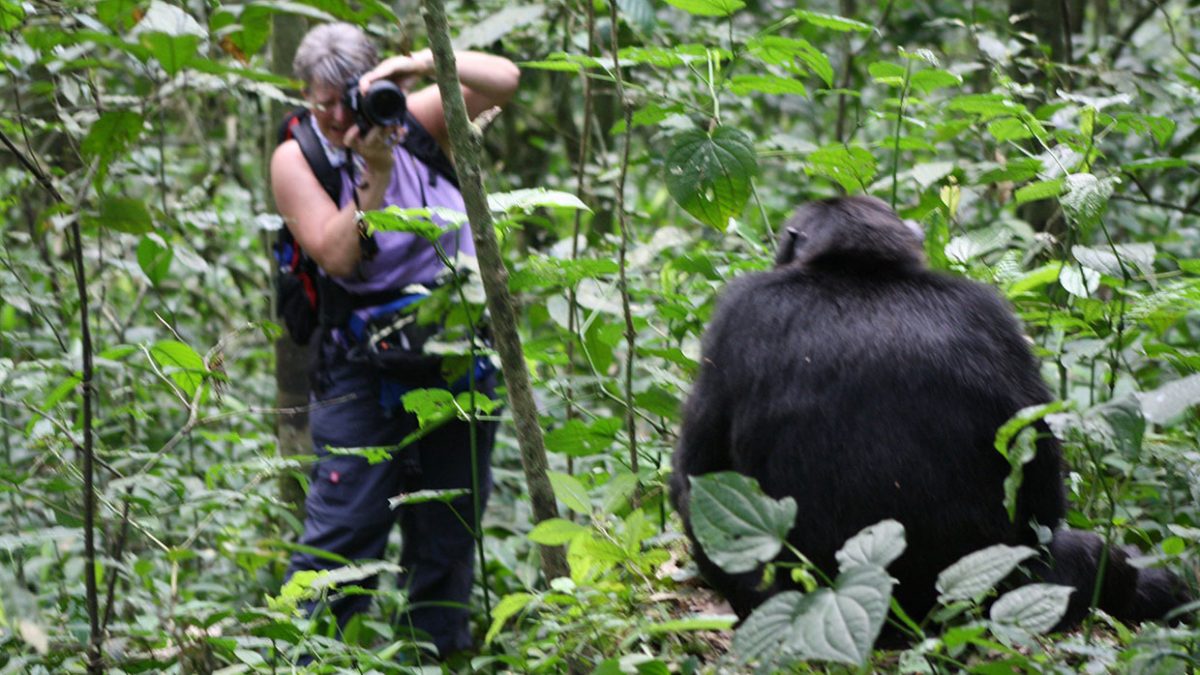
Your briefing begins at Kanyanchu Tourist Centre at 7:30am, where park rangers introduce the tracking rules: maintain a minimum distance of 7 metres from the chimpanzees at all times, do not eat or drink in front of them, avoid direct eye contact, and follow your guide’s directions in all circumstances.
These rules protect both the chimps and you — and following them closely ensures that habituated chimpanzees remain comfortable with human presence for future visitors.
By 8:00am your group enters the forest with a lead ranger, following the previous day’s nest location as a starting point. Chimpanzee tracking in Kibale typically takes between 2 and 4 hours from departure to the chimp group, with a mandatory one-hour face-to-face encounter once the family is located.
During that hour, watching chimpanzees — our closest genetic relatives, sharing 98.7% of our DNA — interact, groom, play, and vocalise in their forest home is a profoundly affecting experience that no wildlife documentary fully prepares you for.
After retreating from the forest and enjoying lunch at the lodge, the afternoon involves a 3-hour drive to Queen Elizabeth National Park in Kasese District — Uganda’s second-largest national park and one of its most productive wildlife areas.
For guests who want to extend their Kibale experience, our dedicated 3 Days Chimpanzee Trekking in Kibale package offers a deeper primate immersion before joining the Uganda-Rwanda circuit.
Accommodation Options: – Budget: Simba Safari Lodge, Bush Lodge in the Tents – Mid-range: Park View Lodge, Bush Lodge – Luxury: Mweya Safari Lodge, Katara Lodge
Meals: Breakfast, Lunch, Dinner
Day 3: Game Drive on Kasenyi Plains + Kazinga Channel Boat Cruise
Day 3 opens with an early morning game drive across the Kasenyi Plains — a vast open grassland sector of Queen Elizabeth National Park that regularly produces excellent sightings of the park’s most iconic savannah species.
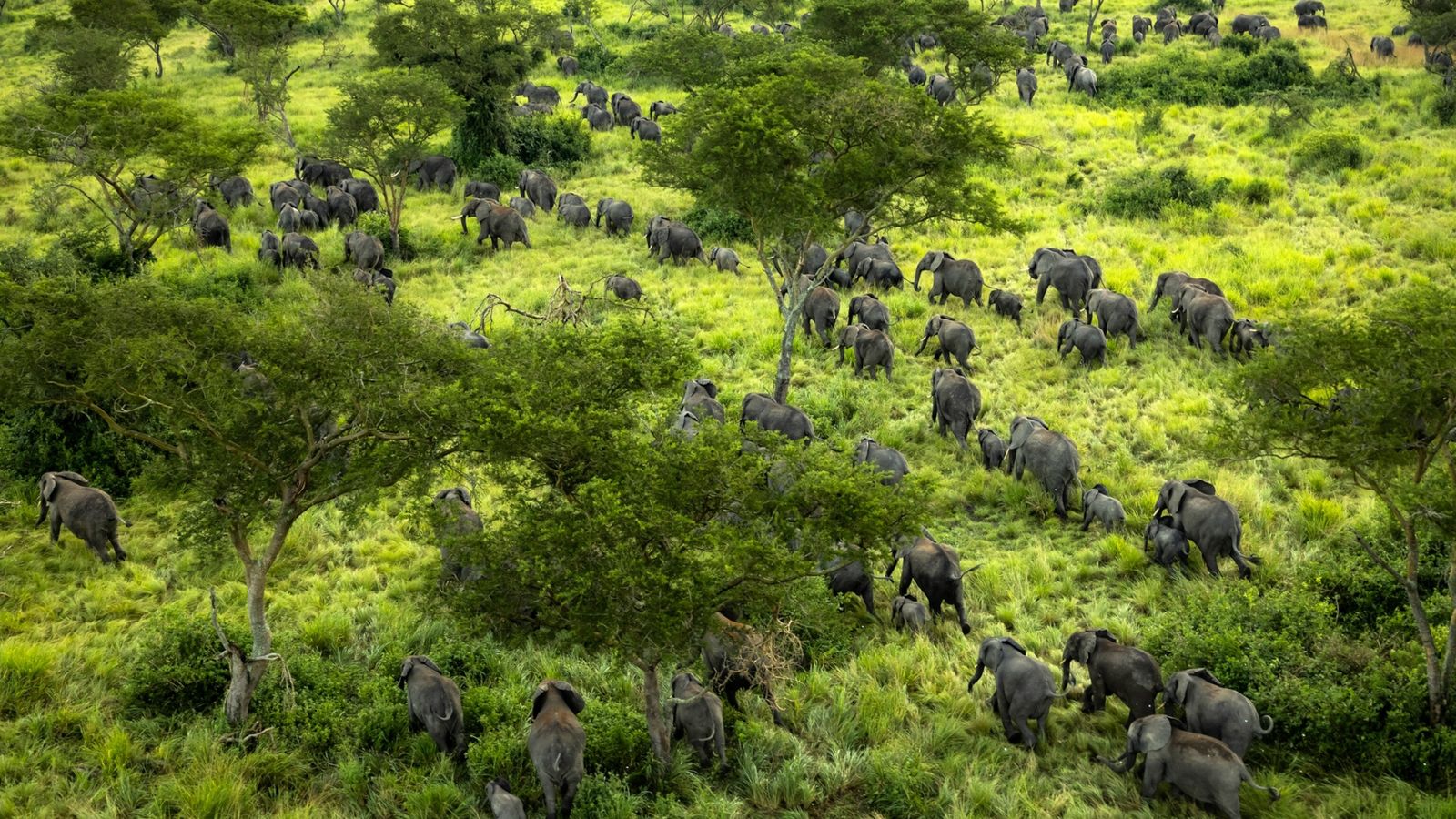
The Kasenyi track winds through open country and riverine thickets, and the combination of habitats means you can encounter buffalo herds, elephant families, Uganda kob antelope, warthog, and the occasional lion before the sun is fully up.
Queen Elizabeth National Park covers 1,978 square kilometres and was established in 1952 — originally as Kazinga National Park — before being renamed after Queen Elizabeth II of England.
It sits at the junction of two of Africa’s great ecosystems: the East African savannah and the Congo Basin forest transition, which gives it an extraordinary diversity of mammals and over 620 recorded bird species — one of the highest bird-counts of any national park in Africa.
The 3 Days Queen Elizabeth National Park Safari and the 4 Days Queen Elizabeth Safari from Hail Tours Uganda offer longer dedicated Queen Elizabeth experiences for visitors with more time.
After the morning game drive and lunch at the lodge, the afternoon centres on the Kazinga Channel boat cruise — widely regarded as one of the finest boat safaris in East Africa.
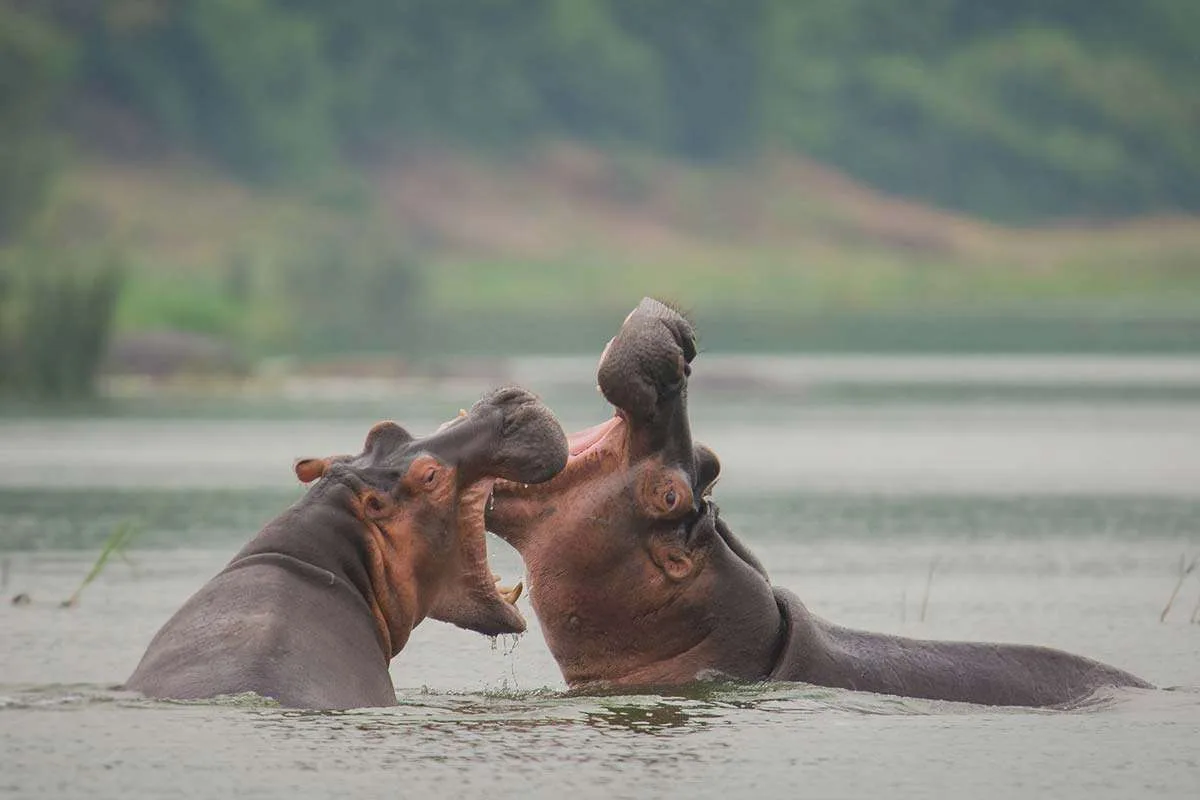
The Kazinga Channel is a 32-kilometre natural waterway connecting Lake George and Lake Edward, and its banks are home to extraordinary concentrations of wildlife.
During the 2–3-hour cruise, expect to pass within metres of hippo pods numbering in the hundreds, enormous Nile crocodiles basking on sandbanks, elephant and buffalo drinking at the water’s edge, and a continuous parade of waterbirds including pelicans, kingfishers, African skimmers, and herons. The Kazinga Channel boat cruise is included in all Hail Tours Uganda Queen Elizabeth itineraries.
Accommodation Options: – Budget: Simba Safari Lodge, Bush Lodge in the Tents – Mid-range: Park View Lodge, Bush Lodge – Luxury: Mweya Safari Lodge, Katara Lodge
Meals: Breakfast, Lunch, Dinner
Day 4: Ishasha Sector Tree-Climbing Lions — Transfer to Volcanoes National Park Rwanda
One of the most unusual and visually spectacular wildlife sightings in Africa awaits on Day 4: the tree-climbing lions of the Ishasha Sector. Ishasha occupies the extreme southern portion of Queen Elizabeth National Park, bordering the DRC, and its population of lions has developed the remarkable habit of resting in the branches of large fig and acacia trees — a behaviour observed in very few lion populations worldwide.
Seeing a pride of lions draped through the branches of a fig tree against the southern Uganda skyline is an image that stays with you permanently.
Your morning game drive through Ishasha’s open woodlands and seasonal grasslands targets the lions in their elevated resting spots, alongside a range of other savannah species including Uganda kob, oribi, elephants, and a diverse assemblage of savannah birds including the Martial Eagle, Verreaux’s Eagle-Owl, and African Wattled Lapwing.
After the Ishasha game drive, the afternoon drive takes you south and east across the Rwanda border into the Virunga Mountain region of northwestern Rwanda, arriving at your accommodation near Ruhengeri (Musanze) in the late afternoon.
Volcanoes National Park is the destination for the next three days — a compact 160-square-kilometre reserve in the Virunga Mountains founded in 1925 specifically to protect mountain gorillas.
It is one of the oldest protected areas in Africa and the site of Dian Fossey’s groundbreaking gorilla research in the 1970s and 1980s. The park currently hosts 13 habituated gorilla families, making it the world’s most accessible and most visited mountain gorilla destination.
Accommodation Options Near Volcanoes National Park: – Budget: Kinigi Guesthouse – Mid-range: Da Vinci Gorilla Lodge, Le Bambou Gorilla Lodge, Virunga Lodge – Luxury: Mountain Gorilla View Lodge, Gorilla’s Nest, Sabyinyo Silverback Lodge
Meals: Breakfast, Lunch, Dinner
Day 5: Mountain Gorilla Trekking in Volcanoes National Park + Iby’Iwacu Cultural Village
Day 5 is the experiential centrepiece of the entire 7 days Uganda Rwanda Wildlife Safari — mountain gorilla trekking in Volcanoes National Park. There are currently fewer than 1,063 mountain gorillas remaining in the world, all of them distributed across the Bwindi Impenetrable Forest in Uganda, the Volcanoes National Park in Rwanda, and the Virunga Conservation Area spanning Rwanda, Uganda, and the DRC. Trekking to observe them in their natural mountain forest habitat is consistently described by those who have done it as one of the most moving wildlife encounters on earth.
The day begins with a 7:00am briefing at Kinigi Park Offices, where ranger guides introduce the rules and assign each group of eight visitors to a specific gorilla family based on fitness, hiking preference, and ranger availability.
Gorilla permit rules are non-negotiable: maintain a 7-metre distance from gorillas at all times, remove your mask if a gorilla approaches (to prevent human disease transmission), keep voices low, avoid direct eye contact, and follow your guide’s instructions immediately. These rules exist to protect the gorillas’ long-term habituation and health.
By 8:00am your group enters the Virunga bamboo and hagenia forests with a lead tracker who has been monitoring the gorilla family’s movements since dawn. The trek to the gorilla family can take anywhere from 30 minutes to 6 hours depending on where the gorillas have moved overnight — be physically prepared for steep, wet terrain and carry water, snacks, and a rain jacket regardless of the morning weather.
Once you reach the family, the mandatory one-hour face-to-face encounter begins — sixty minutes in which to observe gorilla infants playing, silverback males beating their chests, females nursing young, and the entire family unit moving and feeding through the mountain vegetation in complete, extraordinary naturalness.
After returning to your lodge for lunch and relaxation, the afternoon takes you to Iby’Iwacu Cultural Village — also known as Gorilla Guardians Village — a community heritage programme run by former poachers who now protect the very gorillas they once hunted.
A visit to Iby’Iwacu includes traditional Rwandan dance performances, cultural demonstrations of traditional medicine and craft-making, storytelling sessions, and an insight into the community conservation model that has transformed gorilla protection in the Virunga region. It is a genuinely moving complement to the morning’s gorilla experience.
Accommodation Options: As Day 4 Meals: Breakfast, Lunch, Dinner
Day 6: Golden Monkey Tracking in the Virunga Mountains + Twin Lakes Visit
The sixth day of your Uganda Rwanda wildlife tour introduces a second remarkable primate species: the golden monkey (Cercopithecus kandti), a vibrantly coloured Albertine Rift endemic found only in the high-altitude bamboo forests of the Virunga Mountains and the Nyungwe Forest.
With bright golden-orange flanks and a distinctive black cap and limbs, the golden monkey is among the most visually striking primates in Africa — and Volcanoes National Park is one of only two places in the world where it can be tracked.
The morning begins with a briefing at Volcanoes National Park offices on golden monkey tracking rules, followed by entry into the park’s bamboo zone — a completely different forest habitat from the hagenia-hypericum forests used by gorillas.
Golden monkeys are highly active, social, and noisy, moving rapidly through bamboo stands in groups of up to 80 individuals, and the 2–4-hour tracking experience (inclusive of one hour of close interaction) is energetic and joyful in a way that contrasts beautifully with the quieter gravity of gorilla trekking.
After returning to the lodge for a leisurely lunch, the afternoon is spent at the Twin Lakes — Lake Ruhondo and Lake Burera — a pair of stunning volcanic crater lakes in the hills above Ruhengeri.
Set against the backdrop of the Virunga volcanoes, the Twin Lakes offer one of Rwanda’s most photogenic landscapes and a peaceful close to an action-packed day.
Boat trips on the lakes, shoreline walks, and simply sitting with the view are all rewarding ways to spend the afternoon before your final evening in the Virunga region.
Accommodation Options: As Day 4 Meals: Breakfast, Lunch, Dinner
Day 7: Volcanoes National Park to Kigali — City Tour and Departure
The final day of the 7 Days Uganda Rwanda Safari begins with a leisurely breakfast and a farewell to the Virunga Mountains before the 2–3-hour drive southeast to Kigali, Rwanda’s capital city.
The road to Kigali passes through Rwanda’s iconic “Land of a Thousand Hills” — a landscape of dense green ridge-lines, terraced hillsides, and deep valleys that gives the country its poetic Swahili nickname, Igihe cy’imisozi. Rwanda’s roads are well-maintained and the drive is genuinely beautiful.
Kigali city tour stops are chosen to give visitors a meaningful insight into Rwanda’s complex modern identity — a country that has transformed itself from the site of the 1994 genocide into one of Africa’s most prosperous, clean, and efficiently governed nations in just three decades.
Key Kigali city tour sites: – Kigali Genocide Memorial — the most sobering and important heritage site in Rwanda, where approximately 250,000 genocide victims are buried and a profoundly moving museum presents the events of 1994 and their international context – Presidential Palace Museum — the former residence of President Habyarimana, preserved as a museum with the wreckage of his plane still visible in the garden – Kimironko Market — Kigali’s largest and most vibrant market, selling Rwandan crafts, fabrics, and produce – Inema Arts Centre — a celebrated contemporary art space showcasing Rwandan and East African artists
After the city tour, your Hail Tours Uganda team transfers you to Kigali International Airport or your preferred Kigali hotel, completing one of East Africa’s finest week-long wildlife and cultural experiences.
Meals: Breakfast, Lunch
End of the 7 Days Uganda Rwanda Safari
What Is Included in the 7 Days Uganda Rwanda Wildlife Safari
Hail Tours Uganda’s all-inclusive safari package covers every element of the experience from day one to day seven:
- Mountain gorilla trekking permitsfor Volcanoes National Park (USD $1,500 per person — included in package)
- All park entrance feesfor Kibale National Park, Queen Elizabeth National Park (including Ishasha Sector), and Volcanoes National Park
- Chimpanzee tracking permitat Kanyanchu Tourist Centre, Kibale National Park
- Golden monkey tracking permit, Volcanoes National Park
- Game drives— Kasenyi Plains morning game drive and Ishasha Sector game drive
- Kazinga Channel boat cruise— 2–3 hours, including vessel and ranger fees
- Iby’Iwacu Cultural Village visit— entry and cultural programme fees
- 6 nights accommodationat the tier you select (budget, mid-range, or luxury) with full board
- Full-time English-speaking guideacross both Uganda and Rwanda for all 7 days
- Comfortable 4×4 safari vehiclewith pop-up roof for game drives throughout the tour
- Bottled waterduring all game drives and trekking activities
- All inter-destination road transfersincluding the Uganda-Rwanda border crossing
- Kigali city tour on Day 7
- Airport pickup and drop-off
What Is Not Included
- International flights to Uganda (Entebbe) and from Rwanda (Kigali) — or vice versa
- Rwanda and Uganda visa fees (check current requirements for your nationality)
- Travel insurance — strongly recommended with medical evacuation cover
- Alcoholic drinks, cigarettes, and personal laundry
- Personal shopping, souvenirs, and telephone costs
- Tips for driver-guides and lodge staff (optional but appreciated — USD $10–$20/day per guide is standard)
- Optional activities not specified in the itinerary
Essential Packing List for the 7 Days Uganda and Rwanda Safari
Packing correctly for a combined Uganda and Rwanda wildlife safari requires thinking across multiple environments: Kibale’s warm lowland rainforest, Queen Elizabeth’s hot open savannah, and Volcanoes National Park’s cool, wet high-altitude bamboo forest. One bag needs to work for all three.
Clothing
Pack neutral earth-toned clothing throughout — khaki, olive, brown, and grey work well in all habitats without startling wildlife. Bright colours and camouflage patterns are both inappropriate (the latter is illegal in Rwanda). For gorilla and chimpanzee trekking, long-sleeved shirts and long trousers are mandatory — they protect against stinging nettles, thorns, and biting insects, and some guides require them as a basic rule.
A lightweight waterproof jacket is essential across all seven days — Rwanda’s Virunga Mountain zone is particularly wet, and afternoon showers occur year-round. Layer with a fleece or warm mid-layer for the cool mornings at Volcanoes National Park, where dawn temperatures above 2,400 metres elevation can drop to 10°C. Queen Elizabeth and Kibale are warm throughout, so the layers pack away easily when not needed.
Sturdy, waterproof hiking boots are non-negotiable for gorilla trekking — the Virunga slopes are steep, root-covered, and frequently muddy. Boots with ankle support prevent injuries on the descent. Break them in before your trip: new boots on a gorilla trek are a painful mistake.
Safari and Trekking Gear
Quality binoculars (8×42 recommended) significantly enhance your Queen Elizabeth game drive and Kibale birding experiences. A camera with a telephoto lens — 300mm minimum, 400mm preferred — captures the wildlife at the distances encountered on game drives.
For gorilla and chimp trekking, a fast 24–70mm or 70–200mm lens performs better in the forest’s low light conditions than a telephoto that struggles to focus through dense vegetation.
Pack a daypack (20–25 litres) for carrying water, snacks, a rain jacket, and camera equipment during trekking activities. A trekking pole is optional but genuinely useful on the steep Virunga descents, particularly in wet conditions. Gardening gloves protect hands when grabbing vegetation for support during gorilla treks — this is a recommendation from experienced guides and rangers.
Health and Documents
Uganda and Rwanda both require yellow fever vaccination — carry your International Certificate of Vaccination. Malaria prophylaxis is recommended for Queen Elizabeth National Park and Kibale’s lower-altitude zones — consult your travel health provider at least six weeks before departure.
Pack DEET-based insect repellent for the savannah and forest days, high-SPF sunscreen for the open-country game drives, and a basic first-aid kit covering blister treatment, antiseptic, antihistamine, and rehydration sachets.
Ensure your passport has at least six months’ validity beyond your return date and that you research visa requirements for both Uganda and Rwanda in advance — the East Africa Tourist Visa (valid for Uganda, Rwanda, and Kenya in a single journey) is available and may simplify your entry documentation.
FAQs — 7 Days Uganda Rwanda Wildlife Safari
How fit do I need to be for gorilla trekking in Volcanoes National Park? Gorilla trekking in Rwanda requires a reasonable level of physical fitness. The terrain is steep and often wet, and the trek can last up to six hours depending on gorilla location.
You do not need to be an athlete, but you should be comfortable walking uphill for 2–3 hours with short breaks. Rangers carry stretchers for genuine emergencies, and porters can be hired at the park gate to carry your daypack — this support is recommended and directly benefits local communities.
What is the best time of year for the Uganda Rwanda wildlife safari? Both Uganda and Rwanda can be visited year-round, but the dry seasons of June–September and December–February offer the most comfortable conditions, with drier trekking terrain and clearer skies for photography.
The wet seasons of March–May and October–November bring lush green landscapes and are excellent for birding, but forest trails become very muddy. Gorilla permits are in high demand year-round — book at least 3–6 months in advance for peak season dates.
Can I extend this itinerary to include Bwindi gorilla trekking in Uganda? Absolutely. Hail Tours Uganda operates multiple itineraries that combine gorilla trekking in both Uganda and Rwanda.
Our 5 Days Uganda Rwanda Gorilla Trek, 8 Days Uganda Rwanda Safari, and 7 Days Gorilla Trek and Wildebeest Migration all provide options for combining both gorilla populations in a single itinerary.
What is the difference between gorilla trekking in Uganda vs Rwanda? Uganda’s gorilla trekking at Bwindi Impenetrable National Park costs USD $800 per permit (significantly less than Rwanda’s USD $1,500) and tends to involve longer trekking distances in denser, more challenging forest.
Rwanda’s Volcanoes National Park gorilla permit costs more but typically involves shorter trekking distances with well-developed trail infrastructure, and the lodges around Ruhengeri are some of East Africa’s finest.
Our 2 Days Rwanda Gorilla Safari provides Rwanda-specific context, while our 3 Day Gorilla Trekking Uganda covers the Uganda side in full.
Book Your 7 Days Uganda Rwanda Wildlife Safari with Hail Tours Uganda
Hail Tours Uganda designs and operates private, customised 7 days Uganda Rwanda wildlife safaris for individuals, couples, families, and small groups. Every itinerary is tailored to your fitness level, budget, accommodation preference, and specific wildlife priorities.
Our guides are certified, experienced across both countries, and deeply knowledgeable about the habitats, species, and logistics that make the Uganda-Rwanda circuit one of Africa’s most rewarding safari experiences.
Gorilla permits for Volcanoes National Park sell out months in advance — particularly during peak season (June–September and December–February).
Early booking is strongly recommended. Contact Hail Tours Uganda today to check permit availability, confirm your travel dates, and receive a personalised quotation for your 7 Days Uganda Rwanda Wildlife Safari.
Related Tours You May Find Useful
- 5 Days Uganda Rwanda Gorilla Trek
- 7 Days Uganda Rwanda Wildlife Safari
- 8 Days Uganda Rwanda Safari — Extended Circuit
- 2 Days Rwanda Gorilla Safari — Weekend Gorilla Trek
- 3 Day Gorilla and Golden Monkey Trekking Rwanda
- 5 Day Rwanda Primate Safari
- 5 Days Rwanda Congo Gorilla Safari
- 8 Days Rwanda Gorilla Trekking
- Kigali to Volcanoes National Park Safari
- 3 Day Gorilla Trekking Uganda — Bwindi
- 4 Days Bwindi Gorillas and Lake Bunyonyi Safari
- 4 Days Double Gorilla Trekking — Uganda
- 4 Days Flying Gorilla Safari Uganda
- 4 Days Gorilla and Wildlife Tour Uganda
- 3 Days Chimpanzee Trekking in Kibale National Park
- 5 Days Primates Safari Uganda — Chimps and Gorillas
- 3 Days Queen Elizabeth National Park Safari
- 4 Days Queen Elizabeth National Park Safari
- 5 Days Murchison Falls and Kibale Safari
- 5 Days Uganda Gorilla and Wildlife Safari
- 5 Days Uganda Safari — Wildlife and Primates
- 6 Days Uganda Safari
- 7 Days Uganda Birding Safari
- 7 Days Uganda Primates Safari
- 7 Days Uganda Wildlife Safari
- 7 Days Gorilla Trek and Wildebeest Migration
- 9 Days Gorilla Trek in Uganda
- 10 Days Uganda Gorilla and Wildlife Safari
- 10 Days Africa Safari — Uganda and Kenya
- 12 Days Uganda Safari
- 14 Days Uganda Primates and Wildlife Safari
- 18 Days African Safari — Uganda, Kenya and Tanzania
- Uganda Safari Itinerary Price Guide
- About Hail Tours Uganda — Our Story and Team