
Exciting 8 Days Uganda Rwanda Safari: Gorillas & Wildlife
An 8 days Uganda Rwanda safari is the ultimate East African dual-country adventure — a meticulously sequenced eight-day journey that combines gorilla trekking in both Rwanda and Uganda, big game safaris in Queen Elizabeth National Park, relaxation on the shores of Lake Kivu, a cultural immersion in Kigali City, and the boat cruise through Kazinga Channel that has become one of Uganda’s most iconic wildlife experiences.
In eight days, this itinerary delivers two of the world’s most sought-after primate encounters — mountain gorilla trekking in Rwanda’s Volcanoes National Park and again in Uganda’s Bwindi Impenetrable National Park — alongside the tree-climbing lions of Queen Elizabeth’s Ishasha sector and over 600 bird species across Uganda’s finest game park.
Rwanda and Uganda share a border, a mountain range, and a portion of the world’s last remaining mountain gorilla population. What they do not share is experience — trekking gorillas in Rwanda’s Volcanoes National Park feels fundamentally different from trekking gorillas in Uganda’s Bwindi Impenetrable Forest, even though both encounters begin the same way, with a morning briefing and a guided walk into mountain forest in search of habituated gorilla families.
Rwanda’s Virunga volcanoes rise in dramatic symmetrical cones above the cloud line; Bwindi’s ancient forest occupies a dramatically different geological and biological landscape whose extraordinary biodiversity has earned it a designation as a UNESCO World Heritage Site in its own right.
Combining both countries in a single itinerary gives you the full picture of mountain gorilla conservation in East Africa — and eight of the most extraordinary days available anywhere in the wildlife world.
Hail Tours Uganda operates this 8-day Uganda Rwanda safari as a fully guided private package, including both gorilla permits, all park entry fees, border crossing facilitation, 7 nights’ accommodation across three budget tiers, all included meals, boat cruises, city tours, cultural visits, and transport in a dedicated 4WD safari vehicle for the entire duration.
8 Days Uganda Rwanda Safari Brief Itinerary
| Day | Location | Key Activity |
|---|---|---|
| Day 1 | Kigali → Volcanoes National Park | Arrival, transfer, lodge check-in |
| Day 2 | Volcanoes NP | Gorilla trekking + Gorilla Guardian Village cultural tour |
| Day 3 | Volcanoes NP → Lake Kivu | Scenic drive, lake boat ride, relaxation |
| Day 4 | Lake Kivu → Kigali → Bwindi | Kigali city tour, border crossing, arrival at Bwindi |
| Day 5 | Bwindi Impenetrable NP | Gorilla trekking + Ride 4 a Woman cultural visit |
| Day 6 | Bwindi → Queen Elizabeth NP | Ishasha sector drive, tree-climbing lions |
| Day 7 | Queen Elizabeth NP | Morning game drive + Kazinga Channel boat cruise |
| Day 8 | Queen Elizabeth → Entebbe | Return drive, international departure |
Detailed Day-by-Day Itinerary:8 Days Uganda Rwanda Safari
Day 1: Kigali Airport Arrival — Drive to Volcanoes National Park
Your 8-day Uganda Rwanda safari begins at Kigali International Airport, where your private Hail Tours driver-guide meets you on arrival with a welcome sign. Kigali is consistently ranked among the cleanest, safest, and most well-organised capital cities in Africa, and even the drive from the airport through the city’s rolling hills and immaculate streets offers a compelling first impression of a country that has rebuilt itself into one of the continent’s most admired development stories in the three decades since 1994.
After a brief stop at your Kigali hotel for freshening up and lunch, your driver takes you northwest toward Volcanoes National Park — a scenic 2–3 hour journey through Rwanda’s distinctive “Land of a Thousand Hills” landscape, where cultivated hillsides terrace every ridge and valley, traditional homesteads dot the slopes, and the volcanic peaks of the Virunga Massif gradually come into view on the northern horizon.
Arrival at Volcanoes National Park lodges is in the late afternoon, with dinner and overnight in the mountain air of the Virunga foothills at approximately 1,800–2,200 metres above sea level.
Accommodation at Volcanoes National Park:
- Budget: Villa Gorilla or Hotel Muhabura
- Midrange: Le Bambou Gorilla Lodge or Da Vinci Gorilla Lodge
- Luxury: Bisate Lodge or Singita Kwitonda Lodge
Meals: Lunch and Dinner
Day 2: Volcanoes National Park — Mountain Gorilla Trekking and Gorilla Guardian Village Cultural Experience
Day 2 is the first of two gorilla trekking experiences on this 8-day itinerary, and for most travellers it is the day that redefines their understanding of what wildlife encounters can be.
Rwanda’s Gorilla Trek Briefing at Kinigi
After an early breakfast, you drive the short distance to Kinigi Visitor Centre — the Rwanda Development Board’s gorilla trekking briefing facility at the base of the Virunga volcanoes. By 7:00–7:30 a.m., all trekking groups gather for the morning briefing conducted by Rwanda Development Board rangers: the gorilla family groups are announced (each group of maximum 8 visitors is assigned to one of the park’s habituated gorilla families based on fitness level, group size, and ranger assessment), safety guidelines are reviewed, and trekking equipment including walking poles is distributed.
The trek itself begins at the designated forest boundary — typically a 15–30 minute drive from Kinigi to the park entry points corresponding to your assigned family’s home range. In Volcanoes National Park, tracking time to reach a gorilla family typically ranges from 30 minutes to 4 hours depending on the family’s movements the previous day.
Rwanda’s park is smaller and more intensively monitored than Bwindi, and the habituation of gorilla families here is among the most established in the world — gorilla families in Volcanoes have been observed by researchers since Dian Fossey’s time, and some individuals have been monitored for over 40 years.
On finding the gorilla family, your group settles into the one-hour permitted observation period — the most extraordinary single hour of wildlife encounter available anywhere in East Africa.
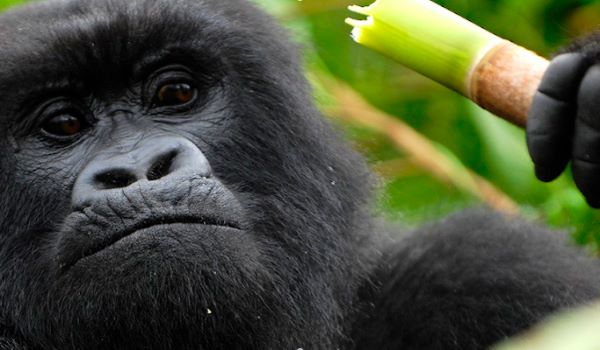
Mountain gorillas share 98.3% of their DNA with humans, and the intelligence and emotional expressiveness visible in a silverback’s gaze, an infant’s playful tumbling, and a female’s patient nursing of her newborn create an encounter whose impact persists long after the trek ends.
Gorilla Guardian Village Cultural Tour
The afternoon of Day 2 offers one of Rwanda’s most enriching cultural programmes: a guided tour of Gorilla Guardian Village with a local guide who introduces you to the diverse history, traditions, and daily life of the three main ethnic groups of Rwanda — the Tutsi, Hutu, and Twa (Batwa).
The village programme — which directly employs former poachers as cultural guides and conservation ambassadors — illustrates how Rwanda’s community-based conservation approach has transformed former wildlife adversaries into passionate protectors of the mountain gorillas.
The tour includes traditional dance performances, local craft demonstrations, and personal stories from community members whose livelihoods have been transformed by gorilla tourism. This community connection to conservation is one of the most significant factors in Rwanda’s gorilla protection success story.
Meals: Breakfast, Lunch, and Dinner
Day 3: Scenic Drive to Lake Kivu — Relaxation, Boat Rides, and Rwanda’s Most Beautiful Landscape
Lake Kivu is one of Africa’s Great Lakes — a deep, still inland sea of 2,700 square kilometres that straddles the Rwanda-DRC border in the western Rift Valley, ringed by green hills, fishing villages, and the towns of Gisenyi (Rubavu) and Cyangugu (Rusizi) on the Rwandan side.
The drive from Volcanoes National Park to the lake winds through highland Rwanda’s most dramatic scenery, descending from the Virunga foothills through terraced agriculture and forest before the lake’s vast blue expanse opens before you.
Lake Kivu is Rwanda’s premier relaxation destination — the antithesis of the previous day’s forest intensity, offering calm water and unhurried lakeside life that gives your body and mind time to absorb the gorilla encounter before the next leg of the safari.
A boat ride from your lodge’s private jetty takes you across the lake’s island-dotted surface — the green volcanic islands rising from the water, the far DRC shore rising into forest-covered hills, and the afternoon light turning the lake surface into hammered gold as the sun descends toward the western mountains.
Lake Kivu Accommodation:
- Basic: Paradis Malahide
- Moderate: Palm Gardens Resort
- Deluxe: Lake Kivu Serena Hotel
Meals: Breakfast, Lunch, and Dinner
Day 4: Kigali City Tour and Drive to Bwindi Impenetrable National Park, Uganda
Day 4 is one of the most diverse days of the 8-day Uganda Rwanda safari — beginning with a morning city break in Rwanda’s capital, crossing the international border, and ending in the ancient forest of Bwindi Impenetrable National Park in southwestern Uganda.
Kigali City Tour: Rwanda’s Extraordinary Capital
The drive from Lake Kivu to Kigali takes approximately 3–4 hours, and your arrival in the capital coincides with a mid-morning city excursion that provides fascinating context for Rwanda’s contemporary story. Kigali is one of the most striking capital cities in Africa — immaculately clean, efficiently administered, and visibly prosperous in a way that makes its recent history both more extraordinary and more poignant.
The Kigali Genocide Memorial Centre is the most important stop on any Kigali city visit — a sobering, profoundly important memorial to the approximately 800,000 Tutsi and moderate Hutu killed in the 100 days of the 1994 genocide. The memorial provides historical context, personal testimony, and an honest, respectful account of the genocide and its aftermath.
For international visitors, it is one of the most important single places to understand in contemporary Africa. After the emotional weight of the memorial, the Kimironko Market and local craft centres provide a more vibrant experience of Kigali’s present — the market’s colour and energy, the quality of Rwanda’s basket weaving and woodwork, and the creative output of Kigali’s growing arts scene.
After lunch in Kigali, your driver crosses the Rwanda-Uganda border — a crossing facilitated by Hail Tours Uganda’s border crossing support included in the package — and the afternoon drive through southwestern Uganda’s hills, tea estates, and eucalyptus forests brings you to Bwindi Impenetrable National Park by evening.
Bwindi Accommodation:
- Basic: Bwindi View Bandas or Ride 4 a Woman Bandas
- Moderate: Lake Kitandara Bwindi Camp or Volcanoes Bwindi Lodge
- Luxury: Mahogany Springs Lodge or Buhoma Lodge
Meals: Breakfast, Lunch, and Dinner
Day 5: Bwindi Impenetrable National Park — Second Gorilla Trek and Ride 4 a Woman Community Visit
Day 5 is the safari’s second and arguably more emotionally profound gorilla trekking experience — in Uganda’s Bwindi Impenetrable National Park, where the encounter with mountain gorillas feels even more intimate because of the dramatically different forest that surrounds it.
Gorilla Trekking in Bwindi Impenetrable Forest
The morning briefing at Bwindi’s relevant park headquarters — Buhoma, Ruhija, Rushaga, or Nkuringo depending on which sector your accommodation is located in — follows the same Uganda Wildlife Authority format as Rwanda’s morning briefing: group assignments, safety guidelines, and equipment preparation. The difference becomes apparent when you enter the forest.
Bwindi’s vegetation is genuinely impenetrable in many zones — ancient trees festooned with moss and epiphytes, undergrowth of dense stinging nettles and climbing plants, steep ravines and muddy slopes where handholds on root systems and walking poles are essential.
Trekking time ranges from 1 to 6 hours, and the forest itself is a wildlife experience beyond the gorillas — 120 mammal species share Bwindi with the gorillas, and encounters with forest elephants, chimpanzees, and multiple primate species are common during gorilla treks.
When you find the gorilla family, the one permitted hour with them unfolds at Bwindi’s characteristic close quarters — the forest’s density means you often encounter gorilla families in tighter spaces than in Rwanda’s more open bamboo zones, creating photographic opportunities of extraordinary intimacy.
Receiving your trekking certificate at the park headquarters after the trek is a moment that every participant treats with genuine pride — the physical and emotional effort of the Bwindi gorilla trek makes the certificate genuinely earned.
Ride 4 a Woman Cultural Project — Uganda’s Community Conservation Model
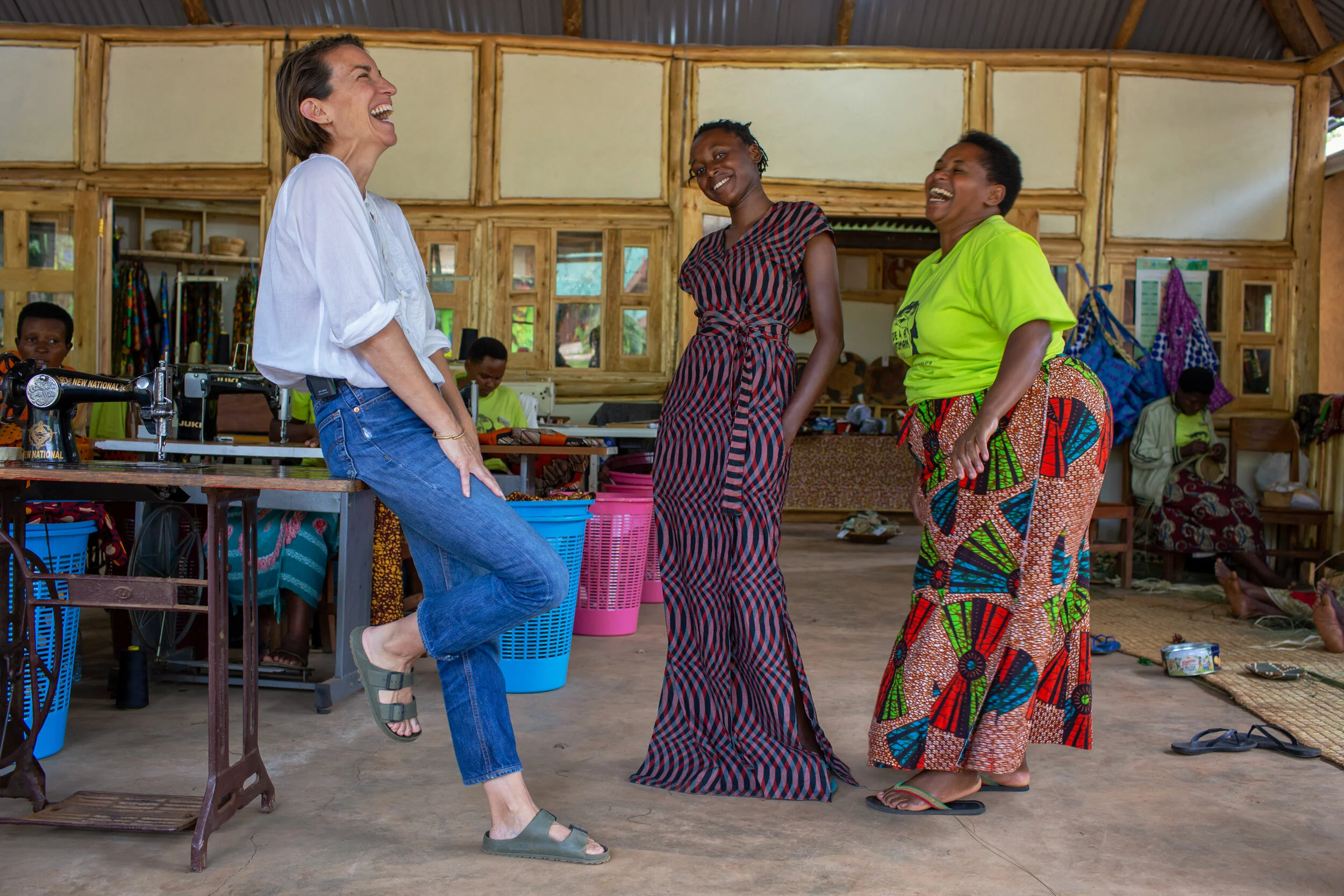
The afternoon visit to the Ride 4 a Woman project at Bwindi is one of the most meaningful community engagement experiences on any Uganda safari. The project employs local women — many of them former subsistence farmers whose land bordered the national park — as weavers, craftswomen, and cultural performers, providing income and community development that directly links their livelihoods to Bwindi’s conservation success.
At Ride 4 a Woman, you watch women create the intricate baskets, mats, and handicrafts that have become internationally recognised symbols of Bwindi’s community empowerment model, participate in traditional dance performances, and hear personal testimonies from participants whose lives the project has transformed.
The proceeds from the cultural visit contribute directly to the project’s operating fund and to conservation education programmes for children in communities surrounding the park.
Meals: Breakfast, Lunch, and Dinner
Day 6: Bwindi to Queen Elizabeth National Park — Ishasha’s Tree-Climbing Lions
Day 6 begins the final wildlife leg of the 8-day Uganda Rwanda safari — the 3–4 hour drive from Bwindi Impenetrable National Park to Queen Elizabeth National Park through one of Uganda’s most spectacularly beautiful driving routes.
The road from Bwindi descends through the Kigezi highlands — Uganda’s most mountainous region, where crater lakes, bamboo forest, and terraced hillsides create a landscape of extraordinary beauty — before entering the Ishasha sector of Queen Elizabeth National Park from the south.
Ishasha Sector: Uganda’s Famous Tree-Climbing Lions
The Ishasha sector is Queen Elizabeth National Park’s most remote and rewarding zone, and its claim to fame is one of Africa’s most extraordinary wildlife phenomena: lion prides that routinely rest, sleep, and survey their territory from the branches of massive fig trees.
Tree-climbing lion populations exist in only two locations in the world — Queen Elizabeth’s Ishasha sector and Tanzania’s Serengeti’s Lake Manyara — and the behaviour here, where prides of 6–15 lions drape themselves across spreading branches up to 8 metres above the ground, provides photography opportunities unlike any conventional African savannah lion sighting.
The game drive through Ishasha en route to your Queen Elizabeth lodges typically produces Uganda Kobs in large herds on the open plains, Topis in smaller groups in the southern grassland, Cape buffaloes in the riverine woodland, and — if fortune is particularly kind — an early view of Ishasha’s lions either on the ground or in their elevated positions in the fig trees along the Ntungwe River corridor.
Queen Elizabeth National Park Accommodation:
- Basic: Simba Safari Camp or Kazinga Channel View Resort
- Moderate: Buffalo Safari Lodge or Bush Lodge
- Luxury: Mweya Safari Lodge or Elephant Plains Lodge
Meals: Breakfast, Lunch, and Dinner

Day 7: Queen Elizabeth National Park — Morning Game Drive and Kazinga Channel Boat Cruise
Queen Elizabeth National Park is Uganda’s most visited national park and one of the most biodiverse protected areas in Africa — a stunning landscape of savannah, crater lakes, forest patches, and the Kazinga Channel connecting Lakes Edward and George, supporting approximately 95 mammal species and an extraordinary 600 bird species.
Day 7 is a full exploration day combining a morning game drive and the afternoon Kazinga Channel boat cruise that has become Uganda’s most celebrated wildlife activity.
Morning Big Game Drive in Queen Elizabeth National Park
The morning game drive through Queen Elizabeth’s northern sector — the flat-topped Mweya peninsula and the broad savannah grassland along the Kasenyi Plains — is one of Uganda’s most reliably wildlife-productive game drive experiences.
The park’s 95 mammal species provide an extraordinarily diverse viewing menu: African bush elephants are among the most commonly encountered large mammals, frequently seen in family groups from 5 to 30 individuals crossing the tracks or feeding in the tree canopy at the forest margins; hippopotamuses number in the thousands in Queen Elizabeth’s waterways and are visible along every channel and lake edge during morning driving; cape buffaloes form herds across the grassland; and the Uganda Kob antelope — Uganda’s national symbol and the antelope responsible for the extraordinary wildlife documentaries of the Queen Elizabeth plains — displays its remarkable social behaviour including the famous lekking grounds where males compete for mating rights.
The tree-climbing lions of the Ishasha sector are the park’s most famous residents, but Queen Elizabeth’s northern sector supports its own significant lion population that is regularly encountered on the Kasenyi Plains.
Leopards are present throughout the park and are most reliably found in the dense vegetation along the Kazinga Channel shoreline during early morning drives.
The bird life in Queen Elizabeth National Park is phenomenal — the 600+ species record includes the spectacular African skimmer nesting on channel sandbanks, the charismatic African fish eagle calling from every dead tree along the water’s edge, the gigantic Goliath heron standing motionless in the shallows, pink-backed pelicans in breeding colonies on lakeside vegetation, various kingfisher species working the channel margins, and the globally threatened shoebill stork in the Maramagambo Forest papyrus swamps. A dedicated game drive with birding binoculars alongside a camera is the most rewarding combination for this park.
Afternoon: Kazinga Channel Boat Cruise — Uganda’s Finest Wildlife Experience on Water
The Kazinga Channel boat cruise is the defining activity of any Queen Elizabeth National Park visit and consistently ranked among Uganda’s top wildlife experiences.
The 32-kilometre natural channel connects Lake George to Lake Edward, and its shallow, nutrient-rich waters support one of the highest concentrations of hippos and Nile crocodiles in East Africa alongside outstanding birdlife.
The 2-hour launch cruise departs from the Mweya jetty in the early afternoon, when hippos are most concentrated in the channel’s shallow water. What you encounter along the channel is not the safari vehicle-based game viewing you have experienced across the previous days, but a completely different and very close perspective on wildlife at the water’s edge — hippos at 10 metres opening their jaws in territorial display, Nile crocodiles sunning on sandbanks with mouths agape, African fish eagles diving to catch fish metres from the launch, and entire elephant families coming to drink and bathe on the opposite bank as you watch from the water level.
The bird list along the Kazinga Channel during a single boat cruise can exceed 100 species — making it one of the most productive single wildlife activities in Uganda for birders — and the cruise ends at the base of the Mweya peninsula with the channel’s most concentrated hippo pod watching the launch depart.
Meals: Breakfast, Lunch, and Dinner
Day 8: Return Drive to Entebbe — Departure
The final morning of the 8-day Uganda Rwanda safari includes breakfast at the lodge and the drive from Queen Elizabeth National Park to Entebbe International Airport for international departures. The journey takes approximately 6–7 hours via Fort Portal town, through Kibale Forest National Park’s forest corridor, and along the Kampala–Masaka highway to Entebbe.
The drive offers final views of western Uganda’s distinctive landscape — the forest patches and tea estates of Fort Portal, the Great Rift Valley escarpment, and the distant shimmer of Lake Victoria as you approach Entebbe. Packed lunch is provided for the journey. Arrival at Entebbe is typically in the late afternoon, well-positioned for most evening international flights.
For travellers who want to extend the experience, Entebbe offers the Ngamba Island Chimpanzee Sanctuary, Entebbe Botanical Gardens, the Uganda Wildlife Education Centre, and comfortable overnight accommodation before departure. The 1 Day Ngamba Island Tour is a popular add-on for travellers with an extra day before their flight.
Meals: Breakfast and Lunch
End of the 8 Days Uganda Rwanda Safari.
What Is Included and Excluded in the 8-Day Safari Package
Fully Included:
- 2 gorilla trekking permits (one in Volcanoes National Park, Rwanda; one in Bwindi Impenetrable National Park, Uganda)
- All park entry fees (Volcanoes NP, Bwindi Impenetrable NP, Queen Elizabeth NP)
- Uganda-Rwanda border crossing facilitation
- 7 nights’ accommodation per the itinerary (1 night Arusha equivalent/Kigali area; 1 night Volcanoes NP; 1 night Lake Kivu; 1 night Bwindi; 2 nights Queen Elizabeth NP; final night as applicable)
- All meals as specified: Days 1–7 (full board); Day 8 (breakfast and lunch)
- Kazinga Channel boat cruise
- Kigali city tour including Genocide Memorial and markets
- Gorilla Guardian Village cultural tour (Rwanda)
- Ride 4 a Woman project visit (Uganda)
- Transport in a dedicated 4WD safari vehicle for the full 8 days
- Services of an experienced driver-guide
- Bottled water throughout
- All government taxes and levies
Not Included:
- International flights (to Kigali and from Entebbe, or vice versa)
- Rwanda and Uganda visas (apply in advance; the Rwanda-Uganda bilateral arrangement may allow single-entry coverage — confirm with Hail Tours Uganda)
- Travel and comprehensive medical insurance (strongly recommended)
- Gorilla porter fees (optional but strongly recommended for Bwindi)
- Personal expenses: laundry, additional beverages, telephone calls, souvenirs, shopping
- Tips and gratuities for driver-guide and lodge staff (discretionary)
- Optional activities not listed in the itinerary
Why This 8 Days Uganda Rwanda Safari?
Choosing an 8 Days Uganda Rwanda Safari itinerary that spans both Uganda and Rwanda rather than a single-country gorilla trek is a decision that every traveller who makes it calls among the best of their safari planning. Here is why the combination works so well.
Two Gorilla Treks — Two Completely Different Experiences
Mountain gorilla trekking is available in only three countries in the world — Rwanda, Uganda, and the Democratic Republic of Congo. The world population of approximately 1,063 wild mountain gorillas (the only great ape population that is increasing rather than declining) is divided between the Virunga Massif and the Bwindi-Sarambwe ecosystem.
Trekking gorillas in both Rwanda and Uganda on a single itinerary means you encounter both populations, in both ecosystems, with the added bonus that both treks can yield completely different family groups, behaviours, and forest experiences.
Rwanda’s Volcanoes National Park gorilla trek offers the shorter average tracking time (the habituated families are generally found more quickly due to the park’s smaller size and longer habituation history), while Bwindi’s gorilla trek is renowned for the more challenging and more immersive forest experience — navigating Bwindi’s steep, ancient, cathedral-like forest is an experience that goes far beyond the gorilla encounter itself.
Gorilla Trekking in Volcanoes National Park, Rwanda
Volcanoes National Park is Rwanda’s most famous protected area, occupying the Rwandan slopes of the Virunga Massif — the chain of eight volcanoes straddling the borders of Rwanda, Uganda, and the DRC.
The park covers approximately 160 square kilometres of afro-montane forest and bamboo zone, and is home to approximately 35% of the world’s mountain gorilla population across more than 12 habituated gorilla families available for trekking.
The Virunga volcanoes provide an extraordinarily dramatic backdrop for gorilla trekking. The volcanic peaks — including Karisimbi (4,507m), Bisoke (3,711m), and Gahinga (3,474m) — create a distinctive landscape of cloud-wreathed forest and open highland meadow unlike any other gorilla habitat on earth.
Beyond the gorillas, Volcanoes National Park is home to endangered golden monkeys (the subject of the park’s second habituated wildlife experience alongside gorillas), spotted hyenas, bushbucks, duikers, forest elephants, and over 200 bird species including the rare Albertine Rift endemics.
The park was made internationally famous by the work of Dian Fossey, the American primatologist whose 18-year study of Volcanoes National Park’s gorillas — and whose murder at the Karisoke Research Centre in 1985 — is recounted in the film Gorillas in the Mist.
The research camp Fossey founded at 3,000 metres on Bisoke’s slopes continues to operate as a mountain gorilla research centre, and the trek to her grave and the graves of the gorillas she studied is available as a half-day hike from the park headquarters.
Gorilla Trekking in Bwindi Impenetrable National Park, Uganda
Bwindi Impenetrable National Park in southwestern Uganda is a UNESCO World Heritage Site and one of Africa’s most biologically rich protected areas. The park covers approximately 321 square kilometres of ancient tropical rainforest — described as “impenetrable” by early explorers because of the extraordinary density of its vegetation — and harbours approximately 50% of the world’s remaining mountain gorillas, distributed across 20 habituated gorilla families available for trekking in four separate gorilla trekking sectors: Buhoma, Ruhija, Rushaga, and Nkuringo.
Bwindi is extraordinary not only for its gorillas. The ancient forest harbours over 120 mammal species including forest elephants, chimpanzees, l’Hoest’s monkeys, blue monkeys, and red-tailed monkeys.
The bird list exceeds 350 species including 23 Albertine Rift endemic species found nowhere outside this biological crossroads zone — making Bwindi one of the most important birding destinations in Africa even for travellers whose primary focus is the gorilla experience.
The gorilla trekking experience at Bwindi is often described as physically more demanding than Rwanda due to the steep terrain and dense vegetation, but that challenge is precisely what makes it so memorable — arriving at a gorilla family after two hours of forest navigation feels like earning the encounter rather than simply walking to it.
Mountain Gorillas: Everything You Need to Know Before Your Trek
Understanding the ecology, conservation status, and trekking rules for mountain gorillas enriches every moment of the two gorilla encounters on this 8-day itinerary.
How Many Mountain Gorillas Exist in the Wild?
The 2018 census confirmed the global wild mountain gorilla population at approximately 1,063 individuals — divided between two populations: the Virunga Massif population (shared between Rwanda’s Volcanoes National Park, Uganda’s Mgahinga Gorilla National Park, and the DRC’s Virunga National Park) and the Bwindi-Sarambwe population in Uganda and the DRC. Mountain gorillas are the only great ape species whose wild population is actually increasing — the result of decades of dedicated conservation effort, community engagement, and the economic value of gorilla tourism.
What to Expect During Gorilla Trekking
Physical preparation: Gorilla trekking involves walking on uneven, often steep terrain in mountain forest for 1–6 hours. Trekkers should be in reasonable physical health. Porters are available at the park headquarters to carry packs and provide physical support on difficult terrain — hiring a porter is strongly recommended as it also provides income for community members.
What to wear: Long-sleeved shirts and trousers that cover your limbs protect against nettles, thorns, and insects. Sturdy, waterproof hiking boots with ankle support are essential. Gardening gloves protect hands when grabbing vegetation on steep slopes. A rain jacket is important year-round in mountain forest. Neutral colours are appropriate; bright colours are not required but vivid reds and oranges are best avoided.
The one-hour rule: Only one hour is permitted with each gorilla family per day, regardless of how long the trek took to find them. This rule — strictly enforced by Uganda Wildlife Authority and Rwanda Development Board rangers — is the most important single protection measure for the gorillas’ health.
Gorillas share sufficient genetic similarity with humans to be susceptible to human infectious diseases, and limiting contact time minimises disease transmission risk.
Permit costs: Rwanda gorilla trekking permits cost USD 1,500 per person per trek. Uganda gorilla trekking permits cost USD 800 per person per trek. Both permits are included in the Hail Tours Uganda 8-day itinerary package price.
Gorilla Trekking Rules Both in Rwanda and Uganda
- Maintain a minimum distance of 7 metres from the gorillas at all times
- Do not eat, drink, or smoke in the presence of the gorilla family
- Do not use flash photography — natural light only
- If you cough or sneeze, cover your face and turn away
- If a gorilla approaches within 7 metres, follow your guide’s instructions and do not run
- Maximum 8 visitors per gorilla family per day
- Anyone showing symptoms of a respiratory illness may be excluded from trekking to protect the gorillas from potential disease transmission
Queen Elizabeth National Park: An In-Depth Wildlife Guide
Queen Elizabeth National Park deserves more than a single day — the 3 Days Queen Elizabeth National Park Safari and 4 Days Queen Elizabeth Safari offer extended exploration of this extraordinary park. On the 8-day Uganda Rwanda safari, Day 7 provides a concentrated but deeply rewarding introduction.
The 95 Mammal Species
Queen Elizabeth National Park’s mammal diversity is remarkable even by East African standards. The full list includes African lion, leopard, spotted hyena, side-striped jackal, African bush elephant, hippopotamus, Cape buffalo, common warthog, Uganda Kob, Defassa waterbuck, Topi, bushbuck, giant forest hog, olive baboon, blue monkey, red-tailed monkey, and l’Hoest’s monkey in the Maramagambo Forest. The park’s connection to the DRC through the Virunga-Queen Elizabeth conservation landscape means trans-boundary movement of wildlife including forest elephants and chimpanzees.
The 600 Bird Species
The 600+ bird species recorded in Queen Elizabeth make it one of the ten most bird-rich national parks in Africa. The Kazinga Channel is the most productive birding zone — African skimmer, giant kingfisher, malachite kingfisher, pied kingfisher, African jacana, yellow-billed stork, saddle-billed stork, and the African fish eagle are all reliably seen on every boat cruise. The Maramagambo Forest adds forest species including the African green broadbill, black bee-eater, and great blue turaco. The shoebill stork — one of Africa’s most sought-after and prehistoric-looking birds — inhabits the Maramagambo Forest papyrus zone and is accessible via a specialised guided walk.
Kazinga Channel: Africa’s Greatest Hippo Concentration
The Kazinga Channel hosts one of the world’s largest hippopotamus populations outside the Luangwa Valley in Zambia — an estimated 5,000 hippos in the channel and adjacent lakes. The afternoon boat cruise concentrates them into a 2-hour visual feast of one of Africa’s most impressive animals, and the proximity that the boat provides — hippos surfacing metres from the launch, opening their extraordinary jaws in territorial yawning displays, and submerging with explosive splashes — creates memories that outlast almost any other wildlife encounter.
Rwanda Cultural Experiences on This Safari
The 8 days Uganda Rwanda safari combines wildlife encounters with two of the most meaningful cultural experiences available in East Africa.
Gorilla Guardian Village (Rwanda)
The Gorilla Guardian Village programme transforms former poachers into conservation champions by providing cultural tourism income that makes gorilla protection economically rational for local communities. The guided village tour introduces visitors to Rwanda’s Tutsi, Hutu, and Twa communities through dance, craft demonstration, and personal storytelling — providing context for the complex social history and extraordinary contemporary resilience of Rwandan society.
Kigali Genocide Memorial Centre (Rwanda)
The Kigali Genocide Memorial is the most significant single site for understanding contemporary Rwanda and arguably one of the most important cultural sites in Africa. The memorial documents the 1994 genocide with compassion, historical accuracy, and a commitment to ensuring that the events are understood and remembered. The memorial’s gardens contain the graves of 250,000 genocide victims — a sobering physical reminder of the scale of the loss that Rwanda has faced and overcome.
Ride 4 a Woman (Uganda)
The Ride 4 a Woman community project at Bwindi demonstrates how women’s economic empowerment connects to conservation success. The crafts produced by the project’s women — particularly the intricate woven baskets and mats — are internationally recognised for their quality and design, and the project’s market links extend to buyers in Europe, North America, and Australia.
The afternoon visit includes craft demonstrations, traditional dance performances, and time to purchase handmade items that directly support the community.
Lake Kivu: East Africa’s Most Beautiful Relaxation Stop
Lake Kivu is not a safari destination — it is the perfectly timed pause that this 8-day itinerary places between the intensity of the Rwanda gorilla trek and the long drive to Uganda.
The lake occupies the western edge of the Albertine Rift Valley, bordered by hills so densely green they seem painted, and its extraordinary clarity and stillness create a visual calm that is physically restorative after the physicality of mountain gorilla tracking.
The boat ride from the lakeside lodges explores the lake’s island archipelago — volcanic islands rising from the water with fishing communities, fruit bats in massive colonies in the trees, and kingfishers and herons working the shoreline.
Swimming in Lake Kivu is safe (unlike many African lakes, it has no bilharzia or hippos near the main town shorelines) and the afternoon on the lake provides the physical and mental restoration that prepares you fully for the Uganda leg of the safari.
Best Time for the 8 Days Uganda Rwanda Gorilla Safari
The 8-day Uganda Rwanda gorilla and wildlife safari runs year-round, and mountain gorilla trekking is available every day of every month across both parks. However, seasonal conditions affect comfort, accessibility, and certain aspects of the wildlife experience.
June–September and December–February (Dry Seasons) — Most Comfortable Trekking
The two dry seasons provide the most comfortable gorilla trekking conditions — drier trails, better visibility in the forest, and easier navigation of Bwindi’s steep terrain without the mud that accumulates in rainy periods.
This is the peak demand period for gorilla permits, and bookings should be made 3–6 months in advance to secure preferred dates and accommodation.
March–May and October–November (Rainy Seasons) — Lush Forest, Lower Crowds
The rainy seasons bring dramatically beautiful forest conditions — the forest is at its most green and alive, photographic light is often extraordinary with dramatic clouds and golden breaks, and visitor numbers are lower than peak dry season.
Gorilla trekking in the rain is a genuinely different experience: the forest sounds and smells intensify, the gorillas often take shelter under large trees and are more stationary and observable, and the overall atmosphere is more immersively wild.
The main practical consideration is that wet-season trekking is more physically demanding on Bwindi’s slopes, and waterproof gear is essential.
For detailed guidance on timing your visit, the best Uganda safari itinerary page covers seasonal considerations across all Uganda parks.
FAQs: 8 Days Uganda Rwanda Safari
Is this safari suitable for first-time gorilla trekkers? Yes — both Volcanoes National Park and Bwindi Impenetrable National Park manage gorilla trekking specifically to accommodate visitors of all fitness and experience levels. Groups are assigned based on physical capability, porters are available, and the experienced guides manage the trek pace to ensure every participant reaches the gorilla family.
How different is gorilla trekking in Rwanda vs Uganda? The gorilla encounter itself — one hour with a habituated mountain gorilla family — is broadly similar in quality. The differences are in the forest and trek experience.
Rwanda’s Volcanoes National Park offers shorter average trekking times in more open bamboo and forest zones; Bwindi’s ancient tropical forest is more challenging terrain with a more immersive forest experience. Most travellers who have done both describe them as complementary rather than comparable.
Can I extend this safari to include chimpanzee trekking? Yes — Kibale Forest National Park in western Uganda (the world’s best chimpanzee trekking destination) is en route between Bwindi and Queen Elizabeth National Park, and the itinerary can be extended by 1–2 days to include a chimpanzee trek.
The 5 Days Uganda Rwanda Gorilla Trek and 7 days Uganda Rwanda Wildlife Safari are comparable itineraries, and the 10 Days Uganda Gorilla and Wildlife Safari adds chimpanzee trekking and additional wildlife parks to the programme.
What vaccinations are required? Yellow fever vaccination is mandatory for entry to both Uganda and Rwanda. Other recommended vaccinations include hepatitis A, typhoid, tetanus, meningitis, and rabies (for extended stays). Malaria prophylaxis is strongly recommended for Uganda’s national parks including Queen Elizabeth. Consult your travel health clinic at least 6 weeks before departure.
Is the gorilla trekking physically demanding? Gorilla trekking is moderately to significantly physically demanding, particularly at Bwindi where steep terrain and dense vegetation are encountered.
Reasonable fitness is important, though special needs and fitness limitations should be discussed with Hail Tours Uganda at time of booking so that appropriate group allocation and porter arrangements can be made.
Book Your 8 Days Uganda Rwanda Safari with Hail Tours Uganda
Hail Tours Uganda is East Africa’s specialist in Uganda and Rwanda gorilla safaris, wildlife itineraries, and cross-border adventures. As a Uganda Tourism Board certified operator with deep Rwanda safari expertise, our team handles every aspect of this complex 8 Days Uganda Rwanda Safari itinerary — from permit acquisition in both countries through border facilitation, lodge booking, cultural programme arrangements, and the expert guiding that ensures every wildlife and cultural encounter reaches its full potential.
Mountain gorilla permits for both Rwanda and Uganda are in high demand and book out months in advance. Contact Hail Tours Uganda today to confirm availability on your preferred dates, discuss accommodation tier preferences, and receive a personalised quote for this extraordinary 8-day Uganda Rwanda gorilla and wildlife safari.
Related Safari Packages Worth Exploring
- 8 Days Uganda Rwanda Safari — The complete 8-day cross-border gorilla and wildlife itinerary
- 5 Days Uganda Rwanda Gorilla Trek — Focused 5-day cross-border gorilla trekking for tighter itineraries
- 7 days Uganda Rwanda Wildlife Safari — 7-day Uganda-Rwanda combination with gorillas and wildlife
- 10 Days Uganda Gorilla and Wildlife Safari — Extends the cross-border experience with Kibale chimpanzee trekking and additional Uganda parks
- 4 Days Double Gorilla Trekking — Two gorilla treks in Uganda’s Bwindi in four focused days
- 3 Day Gorilla Trekking Uganda — Shorter Uganda gorilla trekking safari for constrained timelines
- 4 Days Gorilla and Wildlife Tour — Combines Bwindi gorilla trekking with Queen Elizabeth National Park in 4 days
- 3 Day Gorilla & Golden Monkey Trekking Rwanda — Rwanda-focused 3-day trek combining gorillas and golden monkeys in Volcanoes National Park
- 5 Day Rwanda Primate Safari — Five days across Rwanda’s primate destinations including gorillas, golden monkeys, and chimpanzees
- 2 Days Rwanda Gorilla Safari — Shortest possible Rwanda gorilla experience from Kigali
- 4 Days Flying Gorilla Safari Uganda — Fly in and out of Bwindi for maximum gorilla experience in minimum time
- 3 Days Queen Elizabeth National Park Safari — Extended Queen Elizabeth exploration for wildlife enthusiasts
- 4 Days Queen Elizabeth Safari — Four focused days in Uganda’s most biodiverse national park
- 5 Days Uganda Gorilla & Wildlife Safari — Gorilla trekking and Queen Elizabeth National Park in 5 days within Uganda only
- 7 Days Uganda Primates Safari — Seven days focused on Uganda’s extraordinary primate diversity
- 9 Days Gorilla Trek in Uganda — Extended Uganda gorilla and wildlife itinerary with more time in each destination
- Kigali to Volcanoes Safari — Direct Kigali to Volcanoes National Park gorilla safari
- 5 days Rwanda Congo Gorilla Safari — Extends the Rwanda gorilla experience into the DRC’s Virunga National Park
- Bwindi Impenetrable National Park — Complete guide to Uganda’s most important gorilla and biodiversity destination
- Volcanoes National Park Rwanda — Comprehensive guide to Rwanda’s premier gorilla trekking destination
- Queen Elizabeth National Park — Full guide to Uganda’s most biodiverse national park
- 18 Days African Safari — The ultimate East Africa multi-country safari extending this 8-day framework to a comprehensive 18-day experience
- About Hail Tours Uganda — The certified East Africa safari specialists behind your Uganda Rwanda gorilla adventure
- Contact Hail Tours Uganda — Book your 8-day Uganda Rwanda gorilla and wildlife safari today