
Nairobi National Park Entrance Fees 2026: Updated KWS Rates
Nairobi National Park Entrance Fees: Current Nairobi National Park entrance fees for non-residents, EAC citizens, and children — plus vehicle fees, camping costs, the Nairobi Package, and how to plan the world’s only urban safari.
Nairobi National Park, located just 7 kilometres from Nairobi’s bustling Central Business District, is a genuinely unique gem — one of the very few national parks anywhere in the world within a capital city.
Spanning 117 square kilometres, it offers an extraordinary urban safari experience, where visitors can spot lions, black rhinos, giraffes, and over 400 bird species against the backdrop of Nairobi’s skyline.
Managed by the Kenya Wildlife Service (KWS), the park’s entrance fees are a critical part of its conservation funding, directly supporting wildlife protection and infrastructure upgrades across the reserve.
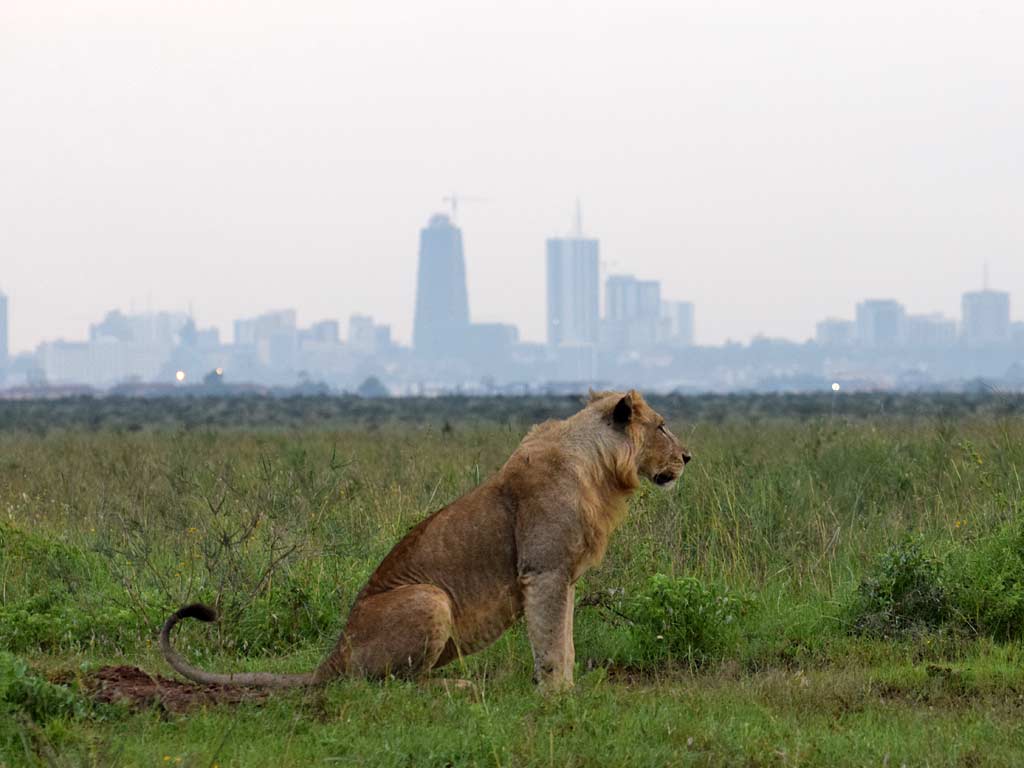
Overview of Nairobi National Park Entrance Fees
Nairobi National Park’s fee structure balances accessibility with the genuine financial needs of conservation, reflecting its status as a premium urban safari destination. Fees vary by residency status — non-residents, EAC citizens/residents, and students/children — and by time of year, with high season (July–March) and low season (April–June) rates.
In 2023, KWS proposed a significant fee hike, reportedly tripling costs for EAC citizens (from around KSh 430 to KSh 2,000 for adults) and raising non-resident fees toward $100.
A High Court ruling in early 2024 is widely reported to have blocked these changes following public pushback, citing the need to keep the park affordable for Kenyans and to support domestic tourism — always worth confirming current status directly with KWS, since fee disputes like this can resurface.
As a result, the 2023/24 fee structure has remained broadly in place into 2026, keeping the park accessible for both local and international visitors.
The park operates from 6:00am to 6:00pm daily, with entry tickets valid for 24 hours. Visitors staying inside the park — at private lodges, for instance — can remain for the full period, while day visitors must exit by dusk or purchase a new ticket to re-enter.
Fees are paid via cashless methods only — M-Pesa, Visa, Mastercard, or KWS bank deposits — through the eCitizen portal (kws.ecitizen.go.ke) or at entry gates including the Main Gate, Langata, or Maasai Gate.
Detailed Nairobi National Park Entrance Fee Structure for 2026
The table below outlines Nairobi National Park entrance fees by residency, age, and season, as reported by KWS and recent sources. Non-resident fees are in USD; EAC citizen and resident fees are in KSh.
| Category | High Season (Jul–Mar) | Low Season (Apr–Jun) | Notes |
|---|---|---|---|
| Non-Resident Adult | $43 | $40 | International visitors not residing in Kenya; valid 24 hours |
| Non-Resident Child (3–17) | $22 | $20 | Children under 3 enter free |
| EAC Citizen/Resident Adult | KSh 500 | KSh 400 | Kenyan citizens or residents of Uganda, Tanzania, Rwanda, Burundi, DRC |
| EAC Citizen/Resident Child | KSh 215 | KSh 215 | Ages 3–17; under 3 free |
| Student (up to 23 years) | KSh 215 / $20 | KSh 215 / $20 | Requires valid student ID, pre-arranged school trip, KWS approval 2 weeks prior |
Key notes: Non-residents without Kenyan residency documentation (such as a work permit) pay in USD, with a $1 convenience fee applying per eCitizen transaction. EAC citizens and residents must present a valid National ID (Kenyan citizens) or a passport with a work permit or visa (EAC residents) to qualify for the lower rate — without documentation, non-resident rates apply by default.
Students are eligible only under 23, sponsored by a recognised institution, and visiting for conservation research or a school trip, with KWS authorisation required in advance. High season aligns with peak tourism and the drier months, while low season reflects wetter conditions and fewer visitors — and always verify current rates directly with KWS before travelling, since park fee structures across Kenya are periodically reviewed.
Additional Fees and Packages Worth Budgeting For
Beyond the standard Nairobi National Park entrance fee, visitors may incur further costs depending on activities, transport, and accommodation choices.
Vehicle fees, charged per vehicle per day based on seating capacity: 5 seats or fewer, KSh 300 (~$2.30); 6–12 seats, KSh 1,030 (~$7.90); 13–24 seats, KSh 2,585 (~$19.90); 25–44 seats, KSh 4,050 (~$31.15). A vehicle is essential for most of the park, since walking is restricted outside designated areas like the Safari Walk.
Camping fees: public campsites run $20 per adult and $10 per child for non-residents (KSh 250/KSh 200 for EAC citizens); special campsites run $35 per adult and $25 per child for non-residents (KSh 1,000/KSh 500 for EAC citizens), with a non-refundable reservation fee of $75 (non-residents) or KSh 7,500 (EAC citizens). Private campsites additionally require hiring two KWS rangers for nighttime security, at a combined cost of around $30.
The Nairobi Package combines Nairobi National Park, the Nairobi Safari Walk, and the Nairobi Animal Orphanage under a single fee — $125 (adult) / $50 (child) for non-residents in high season, or $100 (adult) / $20 (child) in low season; KSh 2,250 (adult) / KSh 650 (child) for EAC citizens in high season, or KSh 2,000 (adult) / KSh 500 (child) in low season. This is genuinely ideal for families or short-stay visitors wanting a fuller experience without visiting each site separately.
Special activities, including guided walking tours, birdwatching, and photography sessions, typically add $20–$50, arranged through KWS or a tour operator. Annual passes are also available for frequent visitors, generally ranging $100–$200 for non-residents depending on category.
Payment Methods and Logistics
Only cashless payment is accepted, both for efficiency and to reduce transaction risk. Options include M-Pesa, Kenya’s widely used mobile payment platform, accepted directly at gates; Visa or Mastercard, accepted via eCitizen or at entry points; and bank deposits, direct transfers to KWS accounts typically pre-arranged for large groups.
Using the eCitizen portal (kws.ecitizen.go.ke) to purchase tickets in advance avoids gate delays, with a $1 fee applying per transaction.
Documentation: non-residents need a valid passport; EAC citizens and residents require a National ID or a passport with the relevant work permit or visa; students must present valid ID alongside KWS authorisation.
Access: enter via the Main Gate (Langata Road), Maasai Gate, or other designated entry points. Self-drive is permitted with a park map, though a 4×4 is genuinely recommended during the rainy seasons (April–May, October–November). Guided safari van tours typically run $80–$160.
Many tour packages bundle park fees, transport, and game drives into a single price, with group rates from around $120 per person — a genuinely convenient option if you’d rather not manage eCitizen payments and logistics yourself.
Park Rules and Cost-Saving Tips
To maximise value and avoid unnecessary extra costs, follow the park’s core rules and plan with a few practical tips in mind.
Rules: respect wildlife and maintain a safe distance at all times, avoid feeding any animals, dispose of litter only at designated points, exit by 6:00pm as a day visitor (overnight stays require an approved lodge or campsite), and observe the maximum speed limit of 40 km/h with no hooting, to protect the animals.
Tips: visit during low season (April–June) to save a few dollars per person on the standard entrance fee; book through a tour operator for group discounts and bundled fees; consider the Nairobi Package if you want to combine multiple attractions in one visit; self-drive in a rented 4×4 (roughly $30–$100/day) to avoid tour van costs, provided you have a reliable park map; and arrive as close to the 6:00am opening as possible for the best game viewing and to make full use of your 24-hour ticket.
The Value of Nairobi National Park
At $43 (high season) or $40 (low season) for a non-resident adult, Nairobi National Park offers genuinely exceptional value. Where else can you see four of the Big Five — lion, leopard, rhino, and buffalo (the park notably has no elephants, given its limited space) — within a 20-minute drive of a capital city? Its proximity to Jomo Kenyatta International Airport makes it a genuinely strong option for layover tourists, with half-day tours comfortably fitting a 6:30am–1:00pm window.
Highlights include black rhinos, cheetahs, Nile crocodiles, and the park’s 400+ recorded bird species, alongside scenic spots like the Ivory Burning Site, Hippo Pool, and Impala Picnic Site.
Unlike gorilla trekking parks, Nairobi National Park has no daily visitor limits, giving you genuine flexibility to plan your visit around your own schedule rather than a permit allocation.
The blocked 2023 fee hike sparked real public debate, with concerns that a KSh 2,000 EAC fee would deter domestic tourism weighed against KWS’s case for stronger conservation funding. The court’s ruling has, for now, kept the park genuinely accessible to Kenyan and East African visitors alongside international travellers.
FAQs -Nairobi National Park Entrance Fees
How much does it cost to enter Nairobi National Park? $43 in high season or $40 in low season for a non-resident adult, with EAC citizens paying KSh 500 or KSh 400 respectively — see the full fee table above for the complete breakdown by category.
Does Nairobi National Park have elephants? No — it’s one of the few major Kenyan parks without resident elephants, given its relatively limited size, though it still hosts four of the Big Five.
Can I self-drive through Nairobi National Park? Yes, with a park map, though a 4×4 is recommended during the rainy seasons for the more challenging sections of track.
What’s included in the Nairobi Package? Nairobi National Park, the Nairobi Safari Walk, and the Nairobi Animal Orphanage under a single combined entrance fee — a strong option for families or short-stay visitors.
Is Nairobi National Park worth visiting on a layover? Genuinely yes — its proximity to Jomo Kenyatta International Airport makes a half-day safari a realistic option even on a short stopover.
Book Your Nairobi National Park Safari Today
Nairobi National Park offers something no other safari destination can: genuine Big Five wildlife viewing minutes from a capital city skyline. Hail Tours offers packages from around $120 per person for a group of six, including entrance fees, 4×4 transport, and a professional KWS-trained guide.
We handle eCitizen payments, permits, and pickups from Nairobi or Kigali, making this an easy addition to a wider Kenya or combined Rwanda–Kenya itinerary. Combine it with the Nairobi Safari Walk, the Giraffe Centre, or extend further into the Maasai Mara or Mount Kenya for a genuinely complete multi-destination adventure.
Contact our team today to book the world’s only urban safari, or browse our full range of Kenya safaris to see how it fits into a longer trip.
Related Pages
Kenya parks & fees
- Masai Mara National Reserve
- Amboseli National Park
- Tsavo National Park
- Samburu National Reserve
- Mount Kenya National Park Entrance Fee
- 5 Best Safari Parks in Kenya
Kenya safaris
- Africa Kenya Safaris
- 3 Days Maasai Mara Safari
- 5 Days Masai Mara and Lake Naivasha
- 6 Days Masai Mara, Lake Nakuru and Amboseli Safari
- 7 Days Best of Kenya Safari
- 8 Days Kenya Big Five Safari
Cross-border combos
Planning guides
Company