
CLICK TO BOOK A MURCHISON FALLS SAFARI
Best 2025 Guide to Murchison Falls: Location, Safaris, Entrance Fee, & more
Murchison Falls, located in northwestern Uganda, is one of Africa’s most spectacular natural wonders and the centerpiece of Murchison Falls NP, Uganda’s largest and most iconic conservation area.
Known for its dramatic gorge where the Nile River forces its way through a narrow channel, the park offers breathtaking scenery and exceptional wildlife experiences.
Visitors can enjoy thrilling Murchison Falls safari, spotting elephants, lions, giraffes, hippos, and over 450 bird species.
A Murchison Falls safari can include boat cruises to the base of the falls, guided game drives, and nature walks. For overnight stays, Murchison Falls lodges range from luxury lodges to budget-friendly options, providing comfort while immersing visitors in the park’s wild beauty. Murchison Falls location makes it accessible for both weekend trips and extended safari adventures.
What is Murchison Falls?
Murchison Falls, also known as Kabalega Falls, is one of the most powerful waterfalls in the world, situated on the Victoria Nile in northwestern Uganda.
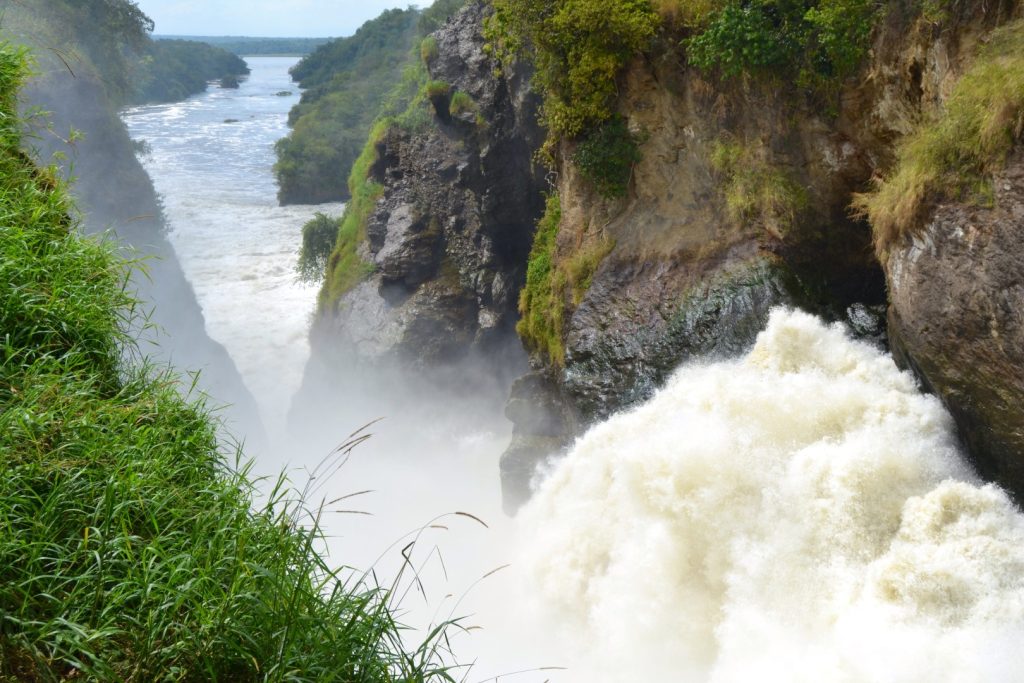
The falls are the heart of Murchison falls np, where the Nile River is forced through a narrow 7-meter (23-foot) gorge, plunging 43 meters (141 feet) into the Devil’s Cauldron below, creating a thunderous roar and a permanent rainbow mist. This dramatic natural spectacle is a key attraction, drawing thousands of tourists annually to witness its raw power and beauty.
The waterfall was named in 1864 by explorer Sir Samuel Baker after Sir Roderick Murchison, the president of the Royal Geographical Society, which sponsored many African explorations.
During the regime of Idi Amin in the 1970s, the falls were temporarily renamed Kabalega Falls in honor of the Bunyoro Kingdom’s Omukama Kabalega, but the original name was restored after Amin’s downfall. Today, both names are used interchangeably by locals and visitors.
Murchison Falls is not just a waterfall; it’s a symbol of Uganda’s natural heritage and a focal point of the Murchison Falls Conservation Area (MFCA), which includes the national park, Bugungu Wildlife Reserve, and Karuma Wildlife Reserve.
Spanning over 5,663 square kilometers, this protected area is a biodiversity hotspot, offering unparalleled opportunities for wildlife safaris, boat cruises, and bird watching.
Murchison Falls National Park: An Overview
Murchison Falls National Park, established in 1952, is Uganda’s largest national park, covering approximately 3,893 square kilometers (1,503 square miles).
Located in the districts of Buliisa, Nwoya, Kiryandongo, and Masindi, the park is bisected by the Victoria Nile, which flows from Lake Victoria to Lake Albert. The park’s diverse ecosystems, including savanna grasslands, woodlands, riverine forests, and wetlands, make it a haven for wildlife and birdlife.
The park’s history dates back to 1926 when it was gazetted as a game reserve to protect its abundant wildlife from poaching and habitat loss. By the mid-1960s, it was East Africa’s premier safari destination, attracting over 60,000 visitors annually.
Despite challenges during the 1970s and 1980s due to political instability, conservation efforts have restored its wildlife populations, making it a top destination today.
Key Features of Murchison Falls National Park
- Murchison Falls: The park’s namesake and a global natural wonder.
- Victoria Nile: A vital lifeline that supports diverse ecosystems and wildlife.
- Karuma Falls: Located at the park’s eastern edge, near the 600-megawatt Karuma Power Station.
- Albert Delta: A wetland where the Nile meets Lake Albert, rich in birdlife and aquatic species.
- Budongo Forest Reserve: Adjacent to the park, known for chimpanzee trekking.
The Geology and Formation of Murchison Falls
The Murchison Falls is a geological marvel formed within the Albertine Rift Valley, where the Victoria Nile encounters a remnant rift valley wall. The river, originating from Lake Victoria, races through 80 kilometers of rapids before narrowing to a mere 7-meter gap at the falls.
This constriction creates immense pressure, forcing approximately 300 cubic meters per second (11,000 cubic feet per second) of water through the gorge, resulting in a spectacular cascade that trembles the surrounding ground.
The rocks at the top of the falls are ancient pelitic schists, containing muscovite crystals that sparkle under sunlight, adding to the visual allure.
The falls consist of two main drops: the primary 43-meter plunge and a smaller, more vertical Uhuru Falls to the north. The water then flows into the Devil’s Cauldron, a turbulent pool that creates a misty environment ideal for spotting rainbows.
This geological phenomenon makes Murchison Falls the largest and most powerful waterfall along the Nile River, earning it a place among the Seven Natural Wonders of Africa. Its unique formation and scenic beauty make it a bucket-list destination for travelers seeking natural splendor.
Wildlife in Murchison Falls National Park
Murchison Falls National Park is a biodiversity hotspot, hosting 144 mammal species, 556 bird species, 51 reptiles, and 51 amphibians.
The park’s varied landscapes—savanna, woodlands, wetlands, and forests—provide ideal habitats for a wide range of wildlife. Here’s a breakdown of the park’s key species:
Mammals
The park is home to four of the Big Five (lions, leopards, elephants, and buffalo), with rhinos absent but viewable at the nearby Ziwa Rhino Sanctuary. Notable mammals include:
- African Elephants: Over 900 individuals, with populations recovering steadily.
- Rothschild’s Giraffes: Exclusive to the northern sector, with an estimated 250 individuals.
- Cape Buffaloes: Over 10,000, one of the most commonly seen species.
- Uganda Kobs: A population of 35,000, thriving in the savanna.
- Lions: Approximately 200, spread across 20 prides.
- Leopards, Spotted Hyenas, Hartebeests, Waterbucks, Bushbucks, Warthogs, Hippos, and Nile Crocodiles: Abundant along the riverbanks, especially near the Albert Delta.
Primates
The park and adjacent Budongo Forest Reserve are home to several primate species, including:
- Chimpanzees: Habituated troops in Rabongo Forest and Budongo Forest offer excellent chimpanzee trekking opportunities.
- Baboons, Colobus Monkeys, and Patas Monkeys: Commonly seen during game drives.
Birdlife
With over 450 bird species, Murchison Falls National Park is a paradise for bird watching. Notable species include:
- Shoebill Stork: A rare, prehistoric-looking bird found in the Albert Delta wetlands.
- Goliath Heron: The world’s largest heron, often spotted along the Nile.
- Great Blue Turaco, White-Thighed Hornbill, Dwarf Kingfisher, Red-Throated Bee-Eater, and Black-Headed Gonolek: Vibrant species that attract birders.
The park’s designation as a Lion Conservation Unit since 2005 underscores its commitment to protecting its wildlife, supported by organizations like Global Conservation and the Uganda Wildlife Authority (UWA).
Top Activities in Murchison Falls National Park
Murchison Falls National Park offers a variety of activities that cater to different interests, from adrenaline-pumping adventures to serene nature experiences. Here are the top activities to include in your Uganda safari:
1. Boat Cruises on the Victoria Nile
A boat cruise to the base of Murchison Falls is a highlight of any visit. Departing from Paraa Landing, these cruises offer stunning views of the falls, hippos, crocodiles, and waterbirds like the shoebill stork. The 3-hour journey provides a unique perspective of the Nile’s power and the park’s wildlife. Private small boats are recommended for a more intimate experience.
2. Game Drives
Game drives in the northern sector are ideal for spotting lions, elephants, giraffes, and buffaloes. The best time for game drives is during the dry seasons (June–September and December–February), when animals congregate around water sources. Early morning drives offer the best wildlife sightings and stunning sunrise views.
3. Hiking to the Top of Murchison Falls
A guided hike to the top of Murchison Falls offers breathtaking views of the waterfall and the surrounding gorge. The trail from Paraa takes about 2 hours and rewards hikers with panoramic vistas and photo opportunities. The mist and roar of the falls create an unforgettable experience.
4. Chimpanzee Trekking
Chimpanzee trekking in Budongo Forest Reserve or Rabongo Forest allows visitors to observe habituated chimpanzee troops in their natural habitat. This activity is a thrilling complement to gorilla trekking in other Ugandan parks like Bwindi Impenetrable National Park.
5. Bird Watching
With over 450 bird species, bird watching is a major draw. The Albert Delta and Rabongo Forest are prime spots for spotting rare species like the shoebill stork and Goliath heron. The wet season (March–May and October–November) is ideal for birding.
6. Sport Fishing
Sport fishing on the Victoria Nile offers a chance to catch large species like the Nile perch, catfish, and tiger fish. This activity is popular among anglers seeking a unique adventure.
7. Hot Air Balloon Safaris
Hot air balloon safaris provide a bird’s-eye view of the park’s savanna, the Victoria Nile, and Murchison Falls. These tours are best during the dry season for clear skies and optimal wildlife viewing.
8. Cultural and Community Visits
Engage with local communities like the Mubako community or the Boomu Women’s Group to learn about Ugandan culture, traditional crafts, and sustainable tourism initiatives. These visits offer a deeper connection to the region’s heritage.

Best Time to Visit Murchison Falls National Park
The best time to visit Murchison Falls National Park depends on your interests:
- Dry Season (June–September, December–February): Ideal for game drives and hiking, as wildlife congregates around water sources, and trails are more accessible. The weather is warm, with temperatures averaging 29°C.
- Wet Season (March–May, October–November): Perfect for bird watching, as migratory birds are present, and the park is lush and green. However, roads may be muddy, and some areas may be harder to access.
The park is open year-round, and each season offers unique experiences. For a balanced visit, consider the shoulder months (June, September, December) for fewer crowds and pleasant weather.
How to Get to Murchison Falls National Park
Murchison Falls National Park is accessible by road and air, with multiple routes from Kampala and Entebbe:
- By Road:
- Kampala to Paraa via Masindi: A 283-kilometer (176-mile) drive, taking 4–5 hours, passing through Masindi and the Kichumbanyobo Gate. This route allows a stop at the Ziwa Rhino Sanctuary for rhino trekking.
- Kampala to Paraa via Karuma: A northern route via the Kampala-Gulu Highway, entering through the Karuma Gate.
- Kampala to Paraa via Hoima: A scenic route through Hoima, connecting to Masindi and the park.
- By Air: Chartered flights from Entebbe International Airport or Kajjansi Airfield to Pakuba Airfield (16 kilometers from Paraa) offer a quick and scenic option. Flights take about 1 hour and are arranged through tour operators.
The park cannot be accessed by train, but road and air options are convenient and well-supported by tour operators.
Murchison Falls Accommodation
Murchison Falls National Park offers a range of accommodations to suit different budgets and preferences:
- Luxury Lodges:
- Nile Safari Lodge: Features en-suite tents and chalets with Nile views.
- Baker’s Lodge: Named after Sir Samuel Baker, offering riverside luxury.
- Kabalega Wilderness Lodge: Known for its sundowner deck and bush bar.
- Paraa Safari Lodge: A historic lodge with modern amenities and a pool.
- Mid-Range Options:
- Murchison River Lodge: Comfortable with scenic views.
- Parkside Safari Lodge: Affordable with good access to park activities.
- Budget Options:
- Yebo Safari Camp: Ideal for backpackers and budget travelers.
- Budongo Eco Lodge: Located in the Budongo Forest, great for chimpanzee trekking.
Booking through trusted tour operators like Achieve Global Safaris ensures seamless arrangements tailored to your preferences.
Historical and Cultural Significance
Murchison Falls and its national park have a rich history:
- Exploration: The falls were first sighted by Europeans John Speke and James Grant in 1862, with Sir Samuel Baker and Florence Baker conducting a thorough exploration in 1863–1864.
- Notable Visitors: The park has hosted figures like Winston Churchill, Theodore Roosevelt, and British Royalty. Ernest Hemingway famously survived two plane crashes near the falls in 1954.
- Cultural Heritage: The park’s alternate name, Kabalega Falls, honors Omukama Kabalega, a Bunyoro king who resisted British colonization. Community visits to the Mubako community or Boomu Women’s Group offer insights into local culture.
The 1951 film The African Queen, starring Humphrey Bogart and Katharine Hepburn, was filmed on Lake Albert and the Victoria Nile, showcasing the park’s untamed beauty.
nbsp;
Conservation Efforts and Challenges
Murchison Falls National Park is managed by the Uganda Wildlife Authority (UWA), which works to protect its biodiversity and combat poaching. Partnerships with organizations like Global Conservation and the International Elephant Foundation support initiatives such as:
- Elephant and Wildlife Census: Using advanced imaging to monitor populations.
- Global Park Defense: Implementing satellite communications, trail cameras, and anti-poaching patrols.
- Community Involvement: Establishing tourism associations and informant networks to promote sustainable tourism.
Challenges include the East African Crude Oil Pipeline, which involves constructing oil well pads and a refinery near the park, potentially impacting its ecosystems. In 2019, Uganda rejected a hydropower project to preserve the falls, highlighting its commitment to conservation.
Travel Tips for Visiting Murchison Falls
- Plan with a Tour Operator: At Hail Tours Uganda, we customize itineraries, including game drives, boat cruises, and chimpanzee trekking. Contact us today to start planning!
- Pack Appropriately: Bring lightweight clothing, sturdy shoes for hiking, binoculars for bird watching, and insect repellent for tsetse flies.
- Book Early: Popular activities like boat cruises and hot air balloon safaris can sell out, especially during peak seasons.
- Respect Wildlife: Follow guides’ instructions during game drives and chimpanzee trekking to ensure safety and minimize environmental impact.
- Combine with Other Destinations: Pair your visit with gorilla trekking in Bwindi Impenetrable National Park or white-water rafting in Jinja for a comprehensive Uganda safari.
Why Visit Murchison Falls National Park?
Murchison Falls National Park is a must-visit for its combination of natural beauty, diverse wildlife, and thrilling activities. The Murchison Falls itself is a global icon, offering a dramatic display of nature’s power.
Whether you’re embarking on a game drive, cruising the Victoria Nile, or trekking to see chimpanzees, the park delivers an unforgettable African safari experience. Its accessibility, range of accommodations, and rich cultural heritage make it a top destination for travelers seeking adventure and serenity.
For more information or to plan your Uganda safari, contact us. Start your journey to Murchison Falls National Park today and discover why it’s Uganda’s crown jewel.