
8 Days Tanzania Safari — Serengeti, Ngorongoro, Tarangire, Lake Manyara & Lake Eyasi
8 Days Tanzania Safari: Tanzania’s Northern Circuit is Africa’s most celebrated wildlife safari route and this 8 Days Tanzania Safari from gives you the full, unhurried version of it.
Over eight days starting and ending in Arusha, this carefully sequenced itinerary moves you through Tarangire National Park, Lake Manyara National Park, Serengeti National Park, Ngorongoro Conservation Area, and Lake Eyasi — five of Tanzania’s most extraordinary destinations, each with a completely distinct character, wildlife profile, and landscape identity.
This is not a rushed highlights reel. Two full days in the Serengeti give you genuine time to track lions across open plains, wait for wildebeest river crossings, and search for the leopards that rest in the fever trees above the Mara River.
A full Ngorongoro Crater floor game drive gives you the concentrated Big Five experience that makes the world’s largest intact caldera arguably Africa’s most reliable single-day wildlife destination.
And the Day 8 encounter with the Hadzabe hunter-gatherer community at Lake Eyasi adds a human dimension to the wildlife safari that most Tanzania Northern Circuit itineraries miss entirely.
Whether you choose a budget tented camp or a luxury lodge, this itinerary delivers the full depth and variety of the Tanzanian safari experience. For a shorter Northern Circuit option, our 5 Days Serengeti and Ngorongoro Safari covers the essentials in five days.
For a more extended stay, our 10 Days Best of Tanzania Safari and 14 Days Tanzania Safari and Zanzibar Beach add further destinations and a Zanzibar beach extension.
Why This 8 Days Tanzania Safari Route Works So Well
Most visitors to Tanzania’s Northern Circuit face a structural challenge: the most famous destinations — Serengeti and Ngorongoro — are separated by several hours of driving, and the temptation is to rush between them without spending meaningful time in either.
The 8-day Tarangire–Lake Manyara–Serengeti–Ngorongoro–Lake Eyasi circuit solves this by building genuine time into each destination while creating a logical geographical arc that minimises unnecessary backtracking.
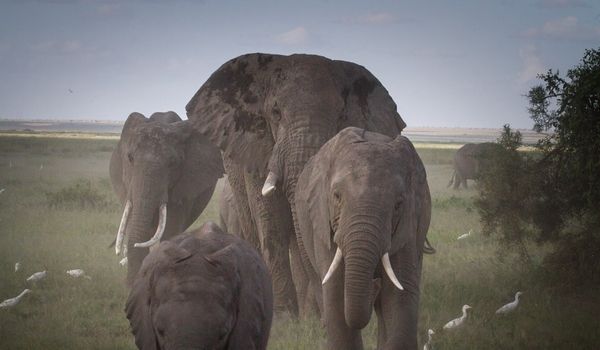
The route begins at Tarangire — closest to Arusha and the most underrated park on the Northern Circuit — where Africa’s greatest elephant concentrations and ancient baobab landscapes deliver a powerful first game drive impression.
It then moves to Lake Manyara, compact but extraordinary for tree-climbing lions and flamingo populations, before the longer drive north to the Serengeti where two full days allow the kind of patient, unhurried wildlife watching that reveals what this ecosystem truly is.
Ngorongoro provides an enclosed, concentrated counterpoint to Serengeti’s open vastness, and the circuit concludes at Lake Eyasi with the Hadzabe cultural encounter that transforms a very good wildlife safari into a truly complete East Africa experience.
For Tanzania safaris combined with gorilla trekking in Uganda or Rwanda, our 7 Days Gorilla Trek and Wildebeest Migration and 18 Days African Safari packages combine both.
8 Days Tanzania Safari — Tour Highlights
- Tarangire National Park— Africa’s highest elephant density in dry season, 9 distinct vegetation types, ancient baobab landscapes, and over 550 bird species in one of Tanzania’s most underrated national parks
- Lake Manyara National Park— Tanzania’s famous tree-climbing lions, dense flamingo flocks on the alkaline lake, and mahogany-fig forest sheltering blue monkeys and elephants within a compact 32,500-hectare rift valley park
- Serengeti National Park— two full days of game drives across the world’s most famous savannah ecosystem; the Great Wildebeest Migration, Big Five encounters, cheetah hunting on open plains, and the option of a hot air balloon safari at dawn
- Maasai village and community walk— an authentic encounter with the Maasai pastoralist culture whose traditional cattle-herding coexists with the Serengeti ecosystem
- Ngorongoro Crater floor game drive— descending 600 metres into the world’s largest intact volcanic caldera for the most concentrated Big Five experience in Africa, including black rhinoceros, endemic to this ecosystem in significant numbers
- Lake Eyasi and Hadzabe tribe encounter— spending a morning with one of the world’s last surviving hunter-gatherer peoples; an encounter of genuine anthropological depth that no other Northern Circuit itinerary delivers as its closing experience
Brief 8 Days Tanzania Safari Itinerary Overview
- Day 1: Hotel Pick-up and road trip to Tarangire National Park
- Day 2: Short journey across the beautiful Great Rift Valley to Lake Manyara National Park
- Day 3: Depart for Serengeti National Park, most famous Park in the country.
- Day 4-5: Have beautiful days to explore Serengeti National Park
- Day 6: Game Drive and transfer to Ngorongoro Conservation Area
- Day 7: Ngorongoro Conservation Area Tours
- Day 8: Tours of Lake Eyasi/Hadzabe Tribe and drive back to Arusha Town.
Detailed Itinerary — 8 Days Tanzania Safari
Day 1: Arusha to Tarangire National Park — Africa’s Elephant Capital
Picked up from your Arusha hotel at 8:00am, your Tanzania safari begins with the drive southwest toward Tarangire National Park — approximately two hours through the Maasai steppe, with Mount Kilimanjaro occasionally visible to the east on clear mornings as you leave the city behind and enter the wide, semi-arid landscape of northern Tanzania.
Tarangire National Park covers 2,850 square kilometres within the Manyara Region and is defined by two features that make it visually unlike any other Tanzanian park: its ancient baobab trees — some estimated to be over 1,000 years old — and the Tarangire River, the only permanent water source in the region during the dry season, which draws wildlife from a vast surrounding catchment.
During June–October, the concentration of African bush elephants around the Tarangire River represents one of the most extraordinary wildlife spectacles in East Africa — hundreds and sometimes over a thousand elephants visible in a single day’s drive, moving in family groups across the river floodplain in continuous procession.
The park’s nine distinct vegetation zones — from open grassland and swamp to dense woodland and riverine forest — support an extraordinarily diverse mammal list. Lions patrol the river margins. Leopards rest in umbrella thorn acacias above seasonal drainage lines. Cheetahs hunt on the open grassland.
Defassa waterbuck, Grant’s gazelle, impala, Grant’s zebra, wildebeest, Cape buffalo, banded mongoose, Dik-dik, caracal, and African wild dog all inhabit different zones of this diverse ecosystem. Over 550 bird species make Tarangire one of Tanzania’s finest birding destinations — an aspect of the park that often surprises visitors who arrived focused primarily on mammals.
Arrival in time for lunch is followed by an afternoon game drive that establishes the rhythm and pleasures of game viewing that will carry through the next seven days.
Accommodation Options: – Luxury: Tarangire Treetops by Elewana, Baobab Tented Camp – Mid-range: Mbali Mbali Tarangire, Boundary Hill Lodge – Budget: Nyikani Camp Tarangire, Kirurumu Tarangire
Meals: Breakfast, Lunch, Dinner
Day 2: Tarangire to Lake Manyara National Park — Great Rift Valley Crossing
After breakfast, the route heads northeast across the Great Rift Valley — one of the world’s most dramatic geological formations, a 6,000-kilometre scar in the earth’s crust stretching from Ethiopia’s Afar Triangle to Mozambique, formed by the slow separation of the African and Arabian tectonic plates over 20 million years.
The escarpment viewpoint above Lake Manyara provides one of Tanzania’s finest panoramas: the lake’s shimmering surface below, the Rift Valley floor stretching south, and the escarpment wall rising 600 metres above.
Lake Manyara National Park covers 32,500 hectares in the narrow strip of land between the escarpment wall and the lake shore — a compact park that delivers disproportionate wildlife variety through the sheer diversity of habitats it compresses into a small area.
Entering through the park’s famous groundwater forest zone, the canopy closes overhead and blue monkeys, olive baboons, African bush elephants, and black-and-white colobus monkeys appear immediately in the trees above the track.
The forest gives way to open floodplain where cape buffalo, wildebeest, impala, zebra, and Masai giraffe graze, and the lake shore itself hosts the park’s most spectacular visual highlight: flamingo populations that at peak season paint the shallows shocking pink for hundreds of metres.
Lake Manyara’s tree-climbing lions are its most internationally famous attraction — a population of lions that has developed the unusual habit of resting in the branches of fever trees and mahogany trees along the lakeshore, a behaviour so rare globally that it draws wildlife photographers from across the world.
Spotting a lioness draped through a fever tree branch above the vehicle track is one of Tanzania’s defining safari moments. The park also harbours hippos in the lakeshore shallows, spotted hyena, Defassa waterbuck, serval cats, African golden cats, bat-eared foxes, and African civets in the transitional scrub zone.
The afternoon offers the option of a boat or bicycle ride around the lake perimeter before dinner at camp.
Accommodation Options: – Luxury: Gibb’s Farm, Lake Manyara Kilimanjaro Lodge – Mid-range: Manyara Wildlife Safari Camp, Kirurumu Manyara Lodge – Budget: Twiga Camp, African Sunrise Lodge & Campsite
Meals: Breakfast, Lunch, Dinner
Day 3: Lake Manyara to Serengeti National Park — The Endless Plains Appear
Day 3 involves the longest driving day of the safari — the route north and west to Serengeti National Park — but the journey itself is one of Tanzania’s great road experiences.
The road climbs from the Rift Valley floor through the Ngorongoro Conservation Area’s highland forest, past the volcanic craters of the Crater Highlands at over 2,300 metres elevation, before descending westward onto the Serengeti plain — a descent that is one of Africa’s most cinematic landscape transitions: you round a bend in the highland forest and suddenly, without warning, the Serengeti plain unfolds to the horizon in every direction, flat and apparently infinite, and the name Siringet — the Maasai word meaning “endless plains” — immediately makes complete sense.
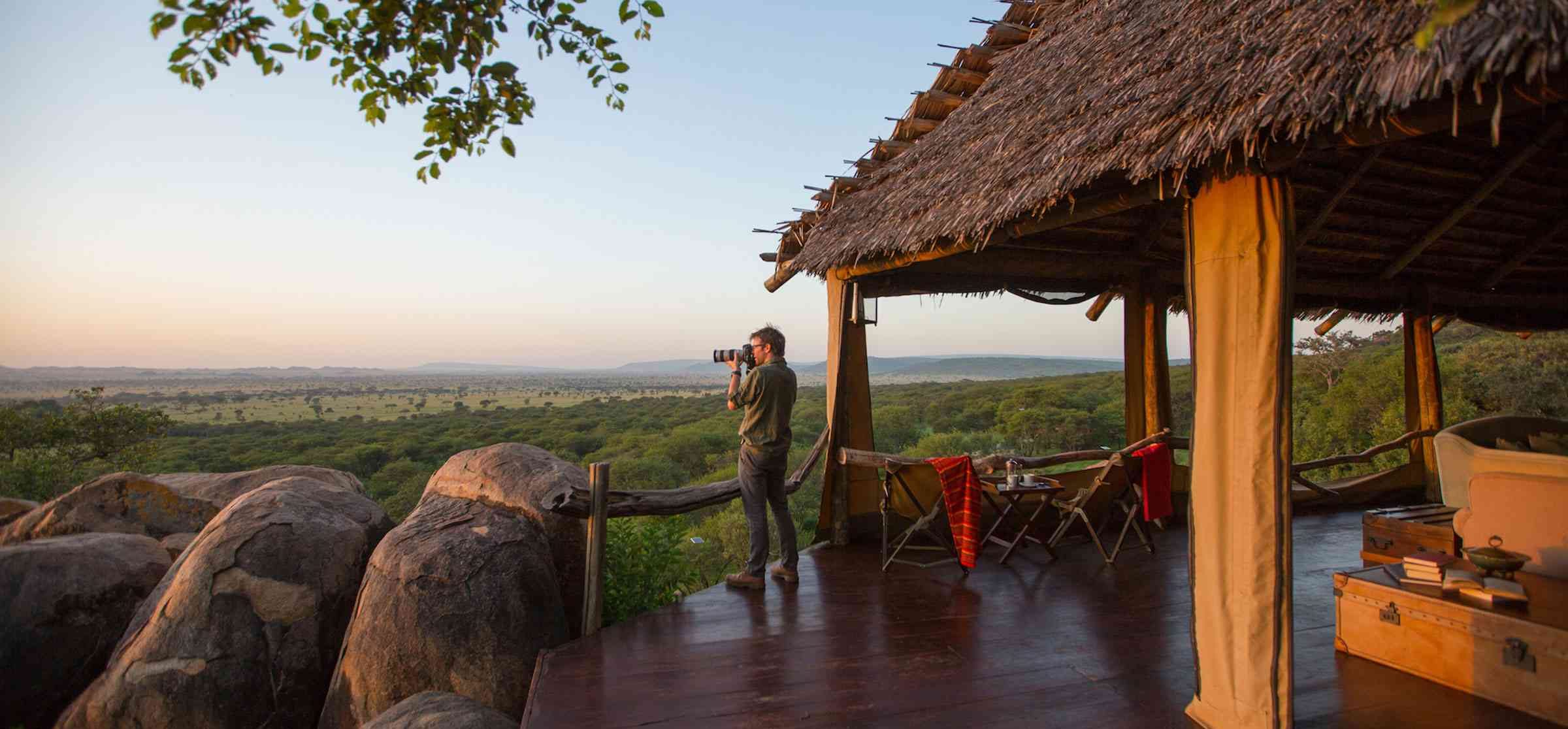
Serengeti National Park covers 14,763 square kilometres of open savannah, kopje (granite outcrop) habitat, riverine forest, and seasonal wetland — Tanzania’s largest national park and one of the world’s most important protected ecosystems.
The park’s wildlife population is extraordinary in both diversity and density: the Big Five are all present in significant numbers, cheetahs inhabit the central plains in one of Africa’s highest-density cheetah populations, African wild dog packs roam the western corridor, Nile crocodiles patrol the Mara and Grumeti rivers, and over 500 bird species inhabit the park’s varied habitats.
But the Serengeti’s defining ecological event is the Great Wildebeest Migration — the movement of approximately 1.5 to 2 million wildebeest alongside hundreds of thousands of Burchell’s zebra and Thomson’s gazelle in a continuous clockwise circuit across the Serengeti–Masai Mara ecosystem driven by seasonal rainfall and grass growth.
The migration is not a single event but a year-round process with distinct phases: the calving season on the southern Serengeti in January–February, northward movement through the central and western Serengeti in March–June, the dramatic Mara and Grumeti River crossings in July–October, and the return south in November–December. Whatever time of year you visit, some phase of the migration is occurring.
Accommodation Options: – Luxury: &Beyond Klein’s Camp, Four Seasons Serengeti – Mid-range: Serengeti Angata Camp, Serengeti Mawe Tented Camp – Budget: Zawadi Serengeti Camp, Kogatende Serengeti Green Camp
Meals: Breakfast, Lunch, Dinner
Day 4: Full Day in Serengeti National Park — Big Five, Migration, and Open Plain Drama
A full day in the Serengeti begins before dawn — the best Serengeti game drives start in the cool pre-sunrise hour when nocturnal predators are finishing their hunts and diurnal species are beginning to move. Lions are often found on or near kills in the early light, draped over rocks or lying in the open before the sun pushes them into shade. Leopards retreat to tree branches as daylight intensifies.
Cheetahs — the most diurnal of Africa’s large cats — begin scanning the open plains from elevated termite mounds as visibility improves. And the wildebeest herds, which move restlessly through the night, begin their morning grazing as the sun climbs.
Your expert Hail Tours guide knows the Serengeti’s seasonal patterns, resident pride territories, and the specific areas most productive for each species at different times of year. The Serengeti is large enough that two days allow meaningful coverage of different sectors — central Seronera for resident lion prides and the kopje granite outcrops where leopards regularly rest; the western corridor for wildebeest river crossings at the Grumeti River; and the northern Serengeti approaching the Kenyan border for the most dramatic concentrations of the migration in peak season.
Wildlife encountered in a full Serengeti day typically includes lion, cheetah, elephant, buffalo, Masai giraffe, wildebeest, zebra, topi, impala, Grant’s gazelle, Thomson’s gazelle, warthog, olive baboon, vervet monkey, banded mongoose, spotted hyena, black-backed jackal, and silver-backed jackal — plus a bird list that can reach 80–100 species in a productive day.
Black rhinoceros occasionally cross from Ngorongoro into the southern Serengeti, and African wild dog sightings, while rare, are possible in the western corridor. For our dedicated Serengeti itinerary, the 4 Days Serengeti National Park Safari offers a focused Serengeti-only option.
Accommodation: As Day 3 Meals: Breakfast, Lunch, Dinner
Day 5: Serengeti Walking Safari, Hot Air Balloon Option & Maasai Village Visit
Day 5 expands the Serengeti experience beyond vehicle-based game drives into three dimensions that reveal completely different aspects of this extraordinary ecosystem.
The Serengeti hot air balloon safari — available as an optional addition — begins before dawn with a pre-sunrise flight above the plains, drifting silently over wildebeest herds and lion prides in the early light from an altitude of 200–400 metres.
The silence, the scale, and the quality of light at Serengeti sunrise from a balloon are among East Africa’s most extraordinary sensory experiences, and the traditional champagne bush breakfast served in the open plains after landing is one of Tanzania safari travel’s great traditions.
For those who prefer ground level, a guided walking safari with an armed ranger guide delivers an entirely different relationship with the Serengeti — tracking animals at ground level, learning to read prints and dung, identifying plant species by touch and smell, and experiencing the profound quiet of walking through African bush with expert naturalists.
The walking safari reveals the Serengeti’s smaller dimensions — insects, reptiles, smaller mammals, and birds invisible from a vehicle — that together constitute the ecological foundation supporting the large mammals that dominate the game drive experience.
The afternoon Maasai village community walk connects the wildlife landscape to its human context. The Maasai pastoralists whose cattle-herding culture has coexisted with Serengeti’s wildlife for centuries explain their traditional relationship with wild animals — the complex negotiation between livestock protection and wildlife tolerance that underlies the conservation success of the Serengeti ecosystem — while demonstrating traditional skills including fire-making, beadwork, and the adumu jumping dance.
Accommodation: As Day 3 Meals: Breakfast, Lunch, Dinner
Day 6: Serengeti — Early Morning Game Drive — Transfer to Ngorongoro Conservation Area
The final Serengeti morning begins with an early pre-breakfast game drive — a sunrise game drive through the Serengeti that catches nocturnal predators before they rest, and often produces the day’s best big-cat sightings.
After brunch at camp, the route heads east toward Ngorongoro Conservation Area, climbing back through the highland forest zone as the Serengeti plains disappear behind you and the volcanic crater landscape of the Ngorongoro highlands emerges.
Ngorongoro Conservation Area covers 809,440 hectares of highland savannah, montane forest, and volcanic landscape — a UNESCO World Heritage Site that the conservation world often calls the “Eighth Wonder of the Natural World” for good reason.
The Conservation Area encompasses not just the famous Ngorongoro Crater but also the Olduvai Gorge (Oldupai Gorge) paleoanthropology site, several additional volcanic craters, the Empakaai Crater lake, and a vast highland plateau where Maasai pastoralists still live and graze their cattle alongside wildlife in the world’s most successful integrated human-wildlife land use model.
The evening drive to your lodge on the crater rim provides the first view down into the caldera — a 600-metre vertical drop to the crater floor below, 20 kilometres across, containing one of Africa’s most extraordinary concentrations of wildlife. Tomorrow’s descent promises encounters that few other wildlife destinations on earth can match.
Accommodation Options: – Luxury: Neptune Ngorongoro Luxury Lodge, Gibb’s Farm – Mid-range: Ngorongoro Farm House, Kitela Lodge – Budget: Ngorongoro Rhino Lodge, Crater Forest Tented Camp
Meals: Breakfast, Lunch, Dinner
Day 7: Ngorongoro Crater Floor Game Drive — Transfer to Lake Eyasi
The world’s largest intact volcanic caldera awaits on Day 7. The Ngorongoro Crater descends 600 metres from its rim to a 260-square-kilometre floor that functions as a natural enclosed arena — one where the steep crater walls prevent most wildlife from leaving and where permanent water sources in Lake Magadi and several seasonal streams support year-round residence of approximately 25,000 large animals.
The descent to the crater floor by 4×4 is itself a dramatic experience — a winding track through cloud forest on the crater wall, emerging onto the open grassland floor as the full scale of the caldera becomes apparent from inside it.
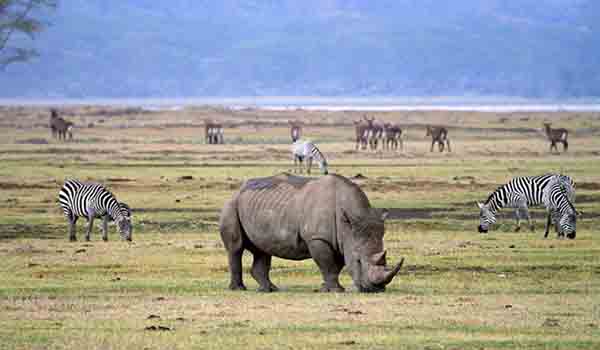
What you see on the crater floor is consistently extraordinary: the Ngorongoro lion population is the densest in Africa relative to area; black rhinoceros — Tanzania’s most endangered large mammal — are present in numbers that make Ngorongoro one of Africa’s best places to see them in the wild; Ngorongoro elephant bulls are among the largest-tusked elephants in East Africa, old males who carry enormous ivory that has been protected from poachers by the crater’s topographical barriers.
Cape buffalo graze in herds of hundreds. Spotted hyena are present in extraordinary numbers — the crater’s hyena clan is one of the world’s most studied, and its members are habituated enough to vehicle presence to allow close-range behavioural observation that would be impossible in less intensively visited wildlife areas.
Cheetahs, leopards, serval cats, Masai giraffe, wildebeest, zebra, flamingo, and over 500 recorded bird species round out a crater wildlife list that delivers more species per hour of game driving than almost any other location in Africa. A hot picnic lunch served on the crater floor — often with buffalo and elephant visible from the lunch spot — is one of Tanzania safari travel’s great pleasures.
After returning to the rim in the afternoon, the route descends to Lake Eyasi in the Rift Valley below — a 1–2 hour drive that drops from the cool highlands to the warmer lake basin where your final overnight accommodation sits at the edge of the lake.
Accommodation Options: – Luxury: Ziwani Lodge – Mid-range: Lake Eyasi Safari Lodge, Sonayi Safari Lodge
Meals: Breakfast, Lunch, Dinner
Day 8: Hadzabe Hunter-Gatherer Experience at Lake Eyasi — Return to Arusha
The final day of the 8-day Tanzania Northern Circuit safari delivers its most culturally distinctive experience: a morning with the Hadzabe (Hadza) at Lake Eyasi — one of the world’s last genuinely intact hunter-gatherer communities, living in the forested hills and scrubland surrounding the lake in a lifestyle that predates agriculture by tens of thousands of years.
Lake Eyasi itself is a remarkable natural feature — the largest water body in the Arusha region, a shallow alkaline soda lake sitting at the southern boundary of the Serengeti ecosystem and directly southwest of Ngorongoro.
Its alkaline chemistry supports vast concentrations of lesser flamingo alongside waterfowl, waders, and the fishing communities of the lake’s eastern shore who share this resource with the Hadzabe and wildlife in a complex, long-established relationship.
The Hadzabe morning encounter begins before dawn when your guide takes you to join a Hadza hunting party. The Hadzabe hunt using traditional bows and arrow technology unchanged for millennia, reading animal tracks, bird behaviour, and vegetation patterns with a precision that reflects thousands of years of accumulated ecological knowledge.
They speak Hadzane — a unique click language linguistically unrelated to any other language family in the world — and maintain their cultural independence through an intimate relationship with the Lake Eyasi ecosystem that sustains them through hunting game, gathering wild honey, and collecting roots, berries, and wild fruits.
An afternoon visit to the Datoga community — a Nilotic pastoralist and metalworking tribe living adjacent to the Hadzabe — provides instructive cultural contrast: the Datoga are skilled blacksmiths who produce arrowheads, knives, and jewellery traded throughout the region using traditional iron-smelting techniques.
The juxtaposition of the Hadzabe’s hunter-gatherer technology and the Datoga’s metalworking sophistication — two completely different adaptive strategies for life in the same landscape — is one of Tanzania’s most thought-provoking cultural encounters.
After the Lake Eyasi morning, the route returns northeast to Arusha Town for a farewell lunch before the transfer to Kilimanjaro International Airport — completing one of Tanzania’s most comprehensive and rewarding eight-day safari circuits. For our 7 Days Tanzania Wildlife Safari and 9 Days Tanzania Wildlife Safari options, visit our Tanzania safaris page.
Meals: Breakfast, Lunch
End of the 8 Days Tanzania Safari.
What Is Included in the 8 Days Tanzania Safari Package
- 7 nights’ accommodationin comfortable safari lodges and tented camps at your chosen tier — full board throughout
- Private 4×4 safari vehiclewith game-viewing roof hatch throughout all game drives and transfers
- Professional English-speaking driver-guidewith specialist Northern Circuit and Serengeti knowledge
- All national park and conservation area entry fees— Tarangire, Lake Manyara, Serengeti, Ngorongoro, Lake Eyasi
- All game drives— Tarangire afternoon, Lake Manyara lake shore, Serengeti Days 4–6, Ngorongoro crater floor
- Ngorongoro crater descent fees— vehicle and guide fees for crater floor access
- Lake Eyasi Hadzabe and Datoga cultural programme fees
- Hotel pick-up and drop-offat Arusha
- Bottled waterthroughout all game drives and road transfers
- Driver allowances and fuel charges
- All applicable Tanzanian government taxes and park levies
What Is Not Included
- Domestic and international airfares to and from Kilimanjaro International Airport
- Tanzania visa fees — USD $50 for most nationalities (e-visa available at evisa.go.tz)
- Travel and medical insurance — comprehensive cover including medical evacuation is essential
- Arusha hotel accommodation on the eve and final night of the safari (available on request)
- Optional activities — Serengeti hot air balloon safari(available at additional cost; advance booking essential), boat rides, bicycle hire
- Personal expenses: tips, laundry, telephone calls, beverages, cigarettes, and souvenir shopping
- Tips for guides and lodge staff (USD $10–$20 per day per guide is standard practice)
Best Time for a Tanzania Northern Circuit Safari
June to October (dry season) is the classic best time for a Tanzania wildlife safari on the Northern Circuit. Shorter vegetation, animals concentrated at water sources, and the peak of the Serengeti’s Mara River crossing season between July and October create the most consistently productive game-viewing conditions of the year. Ngorongoro and Tarangire are excellent throughout this period.
January and February deliver the extraordinary Serengeti calving season on the southern plains — half a million wildebeest calves born within weeks, with cheetah, lion, and hyena hunting intensively among the newborns in one of nature’s most dramatic predator-prey spectacles. This period is also one of the year’s best for Tarangire elephant sightings as herds return from seasonal dispersal.
The wet season from March to May and October to November brings fewer tourists, lower accommodation prices, lush green landscapes, and exceptional birdwatching as Eurasian migratory species are present and resident breeding birds are at peak activity. Lake Manyara and Lake Eyasi’s flamingo populations are at their most spectacular after rainfall.
Tanzania Game Drive Rules and Guidelines
All visitors to Tanzania’s national parks are required to follow TANAPA (Tanzania National Parks Authority) and NCAA (Ngorongoro Conservation Area Authority) regulations. Your guide is responsible for compliance, but understanding these rules helps you get the most from every game drive experience.
Stay exclusively on designated tracks — off-road driving is strictly prohibited in all Tanzanian national parks. Keep voices low at all times when near wildlife; noise disrupts natural behaviour and reduces the quality of your encounter.
Never feed wildlife under any circumstances. Do not exit the vehicle unless your guide explicitly confirms it is safe — lions, buffalo, elephants, and hippos all represent genuine danger to people on foot in uncontrolled situations. Do not litter; carry all waste back to your vehicle and camp.
Respect posted speed limits within all park boundaries. Do not use flash photography near nocturnal or sensitive species. Follow your guide and ranger instructions immediately and without argument.
Tanzania Safari Packing List — What to Bring
Pack neutral, earth-toned clothing throughout — khaki, olive, tan, and brown work across all five destinations and are preferable to white or bright colours that disturb wildlife. Long-sleeved shirts and trousers are recommended for evening hours when insects are most active, particularly at Lake Manyara and Lake Eyasi.
A warm layer or fleece is essential for Ngorongoro — the crater rim sits above 2,300 metres and early mornings are genuinely cold. A lightweight waterproof jacket covers the afternoon rain showers common in the highland areas.
Comfortable closed-toe walking shoes are needed for the Lake Eyasi morning walk with the Hadzabe and any walking safari activities in the Serengeti.
Sturdy sandals or camp shoes work for lodge evenings and non-trekking days. A wide-brimmed hat and high-SPF sunscreen are essential for the open-roof game drive days at Serengeti and Ngorongoro where sun exposure over multiple hours is significant.
Quality binoculars (8×42 recommended) are among the most important items you can bring — essential for the distances involved in Serengeti game viewing. A camera with a telephoto lens (400mm minimum for serious wildlife photography) is needed for game-drive distances; a faster standard zoom (70–200mm) works better inside the forest habitats.
Bring multiple memory cards and spare batteries. DEET-based insect repellent is essential at all camps. A reusable water bottle supplements the bottled water provided.
Book Your 8 Days Tanzania Safari with Hail Tours Uganda
Hail Tours Uganda designs and operates 8-day Tanzania Northern Circuit safaris for individuals, couples, families, and small groups across all budget levels. Our guides are Northern Circuit specialists with deep seasonal knowledge of the Serengeti migration, Ngorongoro crater ecology, and Tarangire’s elephant movements — expertise that consistently converts good game drives into great ones.
Contact Hail Tours Uganda today to confirm availability, discuss your preferred accommodation tier and travel dates, and receive a personalised quotation. Visit our Tanzania Safaris overview page for the full range of Tanzanian itineraries available, and our Uganda Safari Itinerary Price Guide for comparative East Africa pricing.
Related Tours You May Find Useful
- 4 Days Serengeti National Park Safari
- 3 Days Ngorongoro Crater Wildlife Safari
- 5 Days Tanzania Wildlife Tour — Northern Circuit
- 5 Days Serengeti and Ngorongoro Safari
- 5 Days Masai Mara and Lake Naivasha
- 6 Days Kilimanjaro and Gorilla Safari
- 7 Days Tanzania Wildlife Safari
- 7 Days Luxury Tanzania Safari
- 7 Days Selous, Mikumi and Ruaha Safari
- 8 Days Tanzania Budget Safari
- 9 Days Tanzania Wildlife Safari
- 10 Days Best of Tanzania Safari
- 14 Days Tanzania Safari and Zanzibar Beach
- 4 Days Masai Mara Safari — Kenya Tanzania Circuit
- 3 Days Maasai Mara Safari — Kenya
- 6 Days Masai Mara, Lake Nakuru and Amboseli Safari
- 7 Days Best of Kenya Safari
- 8 Days Kenya Big Five Safari
- 11 Days Kenya and Tanzania Safari
- 7 Days Gorilla Trek and Wildebeest Migration
- 8 Days Rwanda Gorilla Trekking
- 7 Days Uganda Rwanda Wildlife Safari
- 7 Days Uganda Wildlife Safari
- 18 Days African Safari — Uganda, Kenya and Tanzania
- 10 Days Africa Safari — Uganda and Kenya
- Tanzania Safaris — All Available Packages
- Uganda Safari Itinerary Price Guide
- About Hail Tours Uganda