
Best Time to Visit Kenya for a Safari in 2026: Complete Season Guide
The best time to visit Kenya for a safari is during the dry season — June through October — when wildlife congregates around water sources, roads are in their best condition, and the world-famous wildebeest migration reaches its dramatic peak in the Maasai Mara. That said, every season in Kenya offers something extraordinary, and the “best” time ultimately depends on what you most want to experience.
Kenya is a year-round safari destination. Whether you want to watch thousands of wildebeest thunder across the Mara River, witness newborn calves taking their first steps on the Serengeti plains, spot flamingos turning Lake Nakuru pink at dawn, or climb Mount Kenya through misty highland forest, there is a right season for every experience.
This guide breaks down Kenya’s best travel months, what each season offers, which parks to visit when, and everything you need to plan a safari that matches your goals perfectly.
Understanding Kenya’s Two Safari Seasons
Like most East African safari destinations, Kenya’s climate is defined by two main seasons — dry and wet — each with distinct characteristics for wildlife viewing, road conditions, and crowd levels.
The Dry Season (June–October and December–February) Kenya’s dry season is widely considered the best time for Kenya wildlife safari. Vegetation thins out as water sources shrink, forcing wildlife to gather in predictable locations. Game viewing is at its most productive — predators are active, herds are concentrated, and long grass that obscures animals during the rains has receded. Roads through national parks are firm and navigable in standard 4×4 vehicles.
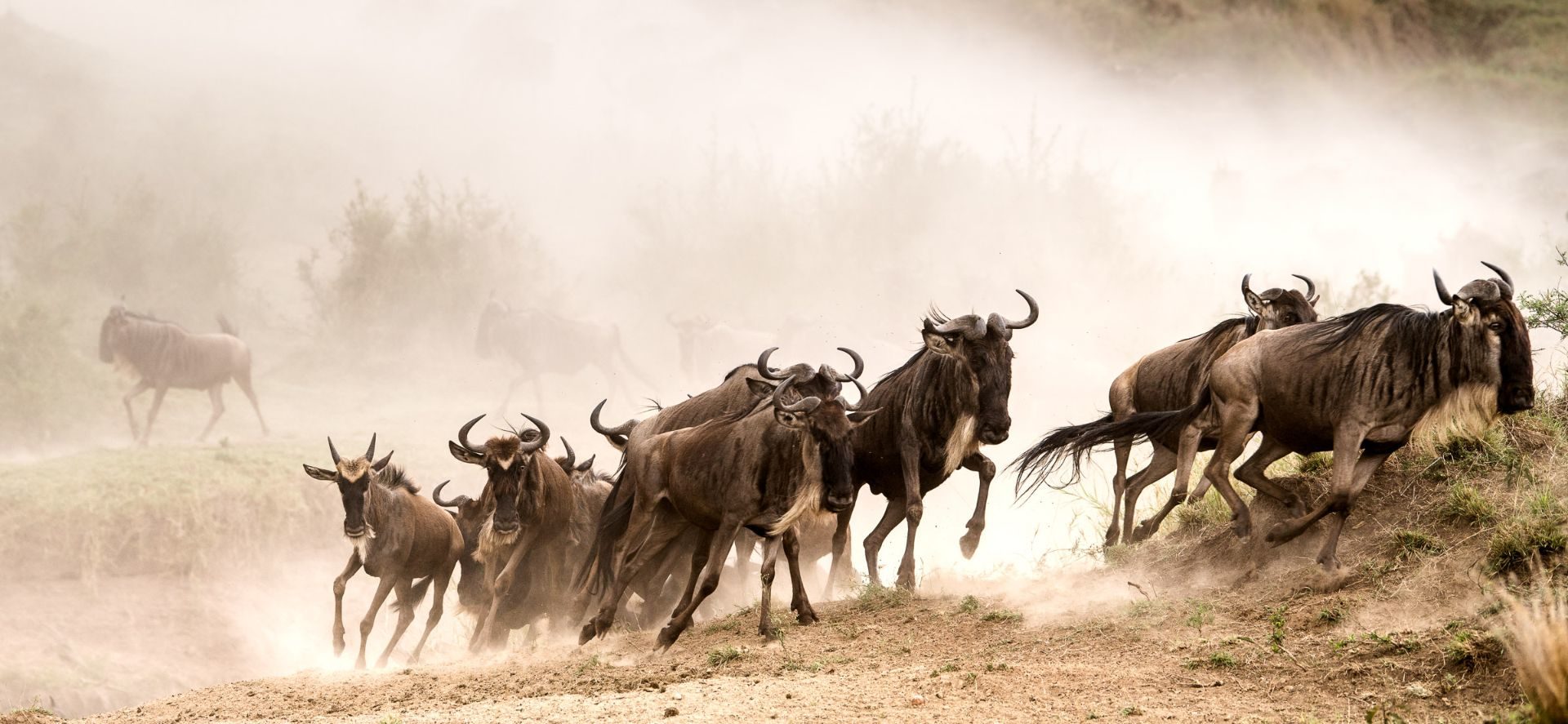
The dry season is also when the wildebeest migration — arguably the greatest wildlife spectacle on earth — reaches Kenya’s Maasai Mara, making July through October among the most sought-after safari months in all of Africa.
The Wet Season (March–May and November) Kenya’s long rains fall from March to May; short rains occur in November. These months bring lush, green landscapes, fewer tourists, lower accommodation rates, and some of the continent’s best birdwatching as migratory species arrive.
Game drives are still productive, though finding wildlife requires more patience as animals disperse across well-watered terrain. Some remote park roads become impassable during heavy rain.
Best Time to Visit Kenya: Month-by-Month Breakdown
January and February — Calving Season
January and February are among Kenya’s most underrated safari months. These are the calving and birthing season for wildebeest — a time when the southern Serengeti and Maasai Mara ecosystem fills with thousands of newborn calves alongside the predators that follow them.
Watching lions, cheetahs, and hyenas hunt amid the chaos of a calving ground is one of Africa’s most raw and compelling wildlife experiences. Crowds are moderate, skies are mostly clear, and accommodation prices are reasonable.
Best parks in January–February: Maasai Mara, Amboseli, Tsavo, Lake Nakuru.
March, April, and May — Long Rains
These are Kenya’s quietest tourist months. Long rains from March through May mean greener landscapes, smaller crowds, and significantly lower lodge and camp rates — sometimes 20–30% below peak season prices. Birdwatching is exceptional, with resident species breeding and numerous migratory birds arriving.
Wildlife viewing is good for patient travellers willing to search harder. Some budget and mid-range camps close during April and May.
Best parks in March–May: Samburu, Meru, Amboseli (less affected by rain than western parks).
June — Start of Peak Season
June marks the beginning of Kenya’s peak safari season. The long rains end, wildebeest in the Serengeti begin their northward migration toward the Mara, and wildlife activity intensifies across all parks.
It is an excellent month to visit — the parks are green from the rains but increasingly accessible as the ground dries, and the wildebeest migration is building momentum.
Best parks in June: Maasai Mara, Tsavo, Amboseli, Lake Nakuru.
July, August, and September — Peak Season and Migration
July to September are the very best months to visit Kenya, particularly for the wildebeest migration in Maasai Mara. This is when hundreds of thousands of wildebeest, accompanied by zebras and gazelles, cross the Mara River in dramatic surges that attract crocodiles, lions, and leopards.
The river crossing scenes — chaotic, violent, and utterly spectacular — are among the most photographed wildlife moments on earth.
All of Kenya’s major parks are excellent during these months. Skies are largely clear, roads are at their best, and game viewing is outstanding across the board.
The trade-off is crowds and higher prices: July through September sees Kenya’s highest tourist volumes and accommodation rates. Book lodges and camps as far in advance as possible — 6 to 12 months ahead for the most popular Mara camps.
Best parks in July–September: Maasai Mara (essential), Amboseli, Tsavo East and West, Samburu.
October — Tail End of Migration
October is an excellent transition month. The wildebeest migration begins its return south, but large herds remain in the Mara through mid-October. Northern parks like Samburu and Meru can be hot during October, with short rains beginning to arrive toward the end of the month. Wildlife viewing remains strong in most parks.
Best parks in October: Maasai Mara (until mid-October), Tsavo, Lake Nakuru.
November — Short Rains and Birdwatching
November’s short rains bring greener landscapes, dramatic skies, and the arrival of migratory bird species. This is one of the best months for Kenya birdwatching safaris, particularly in the Maasai Mara where species diversity peaks. Crowds drop sharply after the October school holiday rush, and accommodation prices fall. Wildlife viewing is good — not exceptional — as animals disperse into better-watered areas.
Best parks in November: Maasai Mara (birdwatching), Lake Nakuru, Amboseli.
December — Early Dry Season Returns
December straddles the short rains and the beginning of Kenya’s second dry window. Christmas and New Year bring a surge of visitors — prices peak again briefly — before January brings a quieter, more affordable period. Wildlife viewing improves through December as rains ease.
Best parks in December: Amboseli, Maasai Mara, Samburu, Tsavo.
The Wildebeest Migration: Kenya’s Greatest Wildlife Event
No discussion of the best time to visit Kenya is complete without addressing the wildebeest migration — one of the most extraordinary natural events on earth and the primary reason millions of visitors choose Kenya for their safari.
Approximately 1.5 million wildebeest, along with hundreds of thousands of zebras and gazelles, make a year-round circular migration between Tanzania’s Serengeti National Park and Kenya’s Maasai Mara National Reserve. The Mara portion of the migration — when wildebeest cross the crocodile-filled Mara River heading north — occurs primarily from July through mid-October.
July to October is therefore the single most important travel window for anyone whose primary goal is witnessing the migration. The river crossings are unpredictable (wildebeest do not cross on schedule), so allowing at least 3–4 days at the Mara gives you the best chance of witnessing this legendary spectacle.
January to February offers the calving season in the southern Serengeti — technically across the border in Tanzania, though Kenya-based safaris can combine both destinations.

Best National Parks to Visit in Kenya and When to Go
Maasai Mara National Reserve — Best: July to October Kenya’s most famous wildlife destination. The Mara sits in Narok County and covers 1,510 square kilometres of sweeping savanna and riverine forest.
Beyond wildebeest, the Mara protects lions, leopards, cheetahs, elephants, giraffes, zebras, buffaloes, and over 450 bird species. Birdwatching in the Mara is best from November to April, when migratory species join resident populations. The Mara is Kenya’s most visited park — book accommodation far in advance for peak season.
Amboseli National Park — Best: June to October, January to February Amboseli is famous for its large elephant herds viewed against the dramatic backdrop of Mount Kilimanjaro.
The dry seasons concentrate elephants and other wildlife around the park’s permanent swamps, creating exceptional game viewing. Amboseli is less affected by rain than western parks, making it accessible year-round.
Tsavo East and Tsavo West National Parks — Best: June to September Together forming one of Africa’s largest protected areas, the Tsavo parks are known for their famous “red elephants” — bulls coated in the region’s distinctive red laterite soil — as well as lions, leopards, buffaloes, and the dramatic Lugard’s Falls. Less crowded than the Mara, Tsavo offers a wilder, more remote feel.
Lake Nakuru National Park — Best: Year-round Lake Nakuru is one of East Africa’s most important birding sites, home to flamingos, pelicans, and over 400 bird species alongside rhinos, leopards, lions, zebras, and buffaloes. The park is excellent year-round, though the flamingo population fluctuates with lake water levels.
Samburu National Reserve — Best: June to October Samburu sits in Kenya’s arid north and offers a distinctly different safari experience — unique northern species like the Grevy’s zebra, reticulated giraffe, Beisa oryx, and Somali ostrich alongside the standard East African wildlife. Hot and dry in October but excellent for game viewing during the broader dry season.
Nairobi National Park — Best: Year-round The world’s only national park within a capital city. Lions, leopards, rhinos, giraffes, and buffaloes roam against a backdrop of Nairobi’s skyline — a surreal and uniquely Kenyan experience accessible on a half-day from the city.
Kenya Birdwatching: When and Where
Kenya is one of Africa’s premier birdwatching destinations, with over 1,100 recorded species across diverse habitats from highland forest to arid scrubland to coastal wetlands.
The best birdwatching months are November to April, when long-distance migratory species arrive from Europe and Central Asia to join Kenya’s extraordinary resident bird communities.
Key birding sites include the Maasai Mara (Kori bustards, ostriches, secretary birds, and dozens of raptors), Lake Nakuru (flamingos and water birds), Arabuko-Sokoke Forest on the coast (rare coastal forest species), and the Kakamega Forest in western Kenya (central African species found nowhere else in East Africa).
Kenya Beyond Safari: Other Experiences by Season
Beach and Coast (Year-round, Best: January–March and July–August) Kenya’s Indian Ocean coastline — stretching from Lamu in the north to Diani in the south — offers white sand beaches, coral reefs, and historic Swahili architecture.
Key beach destinations include Diani Beach, Watamu, Malindi, Kilifi, and the magical Lamu Island, renowned for its 13th-century architecture, dhow sailing, and near-total absence of motor vehicles.
Mount Kenya Climbing (Best: January–February and July–September) Africa’s second-highest peak is best climbed during Kenya’s dry seasons. January–February and July–September offer the clearest conditions and the most stable weather for the ascent to Point Lenana (4,985m) and the technical peaks above.
Hot Air Ballooning over the Mara (Best: July–October) Hot air balloon safaris over the Maasai Mara at dawn are one of Kenya’s most iconic luxury experiences. Available year-round but most popular and visually spectacular during the peak migration months when the savanna is full of wildlife.
Cultural Experiences (Year-round) Kenya’s cultural heritage — particularly the traditions of the Maasai people in the south and the Samburu in the north — can be experienced year-round through community visits, cultural manyatta stays, and beadwork and warrior ceremonies.
Mombasa offers a deeply layered Swahili cultural experience: explore Fort Jesus, spice markets, and the old town’s centuries-old architecture.
Kenya Safari Seasonal Comparison Table
| Month | Season | Wildlife Viewing | Crowds | Prices |
|---|---|---|---|---|
| January–February | Dry (calving) | Excellent | Moderate | Mid-range |
| March–May | Long rains | Good | Low | Budget-friendly |
| June | Dry begins | Very good | Moderate | Mid-range |
| July–October | Peak dry / migration | Outstanding | High | Premium |
| November | Short rains | Good | Low | Budget-friendly |
| December | Transitional | Very good | High (holidays) | Premium |
What to Pack for a Kenya Safari
Packing correctly for Kenya safari travel makes a significant difference to your comfort and safety:
- Valid passport and visa documents (Uganda and Kenya share the East Africa Tourist Visa at $100)
- Neutral-coloured safari clothing — khaki, olive, beige (avoid blue and black which attract tsetse flies)
- Long-sleeved shirts and trousers for sun and insect protection, especially at dawn and dusk game drives
- Sturdy hiking boots or walking shoes for bush walks and any Mount Kenya activities
- Light fleece or jacket — mornings and evenings in the highlands and during the Mara’s peak season can be cool
- Sunscreen (high SPF) and a wide-brim safari hat
- Insect repellent with DEET — essential for malaria prevention
- Binoculars — non-negotiable for game drives and birdwatching
- Quality camera with zoom lens and extra memory cards
- Sunglasses with UV protection
- First aid kit with personal medications and antimalarial tablets
FAQs – Best Time to Visit Kenya
What is the absolute best time to visit Kenya for wildlife? July to October is the best overall period — peak dry season coincides with the wildebeest migration in the Maasai Mara and excellent game viewing across all major parks. For calving season and fewer crowds, January to February is an outstanding alternative.
Is Kenya good to visit in the rainy season? Yes, for the right traveller. The rainy season (March–May and November) offers lush scenery, exceptional birdwatching, smaller crowds, and lower prices. Wildlife viewing is good but requires more patience. Roads in some remote parks can be challenging.
Do I need a visa to visit Kenya? Most international visitors require an East Africa Tourist Visa ($100 USD), valid for Kenya, Uganda, and Rwanda. Many nationalities can apply online before travel. Check your specific passport requirements before booking.
Is Kenya safe for safari tourists? Kenya’s major national parks and tourist areas are generally very safe for international visitors. As with any destination, travellers should stay informed about current conditions, follow their operator’s guidance, and take standard travel precautions.
Plan Your Kenya Safari with Confidence
Kenya rewards those who plan ahead. Whether your dream is watching wildebeest river crossings in the Mara, photographing elephants against Kilimanjaro in Amboseli, or discovering the quiet magic of Lamu Island’s ancient streets, Kenya delivers extraordinary experiences in every season.
The best time to visit Kenya for your specific safari depends on your priorities — and the right tour operator will help you match your dates, destinations, and budget to create an itinerary that brings those priorities to life.
Book gorilla permits and peak season Mara camps well in advance, travel with a licensed guide, and come with an open mind. Kenya will take care of the rest.