Intriguing 10 Facts about Silverback Gorilla Strength
Silverback gorilla strength has fascinated scientists, wildlife enthusiasts, and internet debaters alike for decades. Just how strong is a silverback gorilla compared to a human, how does gorilla bite force stack up against a lion’s, and what actually makes these animals such genuine powerhouses of the primate world?
This guide breaks down everything worth knowing about silverback strength — from punch force and grip power to how their raw power compares to elite human bodybuilders and powerlifters.
Silverback gorillas rank among the most powerful primates on the planet, with physical capabilities that far exceed those of an average human — including professional bodybuilders. Let’s explore what actually drives silverback gorilla power, how it compares to human strength, and the biological factors behind it.
What Makes a Silverback Gorilla So Strong?
Silverback muscles are a genuine marvel of evolution, built for survival in dense, rugged mountain terrain. An adult male silverback typically weighs between 135 and 200 kg (roughly 300–440 lbs), with arms and chest muscle mass that dwarf any human athlete’s. Dense bone structure provides a sturdy framework, while substantial body weight distributes force efficiently during climbs, charges, or confrontations with rivals.
This gorilla power doesn’t come from a gym — it’s forged naturally through daily life. Silverbacks spend hours climbing steep slopes, foraging for leaves and fruit, defending their troop, and asserting dominance over rival males.
Their arms, spanning up to 2.6 meters (8.5 feet) from fingertip to fingertip, let them swing from vines or pull down heavy branches with genuine ease. Gorilla anatomy strength stems from densely layered muscle tissue optimized for both sustained endurance and short, explosive bursts of power.
Unlike humans, who build strength primarily through resistance training, silverbacks develop theirs through constant physical demand. A young male challenges the troop leader through play-fighting as a juvenile, honing the exact skills that peak once he reaches full adulthood.
This natural, lifelong “training regimen” produces muscle that’s genuinely denser and more efficient than a human’s, making nearly every silverback movement a quiet display of raw power.
Physical Attributes of Silverback Gorillas
Silverbacks weigh roughly 300 to 440 pounds and can stand up to six feet tall when fully upright. Their bodies are large and remarkably muscular in equal measure. Key physical attributes include:
Muscle composition: Silverbacks carry a high proportion of muscle mass relative to body fat, contributing directly to their immense strength. Their muscle fiber is adapted for raw power rather than sustained endurance, enabling short bursts of genuinely intense physical activity.
Bone structure: Gorilla bones are notably thick and dense, providing a sturdy skeletal framework that supports their muscular frame and helps them withstand the physical stresses of climbing and foraging.
Strong jaws and teeth: Powerful jaws and large molars are built specifically for grinding tough, fibrous vegetation, allowing silverbacks to process a wide range of plant material — and their bite strength significantly exceeds a human’s, covered in detail below. Our full guide on silverback gorilla weight breaks down these physical measurements in even more depth.

How Silverback Gorilla Strength Is Actually Measured
Silverback strength shows up through several observable behaviors in the wild:
Chest beating — the single most iconic display of gorilla power, where a silverback strikes his chest with cupped hands, producing sounds audible over remarkably long distances. This is fundamentally a show of dominance, intimidating rivals without physical contact.
Physical confrontation — when genuinely threatened, silverbacks may wrestle or push rivals, contests that typically establish dominance without serious injury on either side, while still clearly demonstrating raw strength.
Foraging ability — silverbacks routinely bend branches and pull down foliage well beyond what most animals their size could manage, a quiet but consistent demonstration of everyday gorilla physical strength.
Silverback Gorilla Bite Force and Grip Power
Silverback gorilla bite force is commonly estimated at around 1,300 psi (pounds per square inch) — stronger than a lion’s roughly 1,000 psi, and far beyond the average human’s roughly 160–162 psi. Trained, elite human jaw strength can reach 300–400 psi under ideal conditions, but even that falls well short of a gorilla’s bite.
Massive canines, up to 5 cm (2 inches) long, let a silverback puncture tough hide or crack open nuts with real precision.
Equally impressive is gorilla grip strength. Silverbacks cling to vines while supporting their full body weight, or grip rivals firmly during dominance displays. Tests on captive gorillas have recorded grip forces well beyond typical human handgrip strength, which tops out around 50–100 kg even among trained individuals.
This combination of bite force and grip strength makes a silverback genuinely formidable — a single bite deters predators like leopards, while a secure grip keeps infants safe during travel through the forest canopy.
How Strong Is a Silverback Gorilla Compared to a Human?
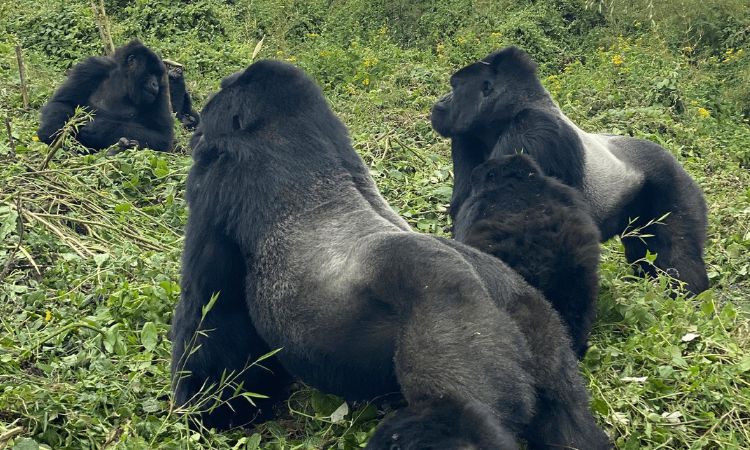
The silverback vs. human strength comparison is genuinely striking. Commonly cited estimates suggest a fully grown silverback could move roughly 1,800 pounds (approximately 815 kg) of dead weight under ideal conditions — worth noting upfront that this figure comes from widely repeated estimates rather than rigorously documented laboratory testing, since formally measuring a wild silverback’s maximum lift isn’t exactly a practical research project.
By comparison, the strongest human powerlifters manage 200–400 kg (440–880 lbs) in competition deadlifts, with world records only occasionally approaching 500 kg under perfect conditions.
Quick Comparison:
| Attribute | Silverback Gorilla | Human (Elite Athlete) |
|---|---|---|
| Estimated Lifting Capacity | Up to ~1,800 lbs (~815 kg) | 440–1,100 lbs (200–500 kg) |
| Body Weight | 300–440 lbs (135–200 kg) | 176–265 lbs (80–120 kg) |
| Strength Multiplier | Roughly 4–10x average human | Baseline |
Real-world observations back this up even without precise lab measurements: silverbacks have been documented bending metal bars in captivity, uprooting entire banana trees in the wild, and crushing thick bamboo stalks with apparent ease.
Imagine a human trying to snap a broomstick with bare hands, then multiply that force several times over — that gets you closer to genuine gorilla fighting power. A silverback’s muscle density lets it generate enormous force without needing bulkier overall size, and this power output actually outpaces even chimpanzees, their closest living relative.
Silverbacks vs. Human Bodybuilders
Comparing silverback strength to human bodybuilders highlights a few genuinely important distinctions:
Muscle mass and composition — a trained bodybuilder might reach 200–300 lbs, with muscle built primarily for aesthetics and symmetry. A silverback’s muscle mass, by contrast, is larger and considerably denser, built for raw functional power rather than visual definition.
Strength-to-weight ratio — silverbacks maintain a genuinely superior strength-to-weight ratio compared to even elite human bodybuilders, letting them perform tasks like lifting heavy branches or defending their troop with apparent ease that no human physique can match.
Natural vs. structured training — silverbacks never touch a barbell. Their strength is purely a product of natural selection and constant environmental demand — climbing, foraging, and social interaction shaping raw power over a lifetime without any gym equipment involved at all.
Silverback Gorilla vs. Grizzly Bear: Who’s Actually Stronger?
The silverback gorilla vs. grizzly bear matchup is a popular hypothetical debate, largely because both animals represent genuine apex-level strength within their own environments. Silverback gorillas weigh up to roughly 200 kg and are known for intelligence, agility, and formidable arm strength.
Grizzly bears, however, are considerably larger — often 270–360 kg — with massive claws and a jaw built specifically for predation rather than a plant-based diet.
In a purely hypothetical direct confrontation, the grizzly’s size, natural aggression, and predatory tools would likely give it the advantage. That said, gorillas rely far more on intimidation than actual combat and rarely engage in genuinely fatal fights even with rival males.
Both animals remain apex icons within their respective ecosystems, and any real-world encounter between the two would obviously never happen in nature, given they don’t share habitats.
The Role of Strength in Gorilla Troop Behavior
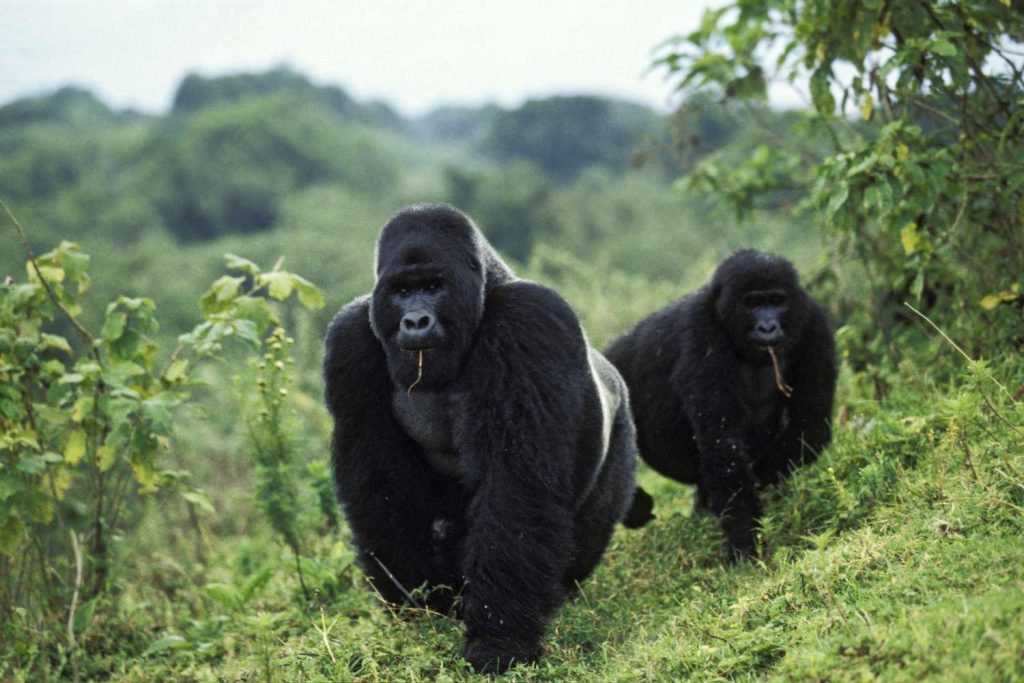
Strength is genuinely the cornerstone of silverback dominance. As troop leader, a silverback uses his physical power specifically to protect the group — females, juveniles, and infants — from external threats. Chest-beating, that thunderous display of cupped hands against the chest, can carry up to a kilometer through dense forest, intimidating rivals entirely without physical contact.
A full-speed charge through crashing vegetation asserts both mating rights and leadership status. Yet gorilla behavior reveals real nuance beyond pure aggression: silverbacks also gently carry infants, build a fresh nest with precisely bent branches every single night, and share food within the troop — genuine compassion running alongside raw might.
Within a troop of roughly 5–30 members, the silverback’s strength ensures overall group cohesion, with weaker males typically submitting through clear submissive gestures rather than risking direct confrontation. This balance of power and genuine care defines silverback leadership dynamics, extensively documented by researchers working in Rwanda’s Volcanoes National Park.
How Silverbacks Use Their Strength in the Wild
In the wild, gorilla strength shows up during genuinely critical moments. Fighting rival males involves powerful slaps, bites, and charges capable of toppling an opponent weighing nearly as much as the silverback himself — though these confrontations remain rare, since they’re intense enough to often decide troop control outright when they do happen.
Defending against predators like leopards calls on the same raw power — a charging silverback can incapacitate a threat with a single blow. Daily life demands strength too, clearing paths through genuinely impenetrable forest in habitats like Bwindi Impenetrable National Park in Uganda and Volcanoes National Park in Rwanda.
Foraging itself requires real strength — uprooting plants or stripping bark for nutrition — and in the Democratic Republic of Congo’s Virunga Mountains, silverbacks navigate genuinely steep terrain where raw power directly supports troop survival through difficult conditions.
The Evolutionary Origins of Gorilla Strength
Silverback strength traces directly back to gorillas’ evolutionary history as primarily herbivorous animals relying on tough, fibrous plant material. This dietary reality drove several key adaptations.
A high-fiber diet demands both a powerful digestive system and strong jaws, and gorillas have developed exactly the muscle strength needed to process this food efficiently over generations.
Social dynamics reinforce this too — since strength is directly tied to establishing troop dominance and protecting the group, physical prowess has remained under continuous evolutionary pressure throughout gorilla history.
Strength in Action: Real-World Comparisons
Bite force: A silverback’s bite is estimated around 1,300 psi — significantly stronger than a lion’s and roughly eight times a typical human’s average of about 160 psi, essential for breaking down tough plant material and serving as a genuine defensive mechanism when needed.
Lifting capability: Estimates suggest a silverback can move upward of 1,800 lbs, making them among the strongest terrestrial animals relative to body size anywhere on Earth. Professional human bodybuilders typically max out around 600–800 lbs in a squat or deadlift — an impressive human feat, but a clear demonstration of just how much raw lifting power separates the two.
Physical endurance and agility: While human bodybuilders often excel at structured endurance training, silverbacks demonstrate genuinely impressive natural agility and speed for their size, capable of climbing trees efficiently and moving quickly when foraging or evading a potential threat.
Can a Human Beat a Silverback Gorilla?
No — a human vs. gorilla fight simply isn’t a realistic contest. Even unarmed, a silverback’s muscle density, roughly 1,300 psi bite, and burst speeds up to 40 km/h (25 mph) overwhelm any individual person.
A single strike could fracture bone; historical accounts of poachers fleeing wild silverback encounters make this point clearly enough on their own.
Gorilla vs. human power genuinely isn’t close — human evolution optimized for intelligence and tool use, not brute physical force, and even trained MMA fighters or strongmen would be outmatched within seconds in a genuine confrontation.
The Science Behind Gorilla Strength
The biology behind gorilla strength comes down largely to muscle fiber composition — gorillas carry a higher proportion of fast-twitch muscle fibers built for explosive power, compared to the endurance-oriented slow-twitch fibers that dominate human muscle. Gorilla muscle tissue shows notably higher density per unit volume than human muscle.
Their plant-based diet — leaves, shoots, and fruit, with bamboo shoots carrying surprisingly high protein content — fuels this strength through remarkably efficient digestion, with fermentation in an oversized gut extracting nutrients well enough to support a massive frame without any meat in the diet at all.
Elevated testosterone levels in mature silverbacks support this growth further, and research suggests adaptations for high-altitude mountain life too, including a larger heart pumping oxygen more efficiently at elevation.
Fun Facts About Silverback Gorilla Strength
- A silverback’s arms are longer than its legs, spanning up to 2.6 meters for superior reach and climbing ability.
- Silverbacks can carry multiple troop members — females and infants combined — totaling well over 100 kg while still moving through the forest.
- Despite a 200 kg frame, silverbacks remain excellent climbers, scaling trees over 30 meters tall with genuine ease.
- Gorillas rarely fight to kill — chest-beating displays alone usually settle disputes without physical contact.
- A silverback’s heart can weigh up to 1 kg, an adaptation supporting oxygen demands at high-altitude mountain habitats.
- Silverbacks can reach speeds around 40 km/h in short bursts — genuinely outpacing Usain Bolt’s recorded top speed.
- Grip strength allows a silverback to hang upside down comfortably while feeding, a small but telling display of overall physical capability.
Silverback Strength and Gorilla Conservation
Silverback gorilla strength isn’t just a biological curiosity — it plays a genuine role in the species’ survival and ongoing conservation. Gorillas face real, persistent threats including habitat loss and poaching, and protecting them matters for maintaining both their population and the broader ecological balance of their habitat.
Role in ecosystems: Silverbacks contribute directly to their forest ecosystems through seed dispersal, with foraging habits that actively promote plant diversity throughout their range — genuinely important ecological work beyond their reputation for raw power.
Ecotourism and awareness: The sheer physical presence and strength of silverbacks has made them a genuine focal point for ecotourism, drawing visitors to parks and reserves across Uganda, Rwanda, and the DRC. Raising awareness of both their strength and the threats they face directly supports stronger conservation outcomes — our guide on how many mountain gorillas are left in the world covers exactly how this population recovery has unfolded.
Silverback gorillas are a genuine testament to the incredible adaptive power of the animal kingdom. Their strength, which surpasses even elite human bodybuilders in nearly every measurable respect, is a direct product of evolution and lifelong environmental adaptation rather than any structured training.
Understanding this strength highlights not just what makes silverbacks remarkable as individuals, but their broader importance within the ecosystems they inhabit — and why ongoing conservation work matters so much for ensuring future generations get to witness it firsthand.
Ready to see silverback strength up close, in person? Our 7 Days Uganda Primates Safari and Nkuringo Gorilla Trekking Tour both offer genuine encounters with wild silverback gorillas in their natural habitat.
FAQ: Silverback Gorilla Strength
How strong is a silverback gorilla punch? Estimates suggest a silverback’s strike could deliver well over 1,000 lbs of force — though gorillas rarely punch like humans do, relying instead on powerful slaps, shoves, and full-body tackles.
How strong is a silverback gorilla compared to a human? Roughly 4–10 times stronger than an average human in proportional terms, with vastly superior upper body strength used for climbing, defense, and asserting dominance.
How much can a silverback gorilla lift? Widely cited estimates suggest up to roughly 1,800 lbs (around 815 kg) — a figure based on observed behavior and comparative anatomy rather than formal laboratory testing.
Does a gorilla eat meat? No — gorillas are primarily herbivores, feeding on leaves, stems, fruit, and bamboo, with only very occasional, incidental insect consumption.
Would a human punch actually hurt a gorilla? Unlikely — a typical human punch would probably not cause real injury given a gorilla’s thick muscle mass, dense bones, and tough skin, though it could provoke a dangerous defensive reaction.
Why are gorillas so strong? Gorillas evolved for climbing, foraging, and defense within dense mountain forest. Their massive muscles, long arms, and genetics produce natural strength without any structured training.
Who’s stronger, a grizzly bear or a gorilla? A grizzly bear is generally larger, more aggressive, and likely stronger overall, with massive claws and a considerably higher bite force built for predation.
What is a silverback gorilla’s bite force? Approximately 1,300 psi — stronger than a lion’s, and capable of cracking tough bamboo and dense plant matter with ease.
Could a human beat a silverback gorilla in a fight? No — even the strongest human fighter would stand essentially no chance against a gorilla’s raw strength, speed, and endurance in a genuine physical confrontation.