
Top 12 Interesting Facts About Female Gorillas: Mating, Birth, Behaviour & More (2026)
Female gorillas are among the most fascinating and least discussed members of one of earth’s most intelligent primate families. While silverbacks command most of the attention in wildlife documentaries and safari conversations, it is the female gorilla — her social intelligence, maternal devotion, reproductive biology, and quiet leadership — that holds gorilla society together.
Understanding female gorillas is essential for anyone interested in gorilla trekking in Uganda, gorilla conservation, or the broader science of great ape behaviour.
This comprehensive guide covers the top 12 interesting facts about female gorillas — including their physical characteristics, mating behaviour, reproductive cycle, motherhood, social hierarchy, communication, diet, and role in the troop.
We also address the most frequently searched questions about female gorillas, from what a female gorilla is called to how female gorillas compare to male gorillas, and everything in between.
What Is a Female Gorilla Called?
One of the most common questions about these primates is: what is a female gorilla called? Unlike many other animals — where females have distinct names like “cow” for elephants or “doe” for deer — a female gorilla is simply called a female gorilla. There is no unique gendered term in common use.
However, in specific scientific and conservation contexts, female gorillas are sometimes referred to by their function in the group — as nursing females, immigrating females, or alpha females — or by individual names assigned by researchers for identification purposes.
In Uganda’s Bwindi Impenetrable Forest and Mgahinga Gorilla National Park, most habituated female gorillas are known by individual names given by the Uganda Wildlife Authority’s gorilla monitoring teams.
Female Gorilla Key Facts at a Glance
|
Feature |
Female Gorilla |
|
Scientific classification |
Genus Gorilla; mountain gorilla subspecies Gorilla beringei beringei |
|
Average weight |
70–90 kg (154–198 lbs) |
|
Average height (upright) |
~1.4 m (4.6 ft) |
|
Back colour |
Black (no silver patch) |
|
Sexual maturity |
8–10 years |
|
Gestation period |
~8.5 months (250 days) |
|
Inter-birth interval |
4–6 years |
|
Lifespan (wild) |
35–40 years |
|
Lifespan (captivity) |
Up to 50–60 years |
|
DNA shared with humans |
~98% |
Taxonomy: Which Species Are Female Gorillas?
Female gorillas belong to the genus Gorilla, comprising two species: the Western gorilla (Gorilla gorilla) and the Eastern gorilla (Gorilla beringei). For visitors interested in gorilla trekking in Uganda, the focus is on the mountain gorilla subspecies (Gorilla beringei beringei), found exclusively in Uganda’s Bwindi Impenetrable National Park and Mgahinga Gorilla National Park, as well as in Rwanda’s Volcanoes National Park and the Virunga Massif in the DRC.
The global mountain gorilla population has recovered to approximately 1,063–1,080 individuals as of 2025/2026 — with around 500 living in Uganda, making Uganda home to roughly half of all mountain gorillas on earth.
Female gorillas are central to this population’s recovery: their slow but steady reproductive cycle, combined with effective conservation and anti-poaching work, has driven the species’ gradual but meaningful increase in numbers.
All gorilla species share approximately 98% of their DNA with humans — a genetic proximity that makes observing female gorilla behaviour during gorilla trekking with Hail Tours Uganda a particularly profound and emotionally resonant wildlife experience.
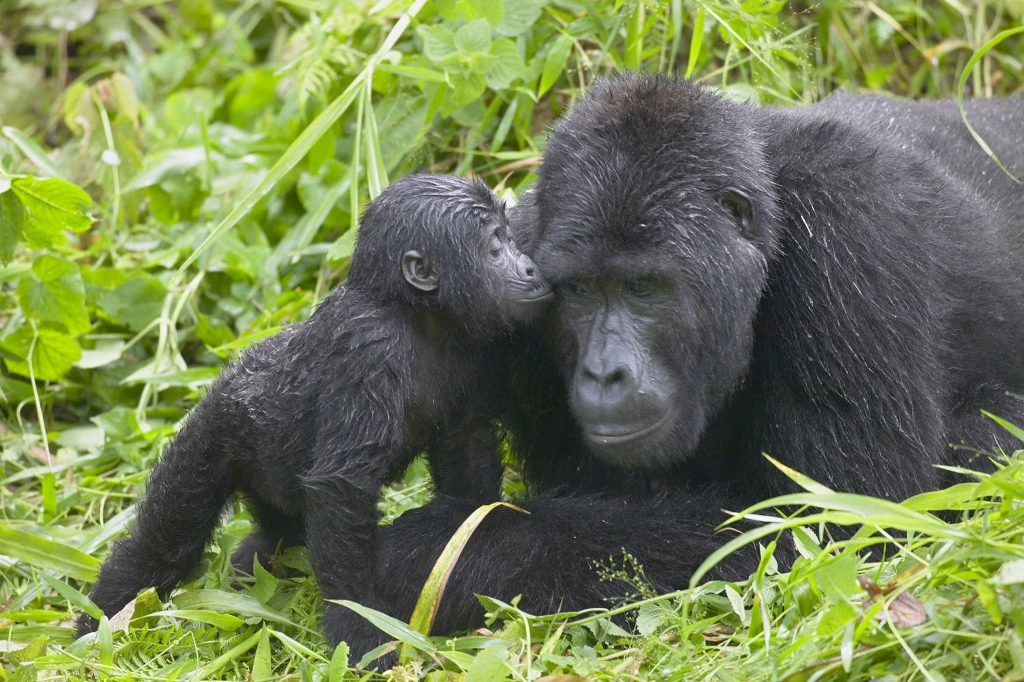
1. Physical Characteristics of Female Gorillas — Size, Build, and Appearance
Female gorilla size and weight represent the most immediately visible difference between the sexes. Sexual dimorphism in gorillas is among the most extreme of any living primate — a characteristic that evolution has maintained over millions of years.
An adult female gorilla weighs between 70 and 90 kilograms (150–200 lbs) — roughly half the mass of a mature silverback gorilla, who typically weighs 140–200 kg.
In height, a standing female gorilla reaches approximately 1.4 metres (4.6 feet), compared to 1.7 metres for adult males. Like all gorillas, females more commonly move on all fours (knuckle-walking) than standing upright.
How to tell a female gorilla from a male: The most reliable visual indicator is the absence of the silvery-grey saddle of hair that develops on the backs of males from approximately age 12 — the feature that gives dominant males the name “silverback.”
Female gorillas retain uniformly black fur throughout their lives, giving them a sleeker, more compact appearance.
Female skulls are smaller, with less pronounced brow ridges and sagittal crests (the bony ridge that anchors powerful jaw muscles in males).
Their broader pelvises are adapted for childbirth, and their arms — while enormously powerful — are proportioned for carrying infants rather than territorial dominance displays.
Despite being smaller, female gorillas are extraordinarily strong — capable of lifting several times their body weight and delivering powerful defensive strikes when protecting their young. Their build prioritises endurance, agility, and nurturing over raw physical dominance.
2. Female Gorilla Personality and Behaviour — The Emotional Core of the Troop
Female gorilla behaviour consistently reveals an emotional complexity and social intelligence that researchers describe as the “emotional core” of gorilla society.
Observers in both wild and captive settings note that female gorillas exhibit high levels of empathy — regularly comforting distressed group members through soft vocalisations, prolonged contact, and grooming.
Grooming behaviour in female gorillas serves as much more than hygiene — it is the social cement that reinforces alliances, reduces tension, and maintains the intricate web of relationships within the troop.
Females who groom each other frequently form the most stable and enduring bonds, and these bonds directly influence the group’s stability during periods of stress (such as silverback challenge or territory dispute).
Female gorilla social behaviour centres on cooperation rather than competition. Related females — sisters, mothers, and daughters — form sub-groups that share food and engage in “allomothering”: one female watches an infant while the mother forages, an arrangement that significantly increases infant survival rates. This cooperative childcare system is one of the most important adaptive advantages of gorilla social organisation.
When threatened — by a predator, an intruding male, or an external danger — female gorillas cooperate actively in defence, screaming and charging in unison to protect infants and juveniles. Their aggression in protective contexts can be formidable despite their generally non-confrontational temperament.
Female gorilla intelligence is well documented. Captive females like Koko — who learned over 1,000 American Sign Language signs and demonstrated cognitive abilities comparable to young children — exemplify the depth of great ape intelligence.
In the wild, female gorillas demonstrate foresight by navigating toward known food sources, managing infant welfare decisions, and mediating social conflicts within the troop.
3. The Life Cycle of Female Gorillas — From Infant to Elder
Female gorilla lifespan in the wild reaches approximately 35–40 years, with captive individuals living up to 50–60 years under managed care. The female gorilla life cycle unfolds through distinct stages:
Infancy (0–3 years): Total dependence on the mother. The infant clings to the mother’s belly for the first months, transitioning to back-riding as strength develops.
Juvenile (3–6 years): Playful and exploratory. Juvenile females begin developing social skills through interaction with peers and adults.
Subadult (6–8 years): Gaining independence while still affiliated with the mother’s social circle.
Adulthood (8+ years): Sexual maturity is reached. Most females transfer to a new troop at this stage to avoid inbreeding — a behaviour that promotes genetic diversity across gorilla populations in Bwindi and Mgahinga.
Elder females (35+): Female gorillas go through menopause — a fact that surprises many people. From approximately age 35, female reproductive activity gradually declines.
Post-reproductive females continue to play important social roles, acting as experienced guides, mediators, and allomothers to younger infants in the group.

4. Female vs Male Gorillas — Key Differences Explained
The differences between female and male gorillas are among the most frequently searched topics in primate biology. Here is a comprehensive comparison:
|
Feature |
Female Gorilla |
Male Gorilla (Silverback) |
|
Weight |
70–90 kg |
140–200 kg |
|
Height (upright) |
~1.4 m |
~1.7 m |
|
Back colour |
Uniformly black |
Silver-grey patch from age 12 |
|
Skull features |
Smaller, less pronounced sagittal crest |
Large sagittal crest, strong brow ridges |
|
Primary role |
Nurturer, caregiver, social mediator |
Protector, leader, territorial defender |
|
Sexual maturity |
8–10 years |
12–15 years |
|
Chest-beating |
Rare |
Common dominance display |
|
Aggression level |
Low (protective when needed) |
Higher (territorial, rival-related) |
This female vs male gorilla comparison illustrates how evolution has produced two complementary behavioural and physical profiles within the same species — one optimised for physical dominance and territorial defence, the other for social cohesion, nurturing, and community resilience.
5. The Silverback and Female Gorilla Relationship
The relationship between silverbacks and female gorillas is one of the most studied dynamics in primate behaviour. It is fundamentally symbiotic: females select their group’s silverback for the protection and resources he provides, while the silverback benefits from the reproductive opportunity and social stability that a cohesive group of females creates.
Do female gorillas choose their mates? Yes — and this is one of the most important behavioural facts about female gorillas. Females exercise genuine mate selection, preferring silverbacks who demonstrate consistent protection, access to quality food resources, and effective conflict resolution within the group.
A female who is dissatisfied with her silverback’s performance may transfer to another troop — a behaviour that regulates inbreeding, influences troop size, and maintains competitive pressure on silverback males to perform.
Why do female gorillas mate with multiple males? In some circumstances, particularly in multi-male groups or during periods of instability, female gorillas may mate with more than one male.
This strategy serves two purposes: it increases the probability of successful fertilisation, and it confuses paternity — encouraging multiple males to tolerate or protect infants they might be related to, which significantly reduces the risk of infanticide.
6. Role of Female Gorillas in the Troop — The Backbone of Gorilla Society
The role of female gorillas in the troop is foundational to every aspect of group function. In a typical gorilla group — one silverback, several adult females, and their offspring — females comprise 60–70% of adult membership and are responsible for the day-to-day stability that allows infants to survive and thrive.
While the silverback provides external protection and leadership on movement decisions, female gorillas manage the troop’s internal social environment: intervening in juvenile disputes, maintaining feeding order, mediating tensions between group members, and collectively rearing the young through allomothering. Without this female social infrastructure, troops fragment and infant survival rates drop dramatically.
Female gorillas are also the primary drivers of genetic diversity. By transferring between troops at maturity, females prevent inbreeding and ensure gene flow between otherwise isolated gorilla populations in Bwindi and across the Virunga Massif.
7. Female Gorilla Communication — Vocalisations, Gestures, and Social Signals
Female gorillas communicate using a sophisticated repertoire of over 25 distinct vocalisations, supplemented by body postures, facial expressions, and tactile signals. Key communicative behaviours include:
Gentle belching: The most characteristic sound of a contented gorilla group — a low, rhythmic rumbling that signals group harmony and contentment. Visitors on gorilla trekking in Mgahinga frequently hear this sound emanating from a relaxed gorilla family.
Grunts and soft calls: Short-range communication between mothers and infants, or between females in close proximity, maintaining contact and reinforcing social bonds.
Screams and alarm calls: Sharp, high-pitched screams signal immediate threat — triggering rapid protective responses from both females and the silverback.
Grooming as communication: Non-vocal but highly communicative — who grooms whom, for how long, and how frequently, encodes detailed information about social relationships, relative status, and alliance formation.
Female gorillas teach young group members the social communication system through guided interaction — a form of cultural transmission that ensures each new generation enters the social world of the troop equipped with the behavioural tools for integration and survival.

8. Female Gorilla Reproductive Cycle — Mating, Pregnancy, and Birth
Sexual Maturity and the Menstrual Cycle
Female gorillas reach sexual maturity at 8–10 years of age. Their reproductive cycle differs importantly from human females: female gorillas undergo an oestrous cycle — not a menstrual cycle — with a cycle length of approximately 28–32 days. Crucially, this cycle does not involve visible blood discharge as in humans.
Instead, females enter periods of fertility and sexual receptivity during which their behaviour changes — they become more active, more assertive, engage in more grooming, and use specific vocalisations and behaviours that signal reproductive readiness to males.
When female gorillas are in heat, they typically become noticeably more playful and socially engaged — approaching the silverback more frequently, initiating grooming, and displaying increased physical proximity. These behavioural signals, rather than visible physiological signs, are the primary indicators of oestrus in the wild.
Gestation and Birth
The female gorilla gestation period is approximately 8.5 months (around 250 days) — closely comparable to human pregnancy duration.
Labour begins with contractions lasting several hours, and the female typically seeks out a quiet, secure location — often a nest she constructs specifically for the birth — away from the main group activity.
Gorillas almost always give birth to a single infant — twins are extremely rare, occurring in less than 2% of births. Newborn gorillas weigh approximately 1.8–2 kg at birth.
Immediately after delivery, the mother begins cleaning the infant, facilitating its first nursing, and maintaining continuous close physical contact for warmth and security.
During the birth process, other group members typically remain nearby — providing security from external threats at a moment of particular vulnerability for the mother.
Inter-Birth Interval and Lifetime Reproduction
Female gorillas give birth every 4–6 years — one of the longest inter-birth intervals of any mammal. This slow reproductive pace means a female may produce only 3–6 offspring in her lifetime, making every birth ecologically significant for mountain gorilla population recovery.
The 20–30% infant mortality rate — from disease, predation, or infanticide by rival silverbacks — further constrains population growth, making the conservation of every breeding female a critical priority.
9. Motherhood and Infant Care — The Baby Gorilla and Mother Bond
The bond between a mother gorilla and her infant is one of the most emotionally powerful relationships in the animal kingdom. From birth, the gorilla mother provides total, continuous care:
- Constant physical contact for the first year — newborns cling to the mother’s belly, transitioning to back-riding as muscle coordination develops
- Nursing for 3–4 years, supplemented by solid food introduced gradually from around 6 months
- Active teaching of foraging skills — demonstrating which plants to eat, how to strip leaves and crack pith, and how to navigate the forest floor
- Social guidance — managing the infant’s interactions with group members, intervening to prevent rough handling, and facilitating appropriate social engagement
- Fierce protection — mothers charge predators and rival males at personal risk, and may sacrifice their own safety to shield their offspring
Gorilla parenting and care extend beyond the biological mother: allomothering is common, with unrelated adult females and older juveniles sharing infant supervision duties.
This community-based approach to infant care represents one of the most adaptive features of gorilla social organisation and significantly improves infant survival rates.
The extended 3–4 year dependency period of gorilla infants means that a mother’s knowledge, experience, and social standing directly determine her offspring’s survival and eventual social success.
What Happens When a Female Gorilla Is About to Give Birth?
The gorilla birthing process is remarkable in both its similarity to human childbirth and its unique adaptations. As a female gorilla approaches labour:
Nest construction: In the hours before birth, the female builds a particularly secure, cushioned nest from leaves, branches, and vegetation — a birthing environment carefully chosen for security from predators and shelter from the elements.
Behavioural changes: Reduced appetite and increased restlessness in the days leading up to labour. The female gradually distances herself from the most active areas of the group.
Labour onset: Contractions lasting several hours. The female isolates to the birth nest or a quiet, sheltered location she has selected.
Birth: Typically takes several hours from active labour to delivery. A single infant is born in the vast majority of cases — twins occur in fewer than 2% of gorilla births.
Immediate post-birth care: The mother immediately begins cleaning the infant with her hands and mouth, facilitates first nursing, and maintains continuous bodily contact. No other group member is permitted to handle the newborn in these early hours.
Group security: Other group members remain in proximity during birth, providing security against external threats at a moment of peak vulnerability for the mother.
10. Female Gorilla Hierarchy — Status, Power, and Social Organisation
Female gorilla social hierarchy is subtle compared to the overt dominance hierarchies of males, but no less real or consequential. Status among females is determined by a combination of age, tenure in the group, relatedness to the silverback, and track record as a mother.
The alpha female gorilla — typically the oldest or most closely related to the dominant male — enjoys preferential access to the best foraging spots and resting areas, first choice of sleeping positions within the group, and her offspring benefit from enhanced protection and social opportunity. She may mediate disputes between lower-ranking females and effectively lead foraging expeditions.
This fluid, alliance-based power structure operates without the physical violence that characterises male dominance contests. Younger females defer to elders through body language and movement patterns, and alliances shift gradually as new females join the group and existing members age.
The result is a dynamic but stable social order that channels group resources equitably and maintains the cooperative relationships on which infant survival depends.
11. Female Gorilla Diet and Foraging — What Do Female Gorillas Eat?
Female gorillas are herbivores, consuming primarily leaves, stems, shoots, bamboo, wild celery, figs, and various fruits — up to 20 kilograms of vegetation per day.
In Uganda’s Bwindi Impenetrable Forest, female gorillas are frequently observed feeding on wild celery, blackberries, figs, and the pith of various forest plants. In Mgahinga’s bamboo zones, bamboo shoots are a seasonal dietary highlight.
Female gorillas spend 6–8 hours per day foraging, following the silverback’s general direction of travel while independently selecting specific food items.
Their strong jaws and powerful hands allow them to process tough fibrous vegetation efficiently, and their digestive systems — supported by specialised gut bacteria — extract maximum nutrition from low-calorie plant material.
Female gorilla foraging behaviour has important ecological consequences: by consuming and dispersing seeds across large forest areas, gorillas are keystone seed dispersers in the forests of Central and East Africa.
Their foraging patterns also clear undergrowth, promoting plant diversity and maintaining habitat quality for the dozens of other species that share their forest ecosystems.
12. Female Gorillas and Conservation — Why They Matter for Mountain Gorilla Recovery
Female gorillas are the limiting factor in mountain gorilla population recovery. With an inter-birth interval of 4–6 years and a lifetime reproductive output of 3–6 offspring, the rate of population growth is entirely dependent on the survival and reproductive success of breeding females.
Mountain Gorilla Population Status
Mountain gorillas are classified as Critically Endangered by the IUCN, with approximately 1,063–1,080 individuals globally as of 2025/2026 — up from fewer than 250 in the 1970s, representing one of the greatest conservation success stories in modern wildlife biology.
Threats to Female Gorillas
- Habitat loss from logging, agriculture, and human settlement encroachment
- Infanticide by rival silverbacks — a leading cause of infant mortality with direct impact on female reproductive success
- Disease transmission from humans — respiratory infections, measles, and other human pathogens to which gorillas have limited immunity
- Poaching and snare injuries — even snares set for other animals injure or kill gorillas
- Human-wildlife conflict in communities adjacent to national park boundaries
How Tourism Supports Female Gorilla Conservation
Gorilla trekking tourism generates approximately USD 34 million annually for Uganda, with gorilla permit revenue ($800 per permit) funding anti-poaching patrols, veterinary care, ranger salaries, and community benefit programmes.
By choosing gorilla trekking with Hail Tours Uganda, visitors make a direct and measurable contribution to the conservation infrastructure that protects female gorillas and their infants.
Unique Facts About Female Gorillas — 12 Things You Probably Did Not Know
- Female gorillas do not chest-beat — this dramatic display is almost exclusively male behaviour. Females prefer vocalisation and grooming as their primary communication tools.
- Female gorillas go through menopause, with reproductive activity declining gradually from approximately age 35 — one of very few non-human primate species where this has been documented.
- A female gorilla’s oestrous cycle does not involve visible menstrual discharge — unlike humans, gorillas show no external signs of menstruation, making reproductive timing more difficult for both observers and males to detect.
- Female gorillas have two pairs of mammary glands — on the chest and abdomen. Breast size changes noticeably during active nursing, reflecting milk production levels.
- Female gorillas do not mate for pleasure — mating is driven by oestrous cycle timing and is fundamentally reproductive in motivation, in contrast to some other great ape species.
- Female gorillas can recognise individual human faces and have been observed differentiating between trusted research team members and strangers over multiple decades of field study.
- Female gorillas are faster climbers than males — their lighter, more agile build makes them superior in the forest canopy, an advantage for accessing fruit and escaping ground-level threats.
- Female gorillas are stronger than they look relative to body mass — capable of lifting several times their weight and delivering powerful defensive strikes when infants are threatened.
- Female gorillas rarely have individual names in the wild — researchers use codes, distinctive physical features, or behavioural characteristics for identification. In habituated groups in Uganda, individual females are known by names assigned by UWA gorilla monitors.
- Female gorillas can adopt orphaned infants — observed behaviour in both Bwindi and the Virunga Massif, reflecting the depth of maternal instinct and community care that characterises gorilla social structure.
- Female gorillas select mates actively — choosing among available males based on qualities including consistency of protection, social stability, and observable health indicators.
- Female gorillas display genuine grief responses when infants die — carrying deceased infants for extended periods, a behaviour that reflects the profound depth of the mother-infant bond.
Gorilla Trekking to See Female Gorillas in the Wild — Uganda 2026
Observing female gorillas in their natural habitat during a gorilla trek in Uganda is one of the most extraordinary wildlife experiences available anywhere in the world. The opportunity to watch a mother gorilla nurse an infant, observe the complex social interactions of a habituated group, or witness the quiet authority of an alpha female is something no documentary can replicate.
Gorilla Trekking Locations in Uganda
Bwindi Impenetrable National Park hosts 22 habituated gorilla groups open for trekking — the largest number of accessible groups in any single location globally. With approximately 459+ mountain gorillas, Bwindi is the most important single site for mountain gorilla conservation and the most rewarding location for seeing female gorillas with infants in natural forest habitat.
Mgahinga Gorilla National Park offers a single habituated group in the spectacular volcanic landscape of the Virunga Massif — a more intimate, remote trekking experience with a dramatically beautiful setting.
Gorilla Trek Practical Information
- Gorilla trekking permit cost (Uganda): USD 800 per person per trek
- Group size: Maximum 8 visitors per gorilla group, per day
- Time with gorillas: 1 hour with the habituated group after trekking time
- Trek duration: 2–6 hours depending on group location
- Best seasons: June–September and December–February (dry season peaks)
- Advance booking: 3–6 months ahead recommended for peak season
- What to wear: Long sleeves, sturdy hiking boots, gaiters, rain jacket, gloves
Gorilla Trekking Guidelines
Maintain a minimum 7-metre distance from gorillas at all times to reduce disease transmission risk. Do not visit if experiencing cold, flu, or respiratory symptoms. Flash photography is prohibited. Always follow the instructions of your UWA ranger guide.’
Frequently Asked Questions About Female Gorillas
What is a female gorilla called? A female gorilla is simply called a female gorilla — there is no distinct common name like “cow” or “doe.” In research contexts, individual females are identified by name or code.
How much does a female gorilla weigh? Adult female gorillas weigh approximately 70–90 kilograms (150–200 lbs) — roughly half the weight of a mature silverback male.
At what age do female gorillas start reproducing? Female gorillas reach sexual maturity at 8–10 years. First births typically occur between 10–12 years of age after the female has transferred to a new group.
How long is a female gorilla pregnant? The gorilla gestation period is approximately 8.5 months (250 days) — comparable to human pregnancy length.
How many babies can a female gorilla have in her lifetime? On average, a female gorilla gives birth to 3–6 offspring during her lifetime, with an inter-birth interval of 4–6 years. This slow reproductive rate is the primary limiting factor in mountain gorilla population growth.
Do female gorillas leave their troop? Yes. Most females transfer to a new group at sexual maturity (8–10 years) to avoid inbreeding. This is one of the most important behaviours for maintaining genetic diversity in gorilla populations.
Why do female gorillas mate with multiple males? Multiple mating can increase fertilisation probability and confuses paternity — encouraging multiple males to protect infants they might be related to, significantly reducing infanticide risk.
How long do female gorillas live? 35–40 years in the wild, up to 50–60 years in captivity with veterinary care and managed nutrition.
Do female gorillas go through menopause? Yes — female gorilla reproductive activity declines gradually from approximately age 35, making gorillas one of the very few non-human primates documented to experience menopause.
How do I see female gorillas in the wild? Book a gorilla trekking permit in Uganda through Hail Tours Uganda for Bwindi Impenetrable or Mgahinga Gorilla National Park. Permits cost USD 800 per person and should be booked 3–6 months in advance for peak season availability.
See Female Gorillas in the Wild with Hail Tours Uganda
Reading about female gorillas is the beginning — seeing them is the experience of a lifetime. A one-hour encounter with a habituated mountain gorilla family in Bwindi’s ancient forest — watching a mother nurse her infant, observing juveniles tumble and play, noticing the calm authority of an experienced female elder — connects you to something genuinely profound about our shared primate heritage and the extraordinary, fragile world that conservation is working so hard to protect.
Hail Tours Uganda arranges expert-led gorilla trekking safaris in Bwindi Impenetrable and Mgahinga Gorilla National Park, including permit booking, 4WD transportation, accommodation, and guides certified by the Uganda Wildlife Authority.
📧 info@hailtoursuganda.com | 🌍 www.hailtoursuganda.com | 📲 WhatsApp: +256 774711658
Limited gorilla permits available — book early for peak season (June–September, December–February).