
Gorilla Families in Bwindi Impenetrable National Park
Bwindi Impenetrable National Park, located in southwestern Uganda, is a UNESCO World Heritage Site renowned for its biodiversity and as a sanctuary for nearly half of the world’s remaining mountain gorilla population.
Spanning approximately 321 square kilometers along the border with the Democratic Republic of Congo, this ancient rainforest, dating back over 25,000 years, is one of the most biologically diverse ecosystems in East Africa.
It is home to over 400 mountain gorillas, representing about half of the global population of approximately 1,063 individuals, as per the 2018 census.
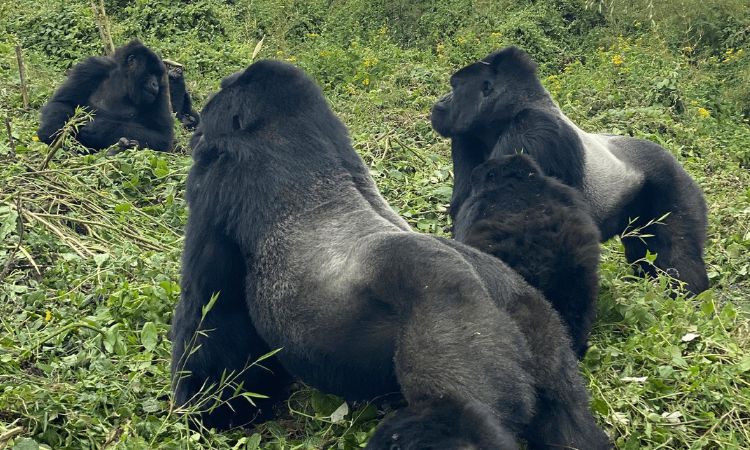
Overview of Mountain Gorillas in Bwindi
Mountain gorillas (Gorilla beringei beringei) are an endangered subspecies of eastern gorillas, found only in the wild in three countries: Uganda, Rwanda, and the Democratic Republic of Congo.
Bwindi, alongside Mgahinga Gorilla National Park in Uganda and the Virunga Massif (encompassing Rwanda’s Volcanoes National Park and Congo’s Virunga National Park), is a critical habitat for these primates.
Bwindi’s gorilla population has grown from around 300 in 1997 to approximately 459 in 2018, thanks to conservation efforts, including the establishment of the park in 1991 and the introduction of gorilla trekking in 1993.
The park hosts over 50 gorilla families, with 19 to 21 habituated for tourism, depending on the source, and others either unhabituated or used for research and habituation experiences.
Gorilla families are social units typically led by a dominant silverback—a mature male responsible for the group’s protection, decision-making, and mating privileges. These families vary in size from 5 to over 30 members, including females, juveniles, infants, and sometimes subordinate silverbacks or blackbacks (younger males). Each family exhibits unique behaviors, dynamics, and histories, shaped by their environment, leadership changes, and interactions with other groups or humans.
Gorilla Trekking Sectors in Bwindi
Bwindi is divided into four main sectors for gorilla trekking: Buhoma, Ruhija, Rushaga, and Nkuringo. Each sector hosts distinct habituated gorilla families, and the terrain, accessibility, and lodging options vary, influencing the trekking experience. Below is a detailed look at the sectors and their respective gorilla families, based on the most consistent and recent information available.
-
Buhoma Sector
Located in the northern part of Bwindi, Buhoma is the most accessible sector, with a variety of lodging options ranging from budget to luxury. It is also home to the park’s headquarters and is popular due to its proximity to Queen Elizabeth National Park. The sector hosts five habituated gorilla families:
- Mubare Gorilla Family: The first family habituated in Bwindi, starting in 1991 and opened for trekking in 1993. Named after the Mubare Hills where it was first sighted, the group initially had 12 members led by silverback Ruhondeza. By 2012, after conflicts and losses, the group dwindled to 5 members. Under the leadership of silverback Kanyonyi, and later Maraya, the family grew to 11 members by 2019, including two newborns. This family is known for its historical significance and resilience despite past challenges, such as attacks by wild gorilla groups.
- Habinyanja Gorilla Family: Habituated in 1997 and opened for trekking in 1999, this family was first sighted near a swamp, hence its name derived from “Nyanja” (meaning “place with water” in Rukiga). Initially comprising 30 members under silverback Mugurusi, the group faced leadership struggles after his death, splitting into two groups, with Rushegura forming as a result. Currently, it has 18 members, including two silverbacks, and is known for its dramatic dynamics and playful interactions.
- Rushegura Gorilla Family: Formed in 2002 after splitting from Habinyanja, this family is led by silverback Kabukojo (following the death of Mwirima in 2014). With 16–17 members, including one silverback, three blackbacks, and several females and juveniles, Rushegura is notable for occasionally venturing near Buhoma’s lodges and community gardens, making it relatively easier to track. Its friendly demeanor makes it a favorite among visitors
- Katwe Gorilla Family: Habituated over three years and opened for trekking in 2018, this family has 7–8 members, including one silverback (Muyambi), four adult females, and two infants. Its proximity to Queen Elizabeth National Park and the availability of luxurious lodging increase its popularity.
- Muyambi Gorilla Family: The newest family in Buhoma, formed in 2019 when Muyambi, a former member of Mubare, split to form his own group. It has 7 members and is gaining attention due to its recent habituation and accessibility.
-
Ruhija Sector
Located in the eastern part of Bwindi, Ruhija is more remote and has fewer lodging options, particularly budget ones. It is known for its high-altitude terrain and playful gorilla families.
- Oruzogo Gorilla Family: Habituated in 2011, this family is led by silverback Tibirikwata and has 23–25 members, including two silverbacks. Known for its playful juveniles, Oruzogo gained fame in 2013 for the birth of twins, making it a lively group to visit.
- Bitukura Gorilla Family: Habituated in 2008, this family has 14 members, including four silverbacks led by Ndahura. It is known for its peaceful and playful demeanor, making it a rewarding trekking experience.
- Kyaguriro Gorilla Family: Habituated in 1995 and initially reserved for research by the Max Planck Institute, this family split into two groups (Kyaguriro A and B). The trekking group, led by silverback Rukina, has 20 members. Mukiza, a former member, formed his own group (Mukiza Gorilla Family) with 10–11 members. Kyaguriro is valued for its research contributions and dynamic group structure.
-
Rushaga Sector
The southernmost sector, Rushaga, is the only area offering gorilla habituation experiences, allowing visitors to spend up to four hours with gorillas under habituation. It hosts several families, some formed through splits from larger groups.
- Nshongi Gorilla Family: Once the largest habituated family with 36 members, Nshongi was opened for trekking in 2009. Splits led to the formation of Mishaya and Bweza families, reducing Nshongi to 25 members, led by silverback Nshongi. It remains a significant group in Rushaga.
- Mishaya Gorilla Family: Formed in 2010 when silverback Mishaya split from Nshongi, this family grew from 7 to 12 members due to Mishaya’s ability to attract new members. It is known for its dynamic growth.
- Bweza Gorilla Family: Another Nshongi splinter group, formed in 2012 by silverback Bweza, this family has 11 members. It is noted for its stability and is a popular trekking choice.
- Kahungye Gorilla Family: Habituated in 2011 with 27 members, Kahungye split to form Busingye and Rwigi families. It currently has 17 members, led by silverback Rumansi, and is known for its multiple silverbacks.
- Busingye Gorilla Family: Formed in 2012 from Kahungye, this family has 9 members, led by a single silverback. It is located near Nshongi and Mishaya, offering a diverse trekking experience.
- Mucunguzi Gorilla Family: A breakaway from Bweza, this family, led by silverback Mucunguzi, has 8–9 members, predominantly females. It is a newer addition to Rushaga’s trekking options.
- Bikyingi Gorilla Family: Formed from Mishaya’s members, this family has 15–21 members and is available for trekking, though it is still under habituation in some reports.
- Rwigi Gorilla Family: A newer family in Rushaga with 6 members, formed from Kahungye. It is less documented but available for trekking.
-
Nkuringo Sector
Located in the southern part of Bwindi, Nkuringo is known for its challenging treks due to the hilly terrain. It hosts three habituated families.
- Nkuringo Gorilla Family: The first family habituated in the sector in 2004, named after the “rolling hills” where it was sighted. Initially led by silverback Nkuringo, who died in 2008, it is now led by Rafiki or Safari. The group has 12 members and is notable for recording the birth of twins, though one died young. A silverback was tragically killed by poachers in 2020.
- Bushaho Gorilla Family: Formed from Nkuringo, this family has 8 members, led by silverback Bahati. It was opened for trekking in 2012.
- Christmas Gorilla Family: Named after its dominant silverback, Christmas, born on Christmas Day, this family has 9 members and was recently habituated for trekking. It is a newer addition to Nkuringo’s offerings.
Gorilla Habituation and Conservation
Habituation Process: Habituation involves acclimating wild gorillas to human presence, typically taking 15–24 months. Rangers and researchers gradually expose gorillas to humans, ensuring they remain calm and safe during tourist visits. This process began in Bwindi with the Mubare family in 1991. Habituated families are monitored daily by trackers to ensure their safety and to guide trekkers.
Conservation Efforts: Bwindi’s gorilla population has benefited from strict conservation measures led by the Uganda Wildlife Authority (UWA) and organizations like Conservation Through Public Health (CTPH) and the International Gorilla Conservation Programme (IGCP).
Gorilla trekking generates significant revenue (permits cost $800 for foreign non-residents as of July 2024), which funds conservation, anti-poaching patrols, and community development. Initiatives like Gorilla Conservation Coffee support local farmers, reducing encroachment on gorilla habitats. The park’s designation as a UNESCO World Heritage Site in 1994 underscores its global importance.
Population Growth: The mountain gorilla population has increased from 880 in 2011 to over 1,063 by 2018, with Bwindi’s population rising from 400 to 459. This growth is attributed to reduced poaching, habitat protection, and community engagement, though threats like disease and habitat loss persist.

Gorilla Trekking Experience
Trekking Process: Gorilla trekking in Bwindi is a highly regulated activity, with only eight visitors permitted per habituated family daily, ensuring minimal disturbance.
Treks begin with a briefing at the sector’s ranger station, covering rules such as maintaining a 10-meter distance and wearing masks to prevent disease transmission. Treks can last 2–7 hours, depending on the gorillas’ location, as they move daily in search of food. Visitors spend one hour with the gorillas, observing behaviors like grooming, feeding, and play.
Permits and Costs: Gorilla trekking permits cost $800 for foreign non-residents, $700 for foreign residents, and UGX 300,000 for East African citizens (as of July 2024). Permits must be booked in advance through UWA or tour operators due to high demand.
Best Time to Trek: Trekking is possible year-round, but the dry seasons (June–September and December–February) are preferred due to drier trails. The rainy season (March–May, October–November) can make trails muddy and slippery, increasing trek difficulty.
Physical Requirements: Trekking requires moderate fitness due to Bwindi’s steep, forested terrain. Porters are available to assist, and trekkers should wear sturdy hiking boots, long sleeves, and carry water and rain gear.
Unique Characteristics and Behaviors
Each gorilla family has distinct traits. For example, Oruzogo is known for its playful juveniles, while Rushegura is noted for venturing near human settlements. Silverbacks play a critical role, defending their families and making decisions about feeding and nesting locations.
Gorillas share 98% of their DNA with humans, displaying behaviors like grooming, play-fighting, and nurturing that resonate with visitors. Their diet in Bwindi includes more fruit than their Virunga counterparts, leading to increased tree-climbing and longer daily travel distances.
Challenges and Community Impact
Challenges: Despite population growth, gorillas face threats from poaching, disease (especially human-borne illnesses), and habitat encroachment. The eviction of the Indigenous Batwa people during the park’s establishment in 1991 remains a contentious issue, as they lost access to forest resources.
Community Benefits: Tourism revenue supports local communities through job creation (guides, porters, lodge staff), infrastructure development, and conservation education. Initiatives like CTPH’s health programs and Gorilla Conservation Coffee empower locals to protect gorilla habitats, fostering a sense of stewardship.