
Gorilla Families in Bwindi Impenetrable National Park Uganda
ExploreGorilla Families in Bwindi, know where to find them, their unique traits, trekking sectors, and tips for choosing the best gorilla trekking experience.
Bwindi Impenetrable National Park, in southwestern Uganda, is a UNESCO World Heritage Site renowned worldwide for its biodiversity and its role as sanctuary for nearly half of the world’s remaining mountain gorillas.
Spanning roughly 321 square kilometers along the border with the Democratic Republic of Congo, this ancient rainforest — dating back more than 25,000 years — ranks among the most biologically diverse ecosystems in East Africa.
Bwindi is home to over 400 mountain gorillas, representing about half the global population of approximately 1,063 individuals recorded in the most recent comprehensive census.
Understanding the different gorilla families in Bwindi — their history, personalities, and which sector each calls home — is genuinely useful groundwork before booking a gorilla trekking safari here, since the sector you choose shapes almost everything about your trekking experience.
Overview of Mountain Gorillas in Bwindi
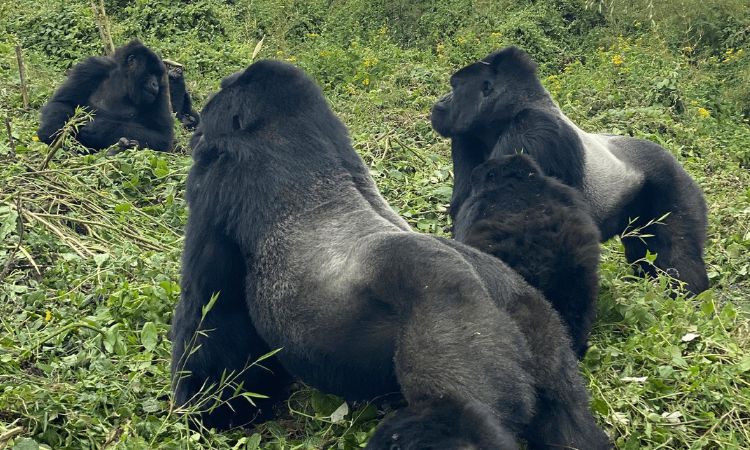
Mountain gorillas (Gorilla beringei beringei) are an endangered subspecies of eastern gorilla, found in the wild in only three countries: Uganda, Rwanda, and the Democratic Republic of Congo. Bwindi, alongside Mgahinga Gorilla National Park and the Virunga Massif spanning Rwanda and the DRC, forms the species’ entire remaining critical habitat.
Bwindi’s gorilla population has grown from around 300 in 1997 to roughly 459 by 2018, a direct result of sustained conservation work — including the park’s formal establishment in 1991 and the introduction of gorilla trekking as a managed tourism activity in 1993.
The park now hosts over 50 distinct gorilla families, with 19 to 21 habituated for tourism at any given time, alongside others kept unhabituated or reserved for research and habituation training.
Gorilla families are tight social units, typically led by a dominant silverback — a mature male responsible for the group’s protection, decision-making, and mating rights.
Family size ranges from as few as 5 to over 30 members, including females, juveniles, infants, and occasionally subordinate silverbacks or blackbacks (younger males).
Each family carries its own distinct personality and history, shaped by leadership changes, past conflicts, and how it interacts with neighboring groups and human visitors.
Bwindi’s Gorilla Trekking Sectors
Bwindi is divided into four main sectors for gorilla trekking — Buhoma, Ruhija, Rushaga, and Nkuringo — each hosting its own set of habituated gorilla families. Terrain, accessibility, and lodging options all vary significantly between sectors, which genuinely shapes the overall trekking experience you’ll have.
How to Choose Which Bwindi Sector Is Right for You
| Sector | Best For | Terrain | Lodging |
|---|---|---|---|
| Buhoma | First-time visitors, easiest access | Moderate, well-established trails | Widest range, budget to luxury |
| Ruhija | Birders, high-altitude scenery | Steep, high-altitude | Fewer options, mostly mid-range |
| Rushaga | Gorilla habituation experience, multiple families | Varied, generally accessible | Growing range of lodges |
| Nkuringo | Experienced trekkers wanting a challenge | Hilly, physically demanding | Limited but scenic options |
If you’re planning your first Uganda gorilla trekking safari, Buhoma’s accessibility and lodge variety make it a natural starting point. If you want the option of a full gorilla habituation experience rather than standard trekking, Rushaga is currently the only sector offering it.
Buhoma Sector: Bwindi’s Most Accessible Gorilla Trekking Base
Located in Bwindi’s northern reaches, Buhoma is the park’s most accessible sector, with lodging spanning budget to luxury and the added convenience of the park headquarters nearby.
Its proximity to Queen Elizabeth National Park makes it a popular pairing for travelers combining gorilla trekking with a broader wildlife circuit. Buhoma hosts five habituated gorilla families:
Mubare Gorilla Family — the first family ever habituated in Bwindi, beginning in 1991 and opened for trekking in 1993. Named after the Mubare Hills where it was first sighted, the group originally numbered 12 members under silverback Ruhondeza. By 2012, following internal conflict and losses, the group had dwindled to just 5 members.
Under successive leadership from silverbacks Kanyonyi and later Maraya, the family rebuilt to 11 members by 2019, including two newborns — a genuine story of resilience that adds real weight to trekking this historically significant group.
Habinyanja Gorilla Family — habituated in 1997 and opened for trekking in 1999, named for the swamp near where it was first spotted (“Nyanja” meaning “place with water” in Rukiga). Originally 30 members strong under silverback Mugurusi, the group split following his death, giving rise to the Rushegura family.
Today it holds 18 members, including two silverbacks, and is known for genuinely dramatic group dynamics and playful interaction.
Rushegura Gorilla Family — formed in 2002 when it split from Habinyanja, now led by silverback Kabukojo following the death of Mwirima in 2014. With 16–17 members, including one silverback, three blackbacks, and several females and juveniles, Rushegura occasionally wanders close to Buhoma’s lodges and community gardens, making it relatively easy to track and a genuine visitor favorite for its friendly demeanor.
Katwe Gorilla Family — habituated over three years and opened for trekking in 2018, with 7–8 members including silverback Muyambi, four adult females, and two infants. Its proximity to Queen Elizabeth National Park and access to luxury lodging keep it consistently popular.
Muyambi Gorilla Family — Buhoma’s newest family, formed in 2019 when Muyambi split from Mubare to lead his own group. With 7 members, it’s gaining attention specifically for its recent habituation and easy accessibility.
Ruhija Sector: High-Altitude Terrain and Playful Gorilla Groups
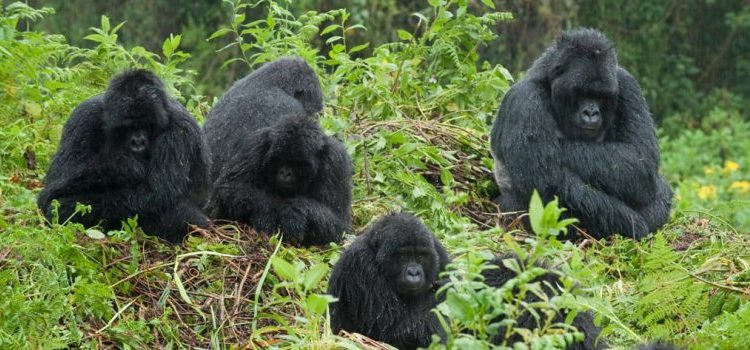
Set in Bwindi’s eastern reaches, Ruhija is more remote than Buhoma, with fewer lodging options — particularly at the budget end. It’s known for its high-altitude terrain and for hosting some of the park’s most playful gorilla families.
Oruzogo Gorilla Family — habituated in 2011 and led by silverback Tibirikwata, with 23–25 members including two silverbacks. Known for its playful juveniles, Oruzogo gained particular attention in 2013 following the birth of twins, making it a genuinely lively group to visit.
Bitukura Gorilla Family — habituated in 2008, with 14 members including four silverbacks led by Ndahura. Known for a peaceful, playful demeanor that makes for a rewarding, relatively relaxed trekking experience.
Kyaguriro Gorilla Family — habituated in 1995 and originally reserved for research by the Max Planck Institute, this group later split into Kyaguriro A and B. The trekking group, led by silverback Rukina, holds 20 members, while a former member, Mukiza, went on to form his own splinter group of 10–11 members. Kyaguriro’s research legacy adds genuine scientific depth to a visit here.
Rushaga Sector: Home to Uganda’s Gorilla Habituation Experience
Bwindi’s southernmost sector, Rushaga is the only area offering the gorilla habituation experience — a longer, more immersive alternative to standard trekking that allows visitors to spend up to four hours with a gorilla family still being acclimated to human presence, rather than the standard one hour with a fully habituated group. Rushaga hosts several families, many formed through splits from larger original groups.
Nshongi Gorilla Family — once Bwindi’s largest habituated family at 36 members, opened for trekking in 2009. Subsequent splits formed the Mishaya and Bweza families, reducing Nshongi to 25 members under silverback Nshongi, though it remains a major presence in the sector.
Mishaya Gorilla Family — split from Nshongi in 2010 under silverback Mishaya, growing from 7 to 12 members thanks to his ability to attract new members — a genuinely notable growth story among Rushaga’s families.
Bweza Gorilla Family — another Nshongi splinter, formed in 2012 by silverback Bweza, now numbering 11 members and known for its relative stability, making it a consistently popular trekking choice.
Kahungye Gorilla Family — habituated in 2011 with 27 members, later splitting to form the Busingye and Rwigi families. Now at 17 members under silverback Rumansi, it’s notable for hosting multiple silverbacks within a single group.
Busingye Gorilla Family — split from Kahungye in 2012, with 9 members under a single silverback, located near Nshongi and Mishaya for a genuinely varied trekking experience across the sector.
Mucunguzi Gorilla Family — a breakaway from Bweza, led by silverback Mucunguzi, with 8–9 members, predominantly female — a newer addition to Rushaga’s trekking roster.
Bikyingi Gorilla Family — formed from former Mishaya members, with 15–21 members, available for trekking though still under active habituation according to some reports.
Rwigi Gorilla Family — a newer, less-documented Rushaga family with 6 members, formed from Kahungye and available for trekking.
Nkuringo Sector: Bwindi’s Most Challenging Terrain
In Bwindi’s southern reaches, Nkuringo is known for demanding treks across genuinely hilly terrain — a strong choice for physically fit visitors seeking a more rugged gorilla trekking experience. It hosts three habituated families.
Nkuringo Gorilla Family — the first family habituated in this sector, in 2004, named after the “rolling hills” where it was first sighted. Originally led by silverback Nkuringo, who died in 2008, the group is now led by Rafiki or Safari.
It holds 12 members and recorded the birth of twins, though one died young; tragically, a silverback from this family was killed by poachers in 2020, a sobering reminder of the ongoing threats gorillas face even within protected areas.
Bushaho Gorilla Family — split from Nkuringo, with 8 members under silverback Bahati, opened for trekking in 2012.
Christmas Gorilla Family — named for its dominant silverback, born on Christmas Day, with 9 members and one of the more recently habituated additions to Nkuringo’s trekking options.
Gorilla Habituation and Conservation
The Habituation Process
Habituation is the gradual process of acclimating wild gorillas to human presence, typically taking 15–24 months of consistent, careful exposure by rangers and researchers to ensure the gorillas remain calm and safe once opened to tourism.
This process began in Bwindi with the Mubare family back in 1991, and every habituated family today is monitored daily by trackers to safeguard both the gorillas and the trekkers who visit them.
Conservation Efforts Protecting Bwindi’s Gorillas
Bwindi’s gorilla population has benefited from consistent, well-funded conservation work led by the Uganda Wildlife Authority (UWA), alongside organizations like Conservation Through Public Health (CTPH) and the International Gorilla Conservation Programme (IGCP).
Gorilla trekking permits — currently $800 for foreign non-residents — generate substantial revenue that directly funds conservation, anti-poaching patrols, and community development.
Initiatives like Gorilla Conservation Coffee support local farmers directly, reducing pressure on gorilla habitat from agricultural encroachment. Bwindi’s 1994 UNESCO World Heritage Site designation further underscores its global conservation significance.
Population Growth Over Time
The global mountain gorilla population grew from 880 in 2011 to over 1,063 by the most recent comprehensive census, with Bwindi’s own population rising from roughly 400 to 459 over the same period.
This recovery reflects reduced poaching, stronger habitat protection, and deeper community engagement — though threats from disease and habitat loss remain very real and ongoing.
Gorilla Trekking Experience in Bwindi
How the Trek Works
Gorilla trekking in Bwindi is a tightly regulated activity, with only eight visitors permitted per habituated family each day to keep disturbance to a genuine minimum. Every trek starts with a briefing at the sector’s ranger station, covering rules like maintaining a 10-meter distance and wearing masks to reduce disease transmission risk.
Treks themselves can run anywhere from 2 to 7 hours, depending on where the gorillas have moved that day, with a full hour granted for observing their feeding, grooming, and play once you find them.
Gorilla Trekking Permits and Costs
Gorilla trekking permits currently cost $800 for foreign non-residents, $700 for foreign residents, and UGX 300,000 for East African citizens. Permits should be booked well in advance through the Uganda Wildlife Authority or a licensed tour operator, given consistently high demand — see our Uganda safari itinerary price guide for a fuller cost breakdown across trip lengths.
Best Time to Trek
Gorilla trekking runs year-round in Bwindi, but the dry seasons — June to September and December to February — are generally preferred for drier, more manageable trails. The rainy seasons (March–May and October–November) make trails muddier and more physically demanding, though they also bring lush scenery and smaller crowds.
Physical Requirements
Trekking in Bwindi requires moderate fitness given the park’s steep, densely forested terrain. Porters are available to assist with gear and difficult sections, and trekkers should come prepared with sturdy hiking boots, long sleeves, rain gear, and plenty of water.
Unique Characteristics and Behaviors Across Bwindi’s Families
Each gorilla family carries its own distinct personality. Oruzogo is known for its especially playful juveniles, while Rushegura is notable for occasionally venturing near human settlements.
Silverbacks play the central role across every family — defending the group, and making the day-to-day decisions about where to feed and nest.
Gorillas share roughly 98% of their DNA with humans, and their behaviors — grooming, play-fighting, nurturing infants — resonate strongly with visitors precisely because they feel so familiar. Interestingly, Bwindi’s gorillas eat considerably more fruit than their Virunga counterparts, which leads to more frequent tree-climbing and longer daily travel distances as they search out fruiting trees across the forest.
Challenges and Community Impact
Despite genuine population growth, Bwindi’s gorillas still face real threats — poaching, disease (particularly illnesses transmitted from humans), and ongoing habitat encroachment.
The eviction of the Indigenous Batwa people during the park’s establishment in 1991 remains a genuinely contentious chapter in Bwindi’s history, since it cut off their traditional access to forest resources they’d relied on for generations — a history worth understanding as part of any visit here.
On the positive side, tourism revenue now supports local communities through direct job creation as guides, porters, and lodge staff, alongside infrastructure development and conservation education.
Programs like CTPH’s community health initiatives and Gorilla Conservation Coffee give local residents a genuine, direct stake in protecting gorilla habitat — turning conservation into shared benefit rather than pure restriction.
Plan Your Bwindi Gorilla Trekking Safari With Us
Choosing the right gorilla family and sector in Bwindi genuinely shapes your entire trekking experience — from the terrain you’ll hike to the specific group dynamics you’ll witness firsthand.
Whether you’re drawn to Mubare’s historic resilience, Oruzogo’s playful juveniles, or Rushaga’s gorilla habituation experience, Hail Tours Uganda can match your trip to the right sector and family based on your fitness level, timeline, and interests.
We handle permit booking directly with the Uganda Wildlife Authority, pair you with experienced local guides, and can build your Bwindi trek into a longer itinerary — our 4 Days Double Gorilla Trekking package lets you visit two separate families across two days, while our 4 Days Bwindi Gorillas and Lake Bunyonyi Safari pairs trekking with time to unwind at nearby Lake Bunyonyi. Contact us today to start planning your Bwindi gorilla trekking safari.
Related Pages
- Bwindi Impenetrable National Park
- Uganda Gorilla Trekking
- Mgahinga Gorilla National Park
- 1 Day Gorilla Trekking Uganda
- 3 Day Gorilla Trekking Uganda
- 4 Days Double Gorilla Trekking
- 2 Day Gorilla Safari in Uganda
- 4 Days Bwindi Gorillas and Lake Bunyonyi Safari
- 9 Days Gorilla Trek in Uganda
- 5 Days Primates Safari Uganda
- Gorilla Trekking Rwanda vs Uganda
- Queen Elizabeth National Park
- Uganda Safari Itinerary Price Guide
- Best Uganda Safari Lodges
- About Hail Tours Uganda