
Top 8 Best Safari Parks in Kenya You Should Visit
Discover the best safari parks in Kenya, including Maasai Mara, Amboseli, Tsavo, and Lake Nakuru, with wildlife highlights and travel tips.
When you think of a safari, the list of possible destinations feels endless — but something genuinely unique makes Kenya one of Africa’s defining safari countries.
Kenya is naturally endowed with roughly 40 national parks and reserves, each offering abundant wildlife, rich birdlife, and landscapes that shift dramatically from one region to the next.
Whether you’re chasing the Big Five, the Great Wildebeest Migration, world-class birding, or genuine cultural encounters, this guide covers the 8 best safari parks in Kenya worth building your trip around.
1. Nairobi National Park: The World’s Most Accessible Safari Park
Widely celebrated as the “wildlife capital of the world,” Nairobi National Park sits just 7–10 kilometres from Nairobi city centre, making it one of the most accessible safari parks anywhere on the continent.
Established in 1946, the park is a stronghold for four of the Big Five — buffalo, leopard, lion, and rhino — making it an excellent choice for travelers with limited time who still want a genuine Kenya safari experience.
Beyond the Big Five, Nairobi National Park delivers cheetahs, zebras, warthogs, baboons, and jackals, alongside an impressive 400+ recorded bird species, including the Egyptian goose, common moorhen, blacksmith lapwing, and secretary bird, plus black-headed heron, Eurasian nightjars, white-bellied bustard, and Kori bustard.
Beyond game drives, don’t miss the Impala Observation Point, the David and Daphne Sheldrick Elephant Orphanage, and the Ivory Site Monument — all genuinely worthwhile additions to a Nairobi National Park visit.
2. Amboseli National Park: Elephants Beneath Mount Kilimanjaro
Set in Kajiado South Constituency, Loitoktok District, Amboseli National Park is famous for two things above all: its huge elephant herds and its breathtaking, unobstructed view of Mount Kilimanjaro.
At just 392 square kilometres, Amboseli’s compact size makes it one of the easiest parks in Kenya to explore thoroughly, with landscapes ranging across savanna grassland, shady woodland, undulating terrain, and swamp.
Roughly 260 kilometres from Nairobi, Amboseli was established in 1974 and declared a UNESCO Man and Biosphere Reserve in 1991. Wildlife here includes cheetahs, buffalo, lions, rhinos, giraffes, zebras, jackals, leopards, yellow and olive baboons, spotted hyenas, waterbucks, impalas, and black-faced vervet monkeys, alongside over 450 bird species — secretary birds, African skimmers, yellow bishops, grey crowned cranes, steel-blue whydahs, superb starlings, and hamerkops among them. Photography safaris, game drives, Maasai cultural visits, and dedicated birdwatching all rank among Amboseli’s best activities.
3. Maasai Mara National Reserve: Kenya’s Iconic Big Five and Migration Destination
Maasai Mara National Reserve needs little introduction — it’s one of Kenya’s most iconic safari destinations, renowned for rich biodiversity including the full Big Five and its role as the northern stage of the Great Migration, when millions of wildebeest, zebra, and gazelle cross up from the Serengeti in Tanzania in search of fresh grazing.
Situated in southwestern Kenya, roughly 270 kilometres — a 5 to 6-hour drive — from Nairobi, the Mara forms part of the wider Serengeti-Mara ecosystem, stretching across more than 1,500 square kilometres.
The Mara offers some of the best game drives and hot air balloon safaris in the country, with sightings regularly including lions, leopards, cheetahs, African elephants, buffalo, rhinoceros, wildebeest, zebra, gazelle, giraffe, hippo, crocodile, hyena, wild dog, baboon, vultures, antelope, warthog, and jackal.
With over 450 recorded bird species, the Maasai Mara also ranks among Kenya’s premier birding destinations. For full trip planning, see our 6 Days Masai Mara, Lake Nakuru and Amboseli Safari and our guide to the 12-hour rule for Masai Mara before you book.

4. Tsavo National Parks: Kenya’s Vast Wilderness Twins
Tsavo East and Tsavo West together form one of Kenya’s largest protected areas, separated by the A109 road and railway line. Covering more than 22,000 square kilometres combined — 12,000 in Tsavo East and 10,000 in Tsavo West — this conservation area is defined by genuinely dramatic scenery: caves, natural springs, ancient lava flows, and rugged rock formations.
Tsavo shelters the full Big Five — rhino, leopard, buffalo, elephant, and lion — alongside cheetahs, crocodiles, gerenuks, and over 500 recorded bird species, making it one of the most complete wildlife destinations anywhere in the country for travelers wanting genuine wilderness scale alongside classic safari game viewing.
5. Lake Nakuru National Park: Kenya’s Premier Birding Destination
Roughly 140 kilometres northwest of Nairobi, Lake Nakuru National Park is a magical, compact park established in 1961 and covering just 188 square kilometres — yet it remains one of Africa’s leading birding destinations, sheltering more than 450 bird species, including black-tailed godwits, lesser and greater flamingos, pelicans, arrow-marked babblers, sooty falcons, ostriches, Abyssinian thrush, and cormorants.
Beyond birding, Nakuru is a genuine game-viewing destination in its own right, home to rhinos, lions, leopards, cheetahs, buffalo, zebra, and gazelle. Where to stay: Mbweha Safari Camp, Sarova Lion Hill Game Lodge, Lakira Camp, Lake Nakuru Lodge, Eagle View, and Naishi Guesthouse all offer solid overnight options for a Lake Nakuru safari stop.
6. Ol Pejeta Conservancy: Kenya’s Rhino Conservation Stronghold
Situated in Laikipia County in central Kenya, Ol Pejeta Conservancy spans roughly 90,000 acres and stands among the country’s most celebrated conservation success stories.
Ol Pejeta shelters the full Big Five — lion, elephant, buffalo, leopard, and rhino — and is globally significant as home to the world’s last two northern white rhinos, making it one of the most important rhino tracking destinations anywhere on Earth.
Beyond rhinos, Ol Pejeta runs major protection programs for endangered African wild dogs and cheetahs, alongside strong sightings of giraffes, zebras, and a wide range of antelope species. With over 300 recorded bird species, it’s also a genuinely rewarding birding stop.
The on-site Sweetwaters Chimpanzee Sanctuary, caring for orphaned and rescued chimpanzees, adds a further, distinctive layer to a visit — alongside Ol Pejeta’s strong commitment to sustainable tourism and community development across every accommodation tier, from luxury lodges to more affordable options.
7. Mount Kenya National Park: High-Altitude Wildlife and Hiking
For travelers wanting a genuine change of pace from savanna game drives, Mount Kenya National Park, roughly 175 kilometres northeast of Nairobi, delivers breathtaking hiking terrain across glaciers, forested slopes, and dramatic U-shaped valleys.
Covering 1,420 square kilometres, the park shelters a genuinely distinctive wildlife list: white-tailed mongoose, black rhino, rock hyrax, suni antelope, leopard, elephant, bushbuck, black-and-white colobus monkey, giant forest hog, and black-fronted duiker.
Birders will find over 130 recorded species here too, including African barbets, bearded vultures, red-billed ducks, yellow-bellied waxbills, red-cheeked cordon bleus, African emerald cuckoos, and rosy-throated longclaws, alongside oriole finches, orange ground thrushes, golden-breasted buntings, brimstone canaries, and violet-backed starlings.
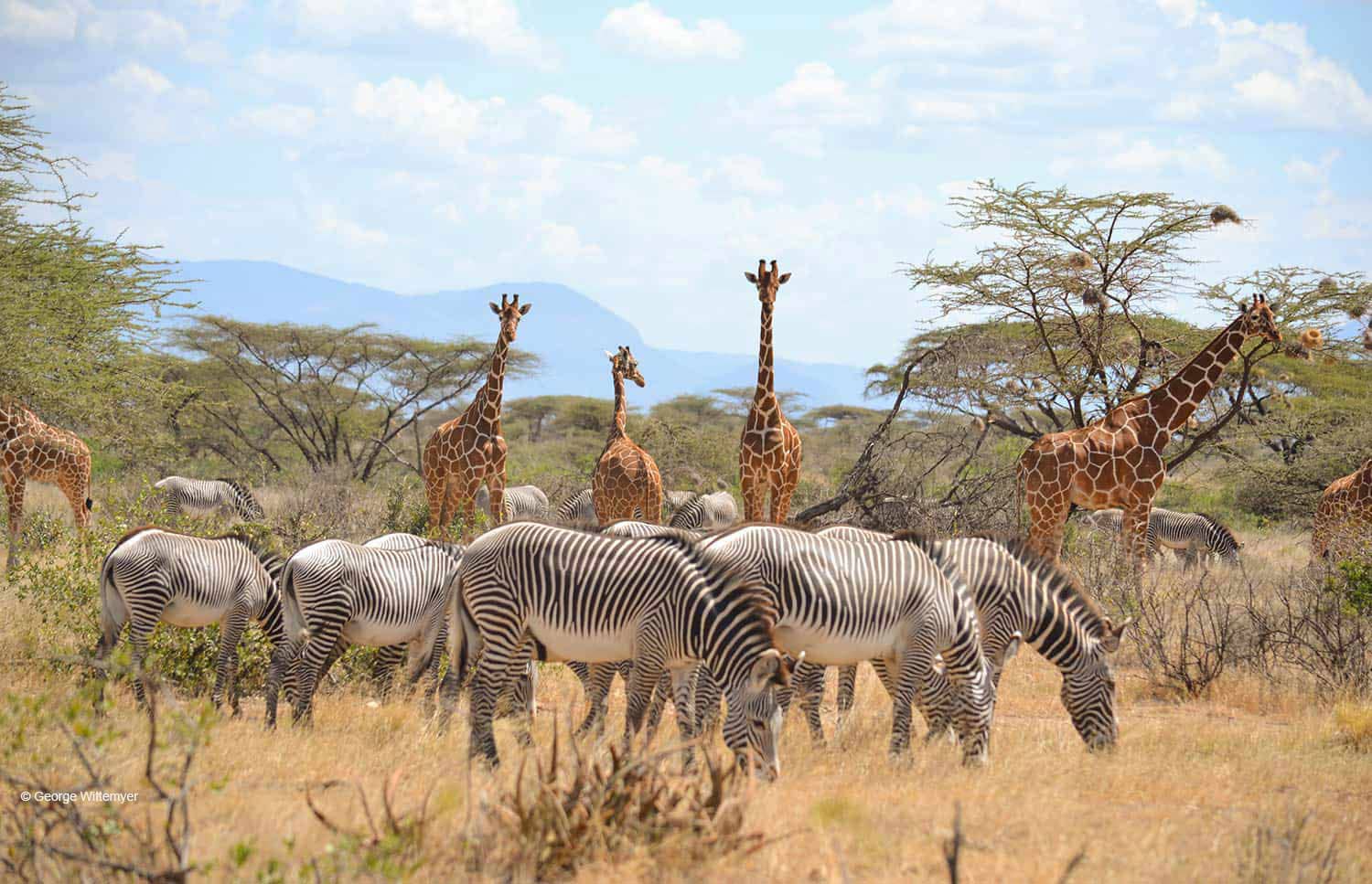
8. Samburu National Reserve: Kenya’s Rare Northern Wildlife
Along the Ewaso Ng’iro River in northern Kenya, Samburu National Reserve offers a genuinely different safari experience defined by rugged, semi-arid beauty and species found almost nowhere else in the country — the Grevy’s zebra, reticulated giraffe, and Samburu ostrich all endemic to this specific region.
Samburu forms part of a wider ecosystem alongside Buffalo Springs and Shaba National Reserve, together covering a substantial, biodiverse conservation area.
Game drives here move through striking acacia forest, open savanna, and riverine vegetation, with the Ewaso Ng’iro River itself acting as the crucial water source drawing elephants, big cats, and antelope species into view. Birdwatchers will find a strong variety of eagles and vultures alongside the reserve’s mammal highlights.
Samburu is equally known for its cultural richness — visits with the nomadic Samburu people offer a genuinely immersive cultural encounter alongside the wildlife, making this reserve a rare, complete blend of adventure, conservation, and culture.
Other Kenya Safari Destinations Worth Exploring
Beyond these eight standout parks, Kenya’s wider safari landscape includes Mount Elgon National Park, Longonot National Park, Meru National Park, Aberdare National Park, Arabuko-Sokoke National Park, and the Marine National Parks along the coast — each offering a genuinely distinct addition to a longer Kenya itinerary.
Our overview of Kenya safari all-inclusive packages and broader Africa Kenya safaris guide cover how these lesser-visited parks fit into a complete trip.
When to Visit Kenya’s Safari Parks
Kenya welcomes visitors year-round, but the dry months — June through October, and again December through February — consistently offer the best safari conditions.
Drier ground makes game tracks across every park on this list considerably easier to navigate, and animals concentrate more predictably around remaining water sources, improving overall wildlife visibility.
Travelers specifically timing a trip around the Great Migration should aim for July through October, when the Maasai Mara’s river crossings reach their peak.
Planning Your Kenya Safari Park Itinerary
With eight genuinely distinct parks to choose from, most travelers combine two or three into a single trip rather than trying to cover all of them at once.
Nairobi National Park pairs naturally with an international arrival, Amboseli and the Maasai Mara combine well with Lake Nakuru for a classic circuit, and Samburu or Mount Kenya suit travelers wanting to add a genuinely different landscape to a longer itinerary.
Our 7 Days Best of Kenya Safari itinerary shows exactly how several of these parks combine into one well-paced trip, while our Masai Mara safari packages page covers Mara-specific options in more depth. Families traveling with children should also see our guide to kid-friendly adventures in Masai Mara.
Ready to plan your Kenya safari? Contact our team to build an itinerary around the parks that matter most to you.

FAQ: Best Safari Parks in Kenya
Which is the most accessible safari park in Kenya? Nairobi National Park, located just 7–10 kilometres from Nairobi city centre.
Which Kenya park is best for the Great Migration? Maasai Mara National Reserve, particularly between July and October when river crossings peak.
Which park is best for birdwatching in Kenya? Lake Nakuru National Park and the Maasai Mara both exceed 450 recorded bird species, making them Kenya’s strongest birding destinations.
Where can I see rhinos in Kenya? Ol Pejeta Conservancy, home to the world’s last two northern white rhinos, alongside Nairobi National Park, Amboseli, Tsavo, and Lake Nakuru.
What is the best time of year to visit Kenya’s safari parks? The dry seasons, June through October and December through February, offer the best game viewing and easiest road conditions.
Related Kenya Safari Guides
- 6 Days Masai Mara, Lake Nakuru and Amboseli Safari
- 7 Days Best of Kenya Safari
- Masai Mara Safari Packages
- Kenya Safari All-Inclusive Packages
- The 12-Hour Rule for Masai Mara
- Kid-Friendly Adventures in Masai Mara
- Africa Kenya Safaris Overview
- 8 Days Bwindi Gorillas and Masai Mara Safari
- 7 Days Gorilla Trek and Wildebeest Migration