
Difference Between a Gorilla and a Mountain Gorilla: The Complete Guide
Learn the difference between a gorilla and a mountain gorilla, including their habitat, physical traits, behavior, diet, and conservation status.
Gorillas, the world’s largest primates, are among the most fascinating wildlife species on the planet, thriving in the dense forests of central and western Africa. As our closest living relatives, gorillas share around 98% of human DNA, making them one of the most intelligent primates in the wild.
Like humans, they live in tight-knit social groups with complex family structures — a trait that makes them a highlight of any Africa wildlife safari.
However, not all gorillas are the same. While every gorilla belongs to the great ape family, the mountain gorilla is a distinct subspecies with characteristics that set it apart from lowland gorillas — and understanding that difference matters if you’re planning mountain gorilla trekking in East Africa.
To really understand the difference between a gorilla and a mountain gorilla, you need to look closely at physical characteristics, habitat, behavior, diet, and conservation status.

Understanding Gorillas: Species and Subspecies
Gorillas belong to the great ape family, scientifically known as Hominidae, and are the largest primates in their order. They’re classified into two main species: western gorillas and eastern gorillas.
Each species splits further into two subspecies. Western gorillas consist of the western lowland gorilla and the Cross River gorilla, while eastern gorillas include the mountain gorilla and the eastern lowland gorilla — the two subspecies most closely associated with gorilla trekking safaris in Uganda and Rwanda.
What Is a Mountain Gorilla?
A mountain gorilla is a subspecies of the eastern gorilla, and unlike its lowland relatives, it prefers high-altitude forest habitat. Mountain gorillas are found in central Africa’s high-altitude dense forests, specifically the Virunga Mountains and Bwindi Impenetrable National Park in Uganda.
Their bodies are physically adapted to the cold temperatures and rugged mountainous terrain of their natural habitat, a key factor that separates mountain gorillas from every other gorilla species on the continent. Here’s a closer look at the key differences between a gorilla and a mountain gorilla.
1. Physical Characteristics: Gorilla vs Mountain Gorilla Size
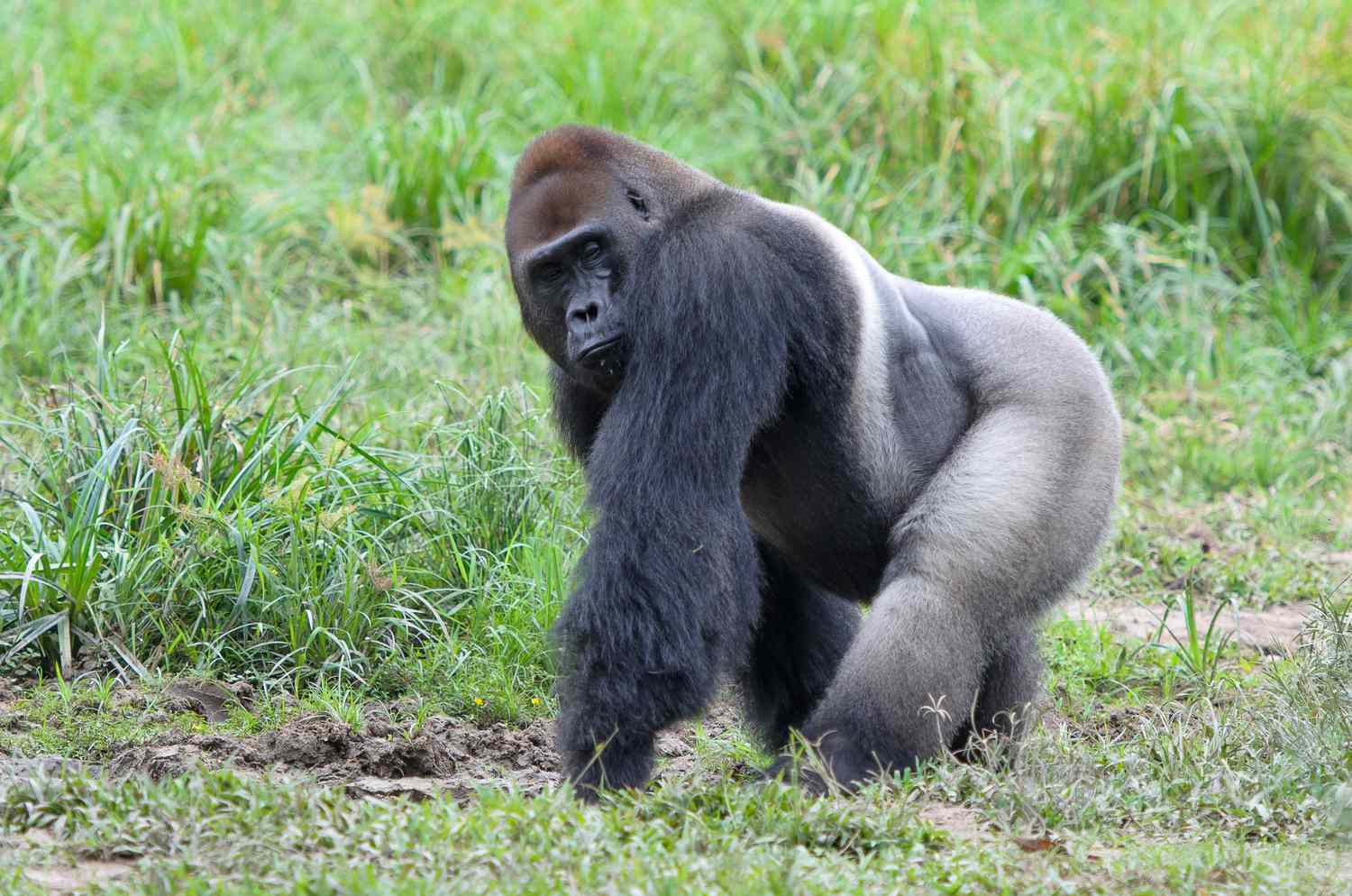
While all gorillas share certain physical traits, mountain gorillas have distinct features that set them apart. Gorillas in general are large, muscular primates compared to chimpanzees and orangutans — but mountain gorillas are noticeably larger and more robust, shaped by the demands of their habitat.
A male mountain gorilla can weigh up to 195 kg (430 lbs), compared to an average of around 160 kg (350 lbs) for a male western lowland gorilla.
Mountain gorillas are also recognizable by their larger heads, wide faces, short broad noses, and larger jaws relative to other gorilla subspecies. Their muscular, well-defined bodies are covered in thick, long fur — an adaptation that protects them from the cold, high-altitude climate of the Virunga Mountains and Bwindi.
2. Habitat and Geographic Range
Habitat is one of the clearest markers of the difference between a gorilla and a mountain gorilla. Mountain gorillas live in high-altitude forest, at elevations ranging from roughly 2,200 to 4,300 meters (7,200–14,100 feet).
They’re found in the dense tropical rainforest of Bwindi Impenetrable National Park in Uganda, home to roughly half of the world’s remaining mountain gorilla population, and in the Virunga Mountains spanning Uganda, Rwanda, and the Democratic Republic of Congo.
In Rwanda, they inhabit Volcanoes National Park; in Uganda, they’re also found in Mgahinga Gorilla National Park; and in the DRC, they occupy Virunga National Park.
By contrast, other gorilla subspecies — particularly the western lowland gorilla — prefer lowland tropical rainforest and swamp habitat, as their name suggests, and are found across the dense forests of Central and West Africa rather than the mountainous parks associated with gorilla trekking tours.
3. Behavior and Social Structure
Social Groups
All gorillas are social primates, but mountain gorillas display specific behaviors that distinguish them from their lowland relatives. They typically live in relatively small, cohesive family groups of around 30 individuals, led by a dominant male silverback responsible for overseeing the group’s movements, safety, and daily activities.
Other gorilla species tend to live in larger, more fluid social groups compared to the tightly structured families that make mountain gorilla trekking such a rewarding wildlife experience — trekkers aren’t just observing gorillas, they’re observing an entire functioning family unit.
Diet
Because their high-altitude habitat doesn’t support the fruit-bearing trees favored by many primates, mountain gorillas feed primarily on leaves, stems, and bamboo shoots. Despite their powerful build, they don’t eat meat; their diet also includes ferns, flowering plants, and the occasional small invertebrate, such as ants or bee larvae.
Western lowland gorillas, by contrast, live in fruit-rich habitat and consume significantly more fruit as a result, making their diet notably different from that of their mountain-dwelling cousins.
Movement
Given their bulky size, mountain gorillas move gracefully but slowly and deliberately, rarely venturing far from their home range. Adult mountain gorillas also rarely climb trees, largely because of their weight. Western lowland gorillas, on the other hand, cover much larger territories in search of seasonal fruit.
4. Conservation Status and Threats
Both gorillas and mountain gorillas face serious threats, though their conservation status differs. Mountain gorillas, once teetering on the edge of extinction, are classified as endangered by the IUCN. Thanks to decades of mountain gorilla conservation work, today’s population is estimated at over 1,000 individuals, spread across four national parks in Uganda, Rwanda, and the Democratic Republic of Congo.
Major threats to mountain gorillas include habitat loss from human activity, poaching for bushmeat and the pet trade, human diseases such as Ebola and influenza, and human-wildlife conflict. Despite ongoing conservation efforts, these risks remain a persistent challenge for this endangered primate.
Western and eastern lowland gorillas, meanwhile, are classified as critically endangered, with larger but rapidly declining populations driven by weaker conservation infrastructure in the countries where they’re found. Eastern lowland gorillas in particular face severe habitat destruction from deforestation and mining.
5. Human Interaction and Tourism: Why Mountain Gorilla Trekking Is So Popular
Mountain gorillas are more closely studied and protected than other gorilla subspecies, partly because of their limited range and strong tourism potential. Habituated gorilla families in Uganda, Rwanda, and the DRC give travelers the rare opportunity to go mountain gorilla trekking, widely regarded as one of the most memorable wildlife encounters on the continent.
Gorilla trekking permits are available in all three countries where mountain gorillas are found, with fees directly funding conservation work and supporting the communities living alongside these national parks.
In Uganda, that means trekking through Bwindi Impenetrable National Park or Mgahinga Gorilla National Park; in Rwanda, it means a hike through the bamboo forests of Volcanoes National Park.
Other gorilla species, by comparison, are far less accessible to tourism due to their remote habitat and expansive range, which limits both viewing opportunities and the conservation funding that tourism generates.
Which Gorilla Is More Common?
The western lowland gorilla is the most widespread and numerous gorilla subspecies, with a population in the hundreds of thousands. Mountain gorillas, by contrast, are far rarer, found only in two small regions of central Africa — which is exactly what makes a Uganda gorilla trekking safari or Rwanda gorilla trekking safari such a genuinely rare wildlife encounter.
How to Choose Between Uganda and Rwanda for Gorilla Trekking
Since mountain gorillas are found in both countries, many travelers ask whether to trek in Uganda or Rwanda. Broadly, Uganda offers a wider range of trekking sectors across Bwindi and Mgahinga, along with the option to combine gorilla trekking with chimpanzee tracking and classic savannah game drives.
Rwanda offers shorter transfer times from Kigali and a slightly more streamlined trekking experience in Volcanoes National Park. Our detailed comparison of gorilla trekking in Rwanda vs Uganda breaks down cost, accessibility, and trekking difficulty in both countries.
What to Expect on a Mountain Gorilla Trekking Safari
A typical trekking day begins early with registration and a briefing at park headquarters, followed by a guided hike through dense forest in search of a habituated gorilla family.
Trekking difficulty varies by park and by which gorilla family you’re assigned, ranging from a relatively easy one-hour walk to a more demanding multi-hour hike over steep, muddy terrain.
Once you find the gorillas, visitors are given a full hour to observe the family up close — watching silverbacks, mothers, and playful juveniles going about their day.
For a full walkthrough of the process, our guide to Uganda gorilla trekking covers permit booking, fitness requirements, and what to pack, while our Rwanda gorilla trekking guide covers the same for Volcanoes National Park.
Best Time for Gorilla Trekking in Uganda and Rwanda
Gorilla trekking is possible year-round in both countries, but the dry seasons — June to September and December to February — offer easier, less muddy trekking conditions.
Wetter months bring lusher scenery but more challenging terrain underfoot. Check our full guide to the best time to visit Uganda before booking your trekking dates.
Choosing the Right Gorilla Trekking Safari
Trekking itineraries range from quick, single-day treks to longer, multi-park circuits. A 1 Day Gorilla Trekking Uganda trip suits travelers short on time, while a 3 Day Gorilla Trekking Uganda safari allows more room to explore Bwindi at a relaxed pace.
Travelers wanting two separate gorilla encounters — ideal for photographers or repeat visitors — often choose a 4 Days Double Gorilla Trekking itinerary, while those starting from Kigali frequently opt for a 2 Days Rwanda Gorilla Trekking Safari in Volcanoes National Park.
For a full breakdown of costs across trekking permits, accommodation, and transport, see our Uganda safari itinerary and price guide.
Final Thoughts: Gorilla vs Mountain Gorilla
The difference between a gorilla and a mountain gorilla ultimately comes down to habitat, physical characteristics, behavior, diet, and conservation status. While all gorillas share common ancestry and social traits, mountain gorillas have adapted to a unique high-altitude environment, with thicker fur, a largely plant-based diet, and smaller, tighter-knit family groups.
Sustained conservation work has helped mountain gorillas become one of the few great ape populations that’s actually growing — a genuine conservation success story, and one you can witness firsthand on a guided trek.
Ready to see the difference for yourself? Visiting Bwindi Impenetrable National Park or the Virunga Mountains offers a true once-in-a-lifetime opportunity to observe mountain gorillas in their natural habitat. Get in touch with our safari planners to build a gorilla trekking itinerary around your travel dates.
Related Gorilla Trekking Pages
- Bwindi Impenetrable National Park
- Mgahinga Gorilla National Park
- Volcanoes National Park, Rwanda
- Uganda Gorilla Trekking Guide
- Gorilla Trekking Rwanda
- Gorilla Trekking Rwanda vs Uganda
- 1 Day Gorilla Trekking Uganda
- 3 Day Gorilla Trekking Uganda
- 4 Days Double Gorilla Trekking
- 2 Days Rwanda Gorilla Trekking Safari
- Best Time to Visit Uganda
- Contact Hail Tours Uganda