Batwa Trail Experience Bwindi: Everything You Need to Know in 2026
Batwa Trail experience Bwindi: Discover the Batwa Trail Experience Bwindi with this complete 2026 guide. Learn about Batwa culture, traditional forest life, trail activities, costs, booking information, and how this unique cultural experience supports local communities and conservation efforts in Uganda.
Bwindi Impenetrable National Park is celebrated worldwide for one encounter — the mountain gorilla. But before the gorillas, before the park was gazetted in 1991, and before any tourist set foot on any trail in this ancient forest, there was another people.
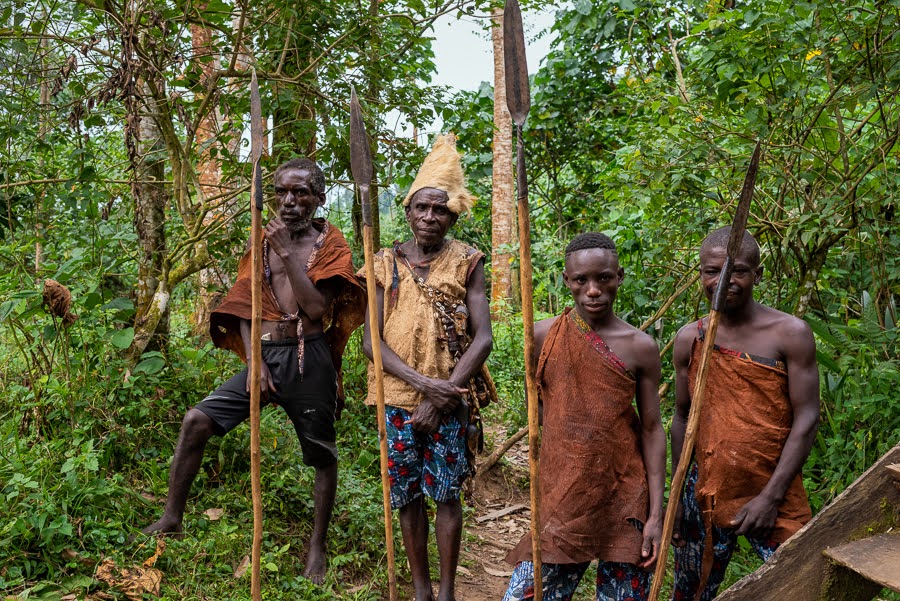
The Batwa pygmies — also called the Forest People — lived as hunter-gatherers within Bwindi and its surrounding forest systems for tens of thousands of years.
They hunted, gathered medicinal plants, harvested honey from wild hives, built fires without matches, tracked animals through terrain so dense it barely admits daylight, and co-existed with the mountain gorillas in ways that left no permanent mark on the forest and accumulated knowledge that no university has catalogued.
The Batwa Trail experience Bwindi is your opportunity to meet the inheritors of that knowledge — and to understand, in one remarkable morning, what was gained and what was lost when this forest became a national park.
Who Are the Batwa People of Bwindi?
The Batwa are among the oldest indigenous inhabitants of Central Africa’s equatorial forest belt — a community whose ancestral territory stretched from Cameroon across the Congo Basin to the forests of southwestern Uganda.
In Bwindi and Mgahinga, the Batwa lived as the forest’s human stewards for generations, maintaining a relationship with the ecosystem so light-footed that their presence is essentially invisible in the archaeological record.
They established no permanent villages, built no structures that would survive them, and left no mark on the forest that distinguishes their tenure from the forest’s own ancient continuity.
When the Ugandan government gazetted Bwindi as a national park in 1991 — a decision made in the name of conservation and, specifically, in the name of protecting the mountain gorillas — the Batwa were evicted from the forest without compensation.
Overnight, a people whose entire cultural identity, spiritual life, medicinal knowledge, and practical survival skills were rooted in the forest became landless squatters on its margins.
They had no farming skills, no permanent housing, no integration into the cash economy, and no mechanism for adapting to an entirely different way of life.
The decades since have been difficult for Batwa communities surrounding Bwindi, marked by poverty, marginalisation, and the gradual erosion of the traditional knowledge that the forest had sustained.
The Batwa Cultural Experience in Bwindi — developed by the Uganda Old People and Batwa Development Union (UOBDU) in partnership with the Uganda Wildlife Authority and USAID — was created specifically to address this injustice by creating a tourism income stream for Batwa communities directly linked to the forest heritage that tourism simultaneously deprived them of.
What Happens on the Batwa Trail at Bwindi?
The Batwa Trail experience Bwindi takes place in the Buhoma sector of Bwindi Impenetrable National Park and lasts approximately three to five hours depending on the programme arrangement.
It is led by Batwa community members themselves — not by park rangers or external guides — which means every demonstration, every story, and every skill shown is delivered by people whose grandparents or great-grandparents practised these things in this exact forest as their daily life.
The trail begins at the Batwa craft shop and office in Buhoma trading centre, just a short walk from the park gate. Your Batwa guide leads the group into the forest or into the community area beyond the park boundary — no park entrance fee is required for the community-based version of the experience, which takes place outside the formal park area. Inside the forest version, UWA charges foreign non-residents approximately USD $40 separately from the trail fee itself.
During the walk, Batwa elders and guides demonstrate traditional fire-making from scratch — using friction techniques that produce flame within minutes in the hands of someone who has practised this since childhood.
They demonstrate traditional hunting techniques including the use of bows, poison arrows, and pit traps, explaining how different prey was hunted across different seasons.
They identify medicinal plants and explain their applications — a pharmacopoeia accumulated across generations of forest living that ethnobotanists have barely begun to document.
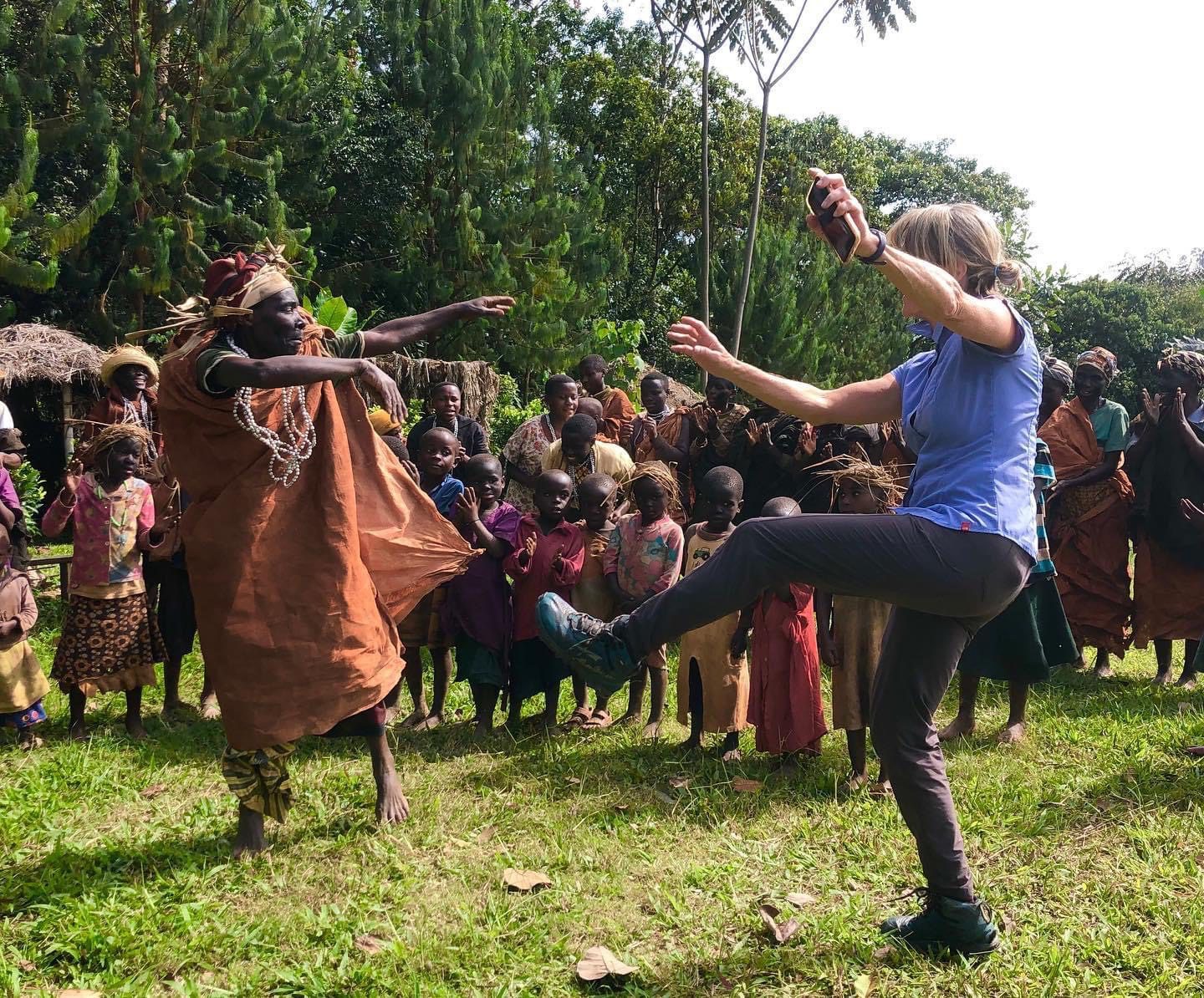
They show honey harvesting methods using smoke and bare hands to access wild hives in tree hollows. And they perform traditional Batwa music and dance — songs whose words encode forest knowledge, celebrations, and the oral history of a people whose story has never been written down.
Batwa Trail Cost and Practical Information for 2026
The Batwa Trail experience cost at Bwindi is USD $100 per person for the full experience in the Buhoma sector, as confirmed by current pricing.
This covers the community trail led by Batwa guides, cultural demonstrations, and the direct contribution to Batwa community income. Visitors interested in filming or documentary production pay an additional USD $400 per day per group.
For travellers combining the Batwa experience with gorilla trekking in Bwindi, the Buhoma sector is the recommended pairing — the gorilla trek takes the morning of one day, and the Batwa cultural experience fills the afternoon or occupies the following morning, making a natural and deeply complementary two-activity sequence without any additional driving.
The Batwa Forest Experience is separate from the standard gorilla trekking permit, which remains USD $800 per person for foreign non-residents in 2026.
The Buniga Forest Batwa Trail near Nkuringo is one of the most developed versions of the experience in the southern sector of Bwindi, running through a forest reserve adjacent to the main park and offering a trail environment that feels more enclosed and more atmospheric than the community-based Buhoma version. It is an excellent choice for guests staying in the Nkuringo sector for their gorilla trek.
The walk itself requires no specialist fitness and is accessible to guests of all ages, including children and older visitors. Comfortable walking shoes, long trousers, a light rain jacket, and insect repellent are the standard preparation.
Why the Batwa Trail Makes Your Bwindi Gorilla Safari Profoundly More Complete
Every visitor to Bwindi comes for the gorillas. Every visitor should also walk the Batwa trail — not as an obligation, but because the two experiences together tell a story that neither can tell alone.
The gorilla encounter shows you the forest as it is now — protected, monitored, managed by an international conservation infrastructure that has successfully arrested the mountain gorilla’s decline and begun its recovery.
The Batwa trail shows you the forest as it was — inhabited by a human community whose presence was not destructive but harmonious, whose knowledge of it exceeded anything that science has since documented, and whose displacement was the human cost of the conservation success that gorilla trekking celebrates.
Understanding both sides of that story makes you a more informed traveller, a more thoughtful conservationist, and a more generous guest in a landscape that has given more than it has received.
The USD $100 trail fee that goes directly to Batwa community households is the smallest payment you can make toward a debt that the conservation system has not yet fully acknowledged.
Visit the Batwa Trail in Bwindi With Hail Tours Uganda
At Hail Tours Uganda, we include the Batwa Trail experience as a recommended addition to every Bwindi gorilla trekking itinerary we build — and we build those itineraries with the specific understanding that the most meaningful Bwindi safari is not one that simply produces a gorilla photograph but one that genuinely engages with the full story of this extraordinary landscape.
We arrange Batwa trail bookings, coordinate the timing with your gorilla trekking permit day to create a seamless two-activity programme, and ensure that the experience is guided with the respect and depth it deserves.
We work with Buhoma sector’s Batwa community programme and with the Buniga Forest Trail team near Nkuringo, matching the experience to whichever sector your gorilla permit is booked in.
Whether you are planning a three-day Bwindi gorilla safari with a Batwa cultural morning, a five-day package that gives the trail its own dedicated day, or a longer Uganda itinerary that uses Bwindi as its emotional centrepiece — we are ready to build it around your dates, your group, and your sense of what a truly meaningful safari looks like.
Contact Hail Tours Uganda today. The gorillas will show you the forest as it is. The Batwa will show you the forest as it was. Both encounters deserve to happen on the same journey — and that journey starts with us.
Related Pages
Bwindi gorilla trekking
- Bwindi Impenetrable National Park
- 1 Day Gorilla Trekking Uganda
- 2 Day Gorilla Safari in Uganda
- 3 Day Gorilla Trekking Uganda
- 4 Days Double Gorilla Trekking
- 4 Days Bwindi Gorillas and Lake Bunyonyi Safari
- 4 Days Flying Gorilla Safari Uganda
- 5 Days Primates Safari Uganda
- 9 Days Gorilla Trek in Uganda
Nearby parks
Planning guides
- Uganda Gorilla Trekking
- Best Time to Visit Uganda
- Uganda Safari Parks
- Best Uganda Safari Lodges
- Uganda Wildlife Safari Activities
Company