Gorilla Trekking Packing List 2026: Everything You Need to Know Before You Trek
A gorilla trekking packing list comes down to six essentials: waterproof hiking boots with ankle support, long-sleeve layers in neutral colours, a rain jacket, gardening gloves for stinging nettles, a small daypack with two litres of water, and a mask for your viewing hour near the gorillas.
Everything else is secondary — but knowing exactly what those secondary items are, and why each one matters in the specific environment of equatorial rainforest trekking at altitude, is what separates prepared trekkers from those who suffer.
Bwindi sits between 1,160 and 2,607 metres, while Volcanoes National Park in Rwanda ranges from 2,400 to 4,507 metres. Mornings start cool and damp, rain can arrive any month, and the forest canopy keeps trails wet even on “dry” days. That combination of altitude, mud, dense vegetation, and unpredictable weather is why generic safari packing advice falls short.
Whether you are trekking with Hail Tours Uganda in Bwindi Impenetrable National Park or planning ahead for your first gorilla safari, this complete 2026 guide covers every item you need — from the boots on your feet to the documents in your daypack — with the reasoning behind every recommendation.
The Complete Gorilla Trekking Packing List 2026
Footwear — The Foundation of Your Trek
Waterproof hiking boots with high ankle support are the single most important item on your gorilla trekking packing list. The forest floor is wet, slippery, and often deeply muddy regardless of the season. Ankle support is critical on steep, uneven terrain. Waterproofing protects against stream crossings and the constant wet undergrowth you will push through.
Your boots must be broken in before you arrive. New boots cause blisters on any long hike — on a steep, 6-hour rainforest trek at altitude, they can end your experience entirely. Wear your boots on several long walks in the weeks before departure. If blisters form, treat them before your trek date.
What to look for in gorilla trekking boots:
- Waterproof membrane (Gore-Tex or equivalent)
- High ankle coverage (above the ankle bone)
- Aggressive rubber outsole for muddy, rooty terrain
- Broken in — NOT new from the shop
Tall wool or moisture-wicking socks are the essential partner to good boots. Wool or moisture-resistant socks such as Smartwool help prevent blisters. Cotton socks are not recommended. Socks should be long enough for pants to be tucked into them if necessary. This is critical for keeping safari ants and other insects out of your boots and off your legs.
Gaiters are strongly recommended and in some cases provided at lodges near Bwindi. Taller gaiters provide more protection than shorter ankle-height versions. They keep mud out of your boots and provide an additional barrier against stinging nettles and insects on your lower legs.
Lightweight sandals or flip-flops for wearing around your lodge after the trek — your boots will be wet and muddy.
Clothing — The Right Fabrics, Right Colours, Right Coverage
Gorilla trekking clothing rules are driven by three principles: full-body coverage, moisture management, and neutral colours that do not disturb wildlife. Here is every clothing item you need:
Long-Sleeved Shirts (Pack 2–3)
Long-sleeved shirts protect your arms from stinging nettles, branches, thorns, insect bites, and sun exposure. Long-sleeve shirts should be made from materials designed for outdoor activities that wick moisture away and dry quickly. Opting for darker colours can help you blend into the forest environment, reducing the chances of startling the wildlife.
What to avoid: Cotton — it absorbs moisture, becomes heavy, and takes hours to dry. Once wet with sweat or rain in cool forest air, cotton puts you at risk of hypothermia. Pack synthetic or merino wool long-sleeve shirts only.
Colours to pack: Olive green, khaki, brown, grey, dark blue. Black and blue shirts are not good in the jungle as they attract tsetse flies and other insects. Bright colours should be avoided while carrying out safari activities in the jungle. Also avoid military camouflage — it is prohibited in some areas and confusing to rangers.
Long Trekking Trousers (Pack 2 Pairs)
Full-length trousers are non-negotiable for gorilla trekking. They protect your legs from stinging nettles, thorny vines, insects, and the constant brush of wet vegetation. Nylon zip-off pants are perfect for cool mornings and warmer afternoons. Blue jeans are not recommended for treks — they are heavy, absorb water, and take days to dry.
Best options: Lightweight nylon or polyester trekking trousers with a DWR (Durable Water Repellent) coating. Zip-off legs give you afternoon versatility. Trousers should tuck into your socks at the bottom to prevent safari ants from climbing your legs.
Rain Jacket or Waterproof Shell
A packable, waterproof rain jacket is essential regardless of the season. Rain can occur at any time, even in dry season. The forest canopy retains moisture and drips long after rain stops. A lightweight, packable rain shell weighing under 400 grams takes almost no space in your daypack and can be the difference between a comfortable trek and a cold, dangerous one.
Fleece or Light Insulating Layer
Nighttime temperatures can dip considerably, especially at higher elevations. Pack warm layers for evenings and mornings. At Bwindi’s higher elevations, early morning temperatures can drop to 11°C/52°F before you even start trekking. A lightweight fleece worn under your rain jacket keeps you warm during the pre-dawn drive to park headquarters and the first hour of the trek before your body temperature rises.
Moisture-Wicking Underlayer
A lightweight synthetic base layer worn under your long-sleeve shirt provides additional warmth, wicks sweat away from your skin, and dries quickly. Essential for morning starts in cool conditions.
Gardening Gloves — The Most Underrated Item
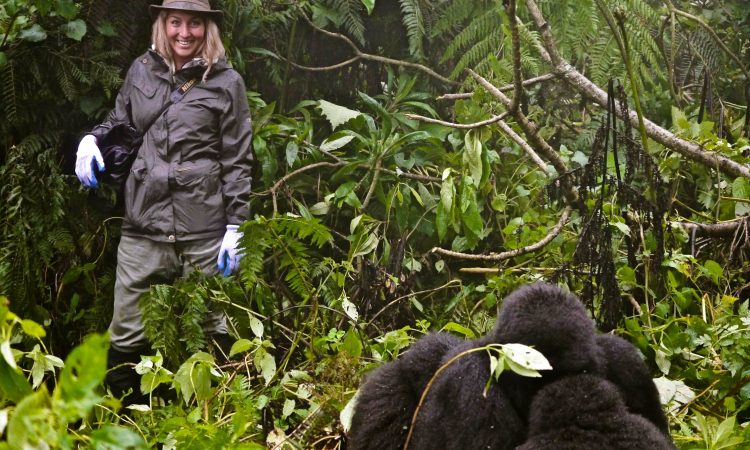
Stinging nettles grow along the trails in both Uganda and Rwanda. You’ll grab branches and vegetation to steady yourself on steep, slippery slopes. Simple gardening gloves prevent painful stings and scratches. Experienced trekkers call them one of the most underrated items on the packing list.
Inexpensive, lightweight, and absolutely essential. A pair of cotton or leather gardening gloves from any hardware store will do. Do not trek without them.
Hat and Buff/Neck Gaiter
A wide-brimmed hat provides sun protection in open areas and keeps rain off your face. A buff or neck gaiter can be pulled up to protect your face and neck from insects in dense forest sections, or worn as a headband when the forest opens up.
Daypack — What to Carry and How to Pack It
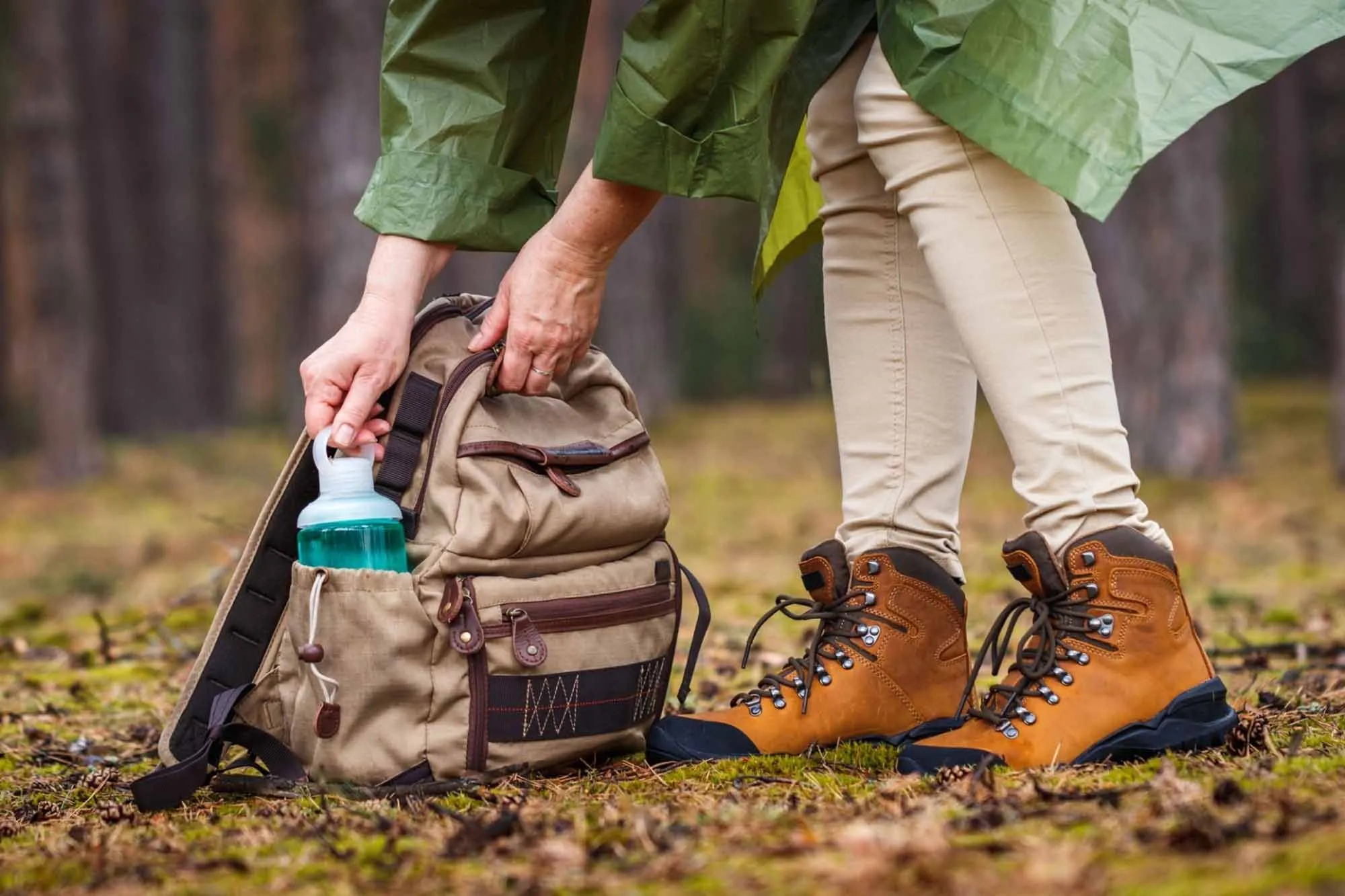
Your gorilla trekking daypack should be a 20–30 litre waterproof or water-resistant backpack. This is what you carry on the trek itself — not your main luggage, which stays at the lodge.
Choose a backpack made of waterproof material or one with a built-in rain cover to protect your belongings from the rainforest’s unpredictable weather.
Everything in your gorilla trekking daypack:
Water (minimum 2 litres): Plan for approximately two litres. Treks last anywhere from two to eight hours depending on where the gorilla family is that day, and the hiking is strenuous at altitude. Use a refillable bottle or hydration bladder — plastic single-use bottles are discouraged and banned in Rwanda.
Snacks and energy food: High-energy snacks sustain you on longer treks. Nuts, dried fruit, energy bars, and sandwiches from your lodge are all appropriate. Energy bars are good to have for treks to the gorillas, especially if they take longer than expected.
Rain cover for your daypack: Even waterproof packs benefit from a dedicated rain cover for sustained heavy downpours.
Dry bags or zip-lock bags: Protect your camera, phone, and documents inside waterproof bags within the pack. Moisture will penetrate any bag in sustained forest rain.
Camera (no flash): Flash photography is explicitly banned by the Uganda Wildlife Authority and prohibited in Rwanda. Disable flash on both your camera and phone before the trek starts.
Gorillas are close — the Uganda Wildlife Authority specifies a minimum distance of 10 metres from gorillas, and you do not need enormous telephoto lenses. Gorillas are close. In fact, trekkers note that gorillas sometimes wander closer than the 10-metre rule.
Binoculars: Useful for spotting birds in the forest canopy and watching gorilla behaviour from a respectful distance.
First aid kit: Include plasters/bandaids, antiseptic wipes, ibuprofen, antihistamines, blister treatment, insect sting relief, and any personal prescription medication. Your kit should also contain lip balm with sunscreen, sunscreen, antiseptic cream, and antibacterial gel.
Insect repellent (DEET): The forests are filled with different types of insects. A bite from an insect could ruin your whole safari, so carry repellents like DEET. Apply to all exposed skin before you enter the forest.
Sunscreen: Apply before departure, even on overcast days. Altitude increases UV exposure.
Toilet paper and hand sanitiser: There are no toilets in the forest while trekking gorillas. A ranger guide will dig a hole for you if needed.
Face mask: Required during your one-hour observation period with the gorilla family. Gorillas share approximately 98% of human DNA and are susceptible to human respiratory diseases. Masks protect them.
Tipping money in small notes: Bring small bills in local currency for tipping guides, trackers, and porters. Tipping your guide (UGX 50,000–100,000), tracker (UGX 20,000–50,000), and porter is expected and appropriate.
Documents — The Most Critical Items of All
Even the most thorough gorilla trekking packing list fails if you forget the paperwork. These documents are just as critical as your boots.
Gorilla trekking permit: This is the single most important document. You cannot enter the park without it. Bring two printed copies and a digital copy on your phone. Your permit confirms your assigned gorilla family and trekking sector. Double-check the date and location before you leave home.
A Uganda gorilla trekking permit costs USD 800 per person (2026 rate). Rwanda permits cost USD 1,500. These are booked through the Uganda Wildlife Authority or licensed tour operators like Hail Tours Uganda.
Passport: Valid for at least six months beyond your travel dates. Keep it in a waterproof pouch.
Uganda e-Visa: Most nationalities require an e-Visa obtained online before arrival. The East Africa Tourist Visa (USD 100) covers Uganda, Rwanda, and Kenya — useful if combining gorilla treks across both countries.
The East Africa Tourist Visa allows the holder to move freely between Kenya, Rwanda and Uganda with only one visa, valid for 90 days, also acting as a multiple-entry visa.
Yellow Fever Certificate: You are required to show a yellow fever certificate upon entering Uganda, Rwanda, and Tanzania. Vaccination should be completed at least 10 days before arrival.
Travel insurance details: Your policy must cover medical evacuation from remote areas. Bwindi is several hours from the nearest hospital. Medical evacuation coverage is non-negotiable for remote forest trekking.
Health and Medical Essentials
Malaria prevention: Malaria is present year-round below 2,000 metres. Consult your doctor about prophylaxis (typically Malarone, Doxycycline, or Lariam) at least 2 weeks before departure. The gorilla trekking areas of Bwindi include elevations both above and below the 2,000-metre malaria risk threshold — prophylaxis is strongly recommended.
Water purification: While most lodges provide safe drinking water, carry purification tablets or a SteriPen as backup for longer treks.
Electrolyte sachets: Altitude trekking with a heavy pack in humid conditions causes significant fluid and electrolyte loss. Electrolyte/flavour crystal packets can be added to water to replace fluids and encourage hydration.
Important health regulation: If you are unwell with anything contagious, even a common cold, you may be denied any of the treks to ensure the safety of the gorillas.
This is a national park regulation, and trekking permits will not be refunded if you are denied entrance due to illness. This is one of the most important rules for gorilla trekking — do not attempt to conceal illness.
Optional but Highly Recommended Items
Trekking/hiking poles: Optional but genuinely helpful on steep descents and muddy, slippery ascents. Walking sticks (one per person, carved from wood) will be available for use at Bwindi and Volcanoes National Park. If bringing your own hiking poles, they must be able to fit in checked luggage, as they are not allowed as carry-on.
Porter hire: Highly recommended for any trekker who is not a regular hiker. Porters carry your daypack, assist you on steep terrain, and provide steadying hands on difficult passages. Porter hire costs approximately USD 10–20 for the day and represents both a manageable cost and a meaningful income source for local communities near Bwindi.
Instant cooling scarf: Can be soaked in water and used to stay cool on warm sections of the trail.
Lightweight camp chair: Some trekkers carry a compact, foldable seat for use during the gorilla observation hour.
Reusable waterproof bags: Several sizes for wet or dirty clothing and to protect camera equipment. Note that plastic grocery bags are banned in Rwanda.
What NOT to Pack for Gorilla Trekking
Knowing what to leave behind is as important as knowing what to bring:
No bright colours: They startle gorillas and attract insects. Neutral tones only.
No military camouflage: Prohibited in some national park areas and potentially confusing to rangers.
No flash on cameras or phones: Banned by UWA regulations. Disable it before entering the forest — not just turned off, but disabled at the settings level.
No plastic bags in Rwanda: Rwanda enforces a nationwide ban on plastic shopping bags. Bags can be confiscated at the airport. Use reusable dry bags, stuff sacks, or cloth bags.
No cologne or perfume: Strong scents disturb gorillas and attract insects. Leave all fragranced products at the lodge.
No shorts: Your legs will be exposed to stinging nettles, thorns, insects, and rough vegetation. Long trousers are mandatory.
No sandals or sneakers: The terrain demands proper waterproof hiking boots.
No large rolling suitcases on the trek day: Baggage should be restricted to one soft compact suitcase, sports bag, or backpack of medium size, as well as a day pack.
Gorilla Trekking Packing List by Season: Wet vs Dry
What to wear gorilla trekking in dry season (June–September, December–February): Even in Uganda’s dry season, the forest trails remain damp and afternoon showers are common.
The dry season makes trails marginally less muddy but does not eliminate the need for waterproof boots and rain gear. Mornings are cooler; pack your fleece for pre-dawn departure.
What to wear gorilla trekking in wet season (March–May, October–November): Wet season trekking requires an upgraded waterproof commitment: a proper rain jacket (not a poncho), gaiters, and extra dry bags for camera and documents.
Trails are significantly muddier and some descents require rope assistance. The reward is lush, dramatic forest scenery and thinner tourist crowds. Permits are sometimes easier to obtain.
The core packing list remains identical for both seasons — only the intensity of rain preparation changes.
Gorilla Trekking Packing List: Uganda vs Rwanda Differences
Both Uganda and Rwanda offer life-changing gorilla encounters, but a few packing considerations differ:
Uganda-specific packing notes:
- Gorilla permit: USD 800 (2026 rate)
- Primary location: Bwindi Impenetrable National Park (multiple sectors: Buhoma, Ruhija, Rushaga, Nkuringo) and Mgahinga
- Altitude range: 1,160–2,607 metres
- Trek difficulty: Variable — some sectors involve genuinely strenuous terrain
- Porter hire strongly recommended for all fitness levels
Rwanda-specific packing notes:
- Gorilla permit: USD 1,500 (2026 rate)
- Primary location: Volcanoes National Park
- Plastic bags are completely banned — confiscated at Kigali Airport on arrival
- Altitude range: 2,400–4,507 metres — pack more warm layers than for Uganda
- Complimentary gaiters are provided at some Rwanda lodges including Five Volcanoes Boutique Hotel and Bisate Lodge.
For most travellers comparing value, Uganda offers the better overall gorilla trekking experience — Uganda is widely considered the best overall destination to see gorillas, and with more wildlife overall, you can also visit Murchison Falls or see primates in Kibale Forest N.P.
The $800 Uganda permit versus Rwanda’s $1,500 makes Uganda significantly more accessible, particularly for families and multiple-permit buyers.
One Final Essential: Hiring a Porter at Bwindi
If there is one item not on most gorilla trekking packing lists that deserves special mention, it is hiring a local porter. Available at park headquarters for approximately USD 10–20, a porter carries your daypack, steadies you on difficult terrain, and provides invaluable local knowledge about the trail and the forest.
Beyond the practical support, porter hire is one of the most direct ways to contribute economically to the communities that live adjacent to Bwindi and whose cooperation is essential to gorilla conservation. Hail Tours Uganda strongly encourages porter hire for every trekker regardless of fitness level.
Why Your Gorilla Trekking Packing List Is More Important Than You Think
Uganda gorilla permits cost USD 800 per person in 2026 — a significant investment. Showing up unprepared means you might not reach the gorillas at all, or you may have to cut your precious one-hour observation short due to exhaustion or gear failure. A solid packing list protects both your health and your financial investment.
Beyond the financial stakes, consider the physical demands. You will be hiking through equatorial rainforest for anywhere from two to eight hours depending on where the gorilla family is that day.
The terrain involves steep slopes, exposed roots, stream crossings, dense undergrowth, and the infamous stinging nettles that line the trails in both Uganda and Rwanda. There are no shops in Bwindi Forest. There are no toilets on the trail. What you carry is what you have.
Without the right packing list, you risk hypothermia from wet cotton clothing in cool mountain air, blisters and foot injuries from inadequate boots, insect-borne diseases like malaria, and discomfort or injury from stinging nettles, ants and thorny vines.
Get it right, and the trek becomes one of life’s defining experiences. Get it wrong, and a lifetime adventure becomes a painful ordeal cut short before you ever see the gorillas.
Gorilla Trekking Rules You Must Know Before You Pack
Uganda Wildlife Authority rules directly affect what you pack and how you behave in the forest:
Uganda’s current conservation tariff specifies that trekkers must maintain a minimum distance of 10 metres from gorillas. A maximum of eight visitors are allowed with a gorilla family at one time.
You receive one hour with the gorilla family. This hour is non-negotiable — when it ends, you leave regardless of what is happening. You may be asked to leave earlier if the gorillas become distressed.
Flash photography is banned. Illness means you are turned away. Masks must be worn during the observation hour. These rules are enforced — not suggested.
Now You Are Ready — Trek the Gorillas with Hail Tours Uganda
You now have the most comprehensive gorilla trekking packing list available for 2026. The boots, the layers, the gardening gloves, the rain jacket, the documents, the permit, the face mask, the DEET — every item has a reason, and every reason traces back to making your one hour with the mountain gorillas the most profound experience of your life.
But here is what no packing list can give you: the knowledge of which gorilla family to request based on your fitness level. The relationships with park rangers that tell you where the gorillas slept last night.
The experienced guide who spots a silverback through the undergrowth before you have any idea where to look. The seamlessly organized transfer from Kampala to Bwindi so that when you reach park headquarters at dawn, you are focused entirely on the experience ahead — not logistics, not permits, not last-minute scrambling.
That is what Hail Tours Uganda delivers.
We are a licensed Ugandan tour operator specializing in gorilla trekking safaris in Bwindi Impenetrable National Park and Mgahinga Gorilla National Park.
We handle your gorilla permit acquisition (USD 800, 2026 rate), transport from Kampala to Bwindi, accommodation at our partner lodges from budget to luxury, pre-trek briefing with experienced guides, and porter arrangement — everything except the actual packing. That, this guide has handled.
Why Hail Tours Uganda?
Our guides have tracked gorillas in Bwindi for years. They know the families, the terrain, the seasons, and the behaviour patterns that make the difference between a standard sighting and a magical, close-up encounter.
Our clients regularly describe their gorilla trek as the single greatest wildlife experience of their lives — and the most common word in our reviews is “speechless.”
Gorilla permits sell out months in advance, especially for peak season dates. There are only 1,063 mountain gorillas left in the world — every trek directly funds their conservation. Every time you see a silverback gorilla in Bwindi’s ancient forest, you are participating in one of conservation’s greatest success stories, and contributing to the continued protection of a species pulled back from the brink.
The gorillas are in Bwindi. Your packing list is done. The only question is when you are coming.
Book your gorilla trekking safari with Hail Tours Uganda: 📱Contact Us: Email 🌐 Hail Tours Uganda
Uganda gorilla trekking permit: USD 800 (2026 rate). Rwanda permit: USD 1,500. Maximum 8 trekkers per gorilla family per day. 1-hour observation limit. Treks last 2–8 hours. Bwindi altitude: 1,160–2,607 metres. Best booked 3–6 months in advance for peak season dates.