Is Kenya a Poor Country? Economy, Poverty Rate & Living Standards Explained
Is Kenya a Poor Country: Kenya is considered a lower-middle-income country, with both growing economic sectors and ongoing poverty challenges.
This balanced classification reflects a nation that has made significant strides in economic diversification and infrastructure while still grappling with high poverty levels, regional inequalities, and climate vulnerabilities.
In 2026, Kenya’s economy demonstrates resilience through sectors like agriculture, tourism, and technology, yet questions around “is Kenya a poor country” persist due to its poverty rate in Kenya and uneven distribution of wealth.
What Defines a “Poor Country”?
Economists and international organizations like the World Bank use several key metrics to classify countries:
- GDP per capita: This measures the average economic output per person. Kenya’s nominal GDP per capita stands around $2,100–$2,600 in recent estimates for 2024–2026, placing it in the lower-middle-income category (typically $1,136 to $4,465). On a purchasing power parity (PPP) basis, it reaches approximately $6,300–$7,930, adjusting for lower living costs.
- Income levels: Average incomes remain modest, with significant inequality. The top 10% of earners capture a disproportionate share compared to the bottom 10%.
- Poverty rates: National poverty lines and international benchmarks (e.g., $2.15 or $3.65 per day in 2017 PPP) reveal the proportion of people struggling to meet basic needs.
These indicators provide context beyond simplistic labels. A country can show strong GDP growth yet face high poverty in Kenya if benefits do not reach all citizens equally. Kenya transitioned to lower-middle-income status in 2014, but progress toward upper-middle-income remains gradual.

Kenya’s Economy Overview: Key Facts
Kenya boasts one of Africa’s most dynamic and diversified economies. In 2024, nominal GDP was approximately $120 billion, with projections for 2026 reaching around $140 billion. Real GDP growth has averaged 4–5% in recent years, with Q3 2025 recording 4.9% expansion, driven by agriculture rebound and construction recovery.
Strong sectors include:
- Agriculture: Contributes about 29% to GDP and employs a large portion of the workforce. It benefits from favorable weather in some periods but remains vulnerable to droughts and floods. Key exports: tea, coffee, horticulture.
- Tourism: A major foreign exchange earner, with 7.9 million visitors in 2025 generating roughly $3.8–3.85 billion in revenue.
- Technology and Services: Nairobi’s “Silicon Savannah” hosts a thriving tech scene with mobile money (M-Pesa) innovations. Services account for over 50% of GDP, including finance, real estate, and ICT.
- Other contributors: Manufacturing, construction, and remittances from the diaspora.
The economy shows resilience, with projected growth of 4.9–5.3% in 2026, supported by easing inflation, monetary policy adjustments, and private sector activity. However, challenges like high public debt (around 65% of GDP) and fiscal pressures persist.
Poverty in Kenya: Core Challenges
Despite growth, poverty rate in Kenya remains significant. The national poverty headcount stood at 39.8% in 2022, affecting over 20 million people. Some estimates using international lines ($3/day) place higher figures, with Kenya ranking among countries with notable portions living below thresholds.
Urban vs rural differences are stark:
- Rural poverty hovers around 38–40%, where subsistence farming dominates and climate shocks hit hardest.
- Urban poverty is lower (around 26%), but informal settlements in cities face overcrowding and limited services.
Regional disparities are pronounced: arid northern counties like Turkana report rates exceeding 80%, while urban centers fare better. Multidimensional poverty (considering health, education, living standards) affects about 25–37% of the population, with many more vulnerable.
Poverty reduction has been slow relative to GDP growth due to inequality, population growth, and uneven job creation. Economic expansion has not always translated into broad-based household income gains.
Standard of Living: Modern Cities vs Rural Areas
Living conditions in Kenya highlight contrasts and inequality. Nairobi, the capital, features a modern skyline with skyscrapers, shopping malls, tech hubs, and vibrant middle-class neighborhoods.
It serves as East Africa’s financial and transport gateway, offering better access to education, healthcare, and services for many residents.
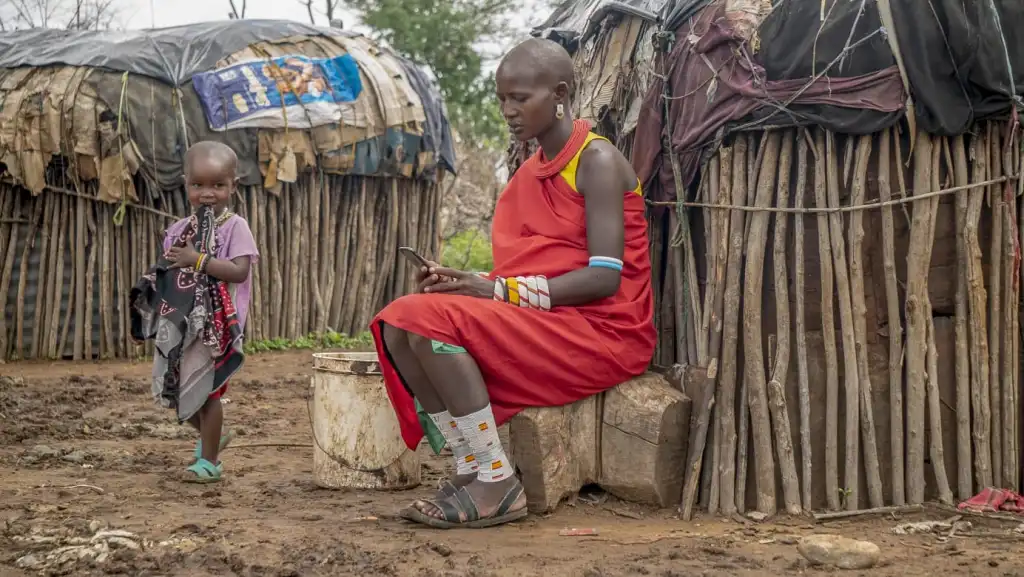
In contrast, rural areas often rely on basic infrastructure, with challenges in water access, electricity, and roads. Many households engage in small-scale farming, facing risks from unpredictable weather. Coastal regions like Mombasa blend tourism-driven development with local livelihoods.
This development + inequality dynamic is evident: a growing urban middle class coexists with persistent rural hardship.
Access to electricity has improved nationwide, and mobile connectivity is widespread, enabling digital services even in remote areas. Yet, gaps in quality education and healthcare contribute to uneven living standards.
Is Kenya Developing? Economic Growth and Progress
Yes, Kenya is a developing country with clear momentum under frameworks like Vision 2030, which aims for newly industrialized status. Key drivers include:
- Infrastructure development: Investments in the Standard Gauge Railway (SGR), roads, ports, and energy projects. A new National Infrastructure Fund (signed into law recently) seeks to mobilize private and domestic capital for highways, dams, and renewable energy to close financing gaps.
- Foreign investment: Deals in agriculture, manufacturing, ICT, energy, and real estate. Kenya attracts interest as a regional hub, with initiatives like the Kenya International Investment Conference showcasing billions in potential commitments.
- Economic growth: Steady 4–5%+ annual expansion, outperforming some regional peers in diversification. Tech innovation and a youthful population (demographic dividend) offer long-term potential.
Challenges remain, including debt sustainability and the need for more inclusive growth to create formal jobs for the expanding workforce.
Factors Affecting Poverty
Several interconnected issues influence poverty in Kenya:
- Unemployment: Especially among youth; many rely on informal sector jobs with low security.
- Education access: While enrollment has risen, quality and rural-urban gaps affect skills development and employability.
- Climate challenges: Droughts, floods, and erratic rains disrupt agriculture—the backbone for many poor households—exacerbating food insecurity.
Other factors include governance, corruption perceptions in some areas, and rapid population growth outpacing job creation.
Kenya Tourism & Economy: A Key Driver for Growth
Tourism plays a vital role in Kenya’s economy, serving as a major income source and employment generator. In 2025, the sector welcomed 7.9 million visitors (including strong domestic tourism) and earned approximately KSh 500 billion (~$3.85 billion).
Iconic destinations like the Maasai Mara National Reserve draw global visitors for the Great Migration, where millions of wildebeest and other wildlife cross plains in one of nature’s greatest spectacles.
Tourism supports wildlife conservation, community livelihoods through conservancies, and related industries like hospitality and transport. It helps diversify the economy beyond agriculture and provides foreign exchange to fund development.
For safari enthusiasts, Kenya offers world-class experiences that highlight the country’s natural heritage while contributing to poverty alleviation in rural conservancy areas.
Explore Kenya safaris to witness these wonders firsthand, or check our travel guides for planning tips and wildlife articles on conservation efforts.
Comparison with Other Countries
In East Africa, Kenya holds a relatively strong position:
- Uganda: Lower GDP per capita (around $1,000–1,200 nominal) and higher poverty risks in some metrics, though with solid growth in agriculture and oil prospects.
- Rwanda: Known for rapid post-conflict development and lower corruption perceptions, with GDP per capita around $1,000 nominal but strong services and tourism focus. Kenya leads in overall economy size and diversification.
Kenya’s larger GDP, established infrastructure, and tech edge give it advantages, but all three nations face shared challenges like climate impacts and youth employment.
FAQs – Is Kenya a poor country
Is Kenya rich or poor?
Kenya is neither simply rich nor poor—it is a lower-middle-income developing economy with dynamic growth alongside persistent poverty challenges.
What is the poverty rate in Kenya?
Approximately 39.8% nationally (2022 data), with higher rates in rural and arid regions. International benchmarks show notable portions below $2.15–$3.65/day lines.
Is Kenya safe for tourists?
Most tourist areas, including national parks and major cities (with standard precautions), are safe and well-managed. Kenya remains a top destination for Kenya safaris and beach extensions.
Is Kenya a developing country?
Yes, with ongoing infrastructure projects, investment inflows, and economic diversification under Vision 2030.
Conclusion
Kenya is not simply a poor country; it is a developing nation with both economic progress and ongoing challenges, making it one of Africa’s most dynamic economies. Its Kenya economy blends traditional strengths in agriculture and tourism with emerging tech and services, supported by infrastructure gains and foreign investment.
While poverty in Kenya and inequality require sustained attention—through better education, climate resilience, and inclusive job creation—the country’s trajectory shows resilience and potential.
Despite economic challenges, Kenya remains one of Africa’s top travel destinations, offering world-class wildlife experiences in places like the Maasai Mara.