
Uganda Primate Conservation: Everything You Need to Know
Uganda primate conservation stands among the greatest wildlife recovery stories on the African continent — a rare example of a great ape population actually growing rather than shrinking.
From the mountain gorillas of Bwindi Impenetrable National Park to the chimpanzees of Kibale Forest and the golden monkeys of Mgahinga, Uganda protects a genuinely extraordinary share of the world’s remaining primate diversity, and understanding how that conservation actually works deepens every gorilla trek, chimpanzee walk, or wildlife safari you take in the country.
This guide covers everything worth knowing about primate conservation in Uganda: the mountain gorilla’s remarkable population recovery, how chimpanzee conservation works in Kibale, the threats that still remain, and exactly how your own visit contributes directly to protecting these species for the next generation.
Mountain Gorilla Conservation in Uganda: A Genuine Success Story
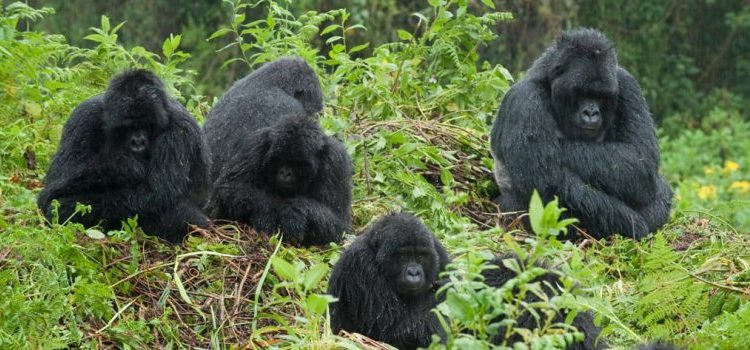
Mountain gorilla conservation is arguably Africa’s single greatest conservation turnaround. In the 1980s, fewer than 300 mountain gorillas remained in the wild, with numbers at one point dropping as low as 254 individuals — a population teetering genuinely close to extinction.
Today, the global mountain gorilla population has climbed to an estimated 1,063 individuals, split between the Virunga Massif (spanning Uganda, Rwanda, and the Democratic Republic of Congo) and Uganda’s own Bwindi Impenetrable National Park, home to roughly 459 of that total. Mountain gorillas are now the only great ape species confirmed to be increasing in number — a genuinely rare bright spot in global primate conservation.
This recovery didn’t happen by accident. It stems from decades of intensive anti-poaching patrols, habitat protection, and — critically — community-centered conservation that turns local communities from potential threats into active protectors of gorilla habitat.
For the full data behind this recovery, our detailed breakdown of how many mountain gorillas are left in the world tracks the population figures year by year, while our piece on mountain gorilla conservation success stories covers the specific strategies — from transboundary collaboration between Uganda, Rwanda, and the DRC to revenue-sharing schemes that fund schools and health centers around gorilla habitat.
How Gorilla Habituation Supports Uganda’s Conservation Efforts
One of the most important tools in Uganda’s gorilla conservation strategy is the gorilla habituation process — the careful, multi-year effort to accustom wild mountain gorilla families to human presence without triggering fear or aggression.
Handled by Uganda Wildlife Authority (UWA) researchers and rangers, this process typically takes 2 to 5 years per family, starting with short, non-threatening visits at a safe distance and gradually building toward the close, calm proximity that eventually allows both scientific research and limited, carefully managed tourism.
This isn’t just a tourism product — it’s a genuine conservation mechanism. Habituation enables non-invasive veterinary monitoring, ongoing genetic research, and daily health checks on individual gorillas, all of which feed directly back into mountain gorilla conservation strategy.
Revenue from the extended gorilla habituation experience — available specifically in Bwindi’s Rushaga sector — funds ranger patrols, habitat restoration, and community projects, making it one of the clearest examples of tourism directly bankrolling conservation outcomes on the ground.

Chimpanzee Conservation in Kibale National Park
While mountain gorillas dominate the conversation, chimpanzee conservation in Uganda is just as significant. Kibale National Park, often called the “Primate Capital of the World,” shelters an estimated 1,500 chimpanzees — one of the largest and most reliably habituated chimpanzee populations anywhere in East Africa, alongside 12 other primate species including red colobus monkeys, L’Hoest’s monkeys, and grey-cheeked mangabeys.
Chimpanzee trekking permit fees in Kibale directly fund Uganda Wildlife Authority conservation work and support initiatives run in partnership with the Jane Goodall Institute, covering habitat protection, anti-poaching patrols, and community development around the park’s boundary.
Because Kibale sits at the heart of a wider protected corridor linking to Queen Elizabeth National Park, its conservation success has ripple effects across the broader ecosystem, supporting genetic exchange between wildlife populations that would otherwise become isolated.
Our full guide to Kibale National Park entrance fees breaks down exactly how these conservation-linked fees are structured, while our 3 Days Chimpanzee Trekking in Kibale itinerary shows how a single trip translates directly into conservation funding.
The Biggest Threats to Uganda’s Primate Populations
Despite genuine progress, primate conservation in Uganda still faces real, ongoing threats that require constant vigilance:
- Disease transmission — mountain gorillas and chimpanzees share roughly 98% of human DNA, making them highly vulnerable to human respiratory illnesses. Gorilla Doctors and UWA veterinary teams describe disease as one of the single biggest ongoing threats to the species, a risk amplified by growing tourism numbers and closer human-wildlife proximity.
- Habitat fragmentation — agricultural expansion, illegal logging, and human settlement continue to press against protected forest boundaries, limiting the natural range gorilla and chimpanzee families can expand into as their populations grow.
- Political instability in the wider region — conflict in the Democratic Republic of Congo’s portion of the Virunga Massif has periodically spiked poaching risk, even as transboundary cooperation between Uganda, Rwanda, and the DRC has generally managed to hold gorilla numbers steady through these periods.
- Climate change — shifting rainfall patterns and rising temperatures are gradually altering vegetation zones that both gorillas and chimpanzees depend on for food, an emerging pressure conservationists are only beginning to fully map.
- Population density pressure — somewhat paradoxically, as gorilla numbers recover within a fixed habitat area, higher density has been linked in scientific studies to greater susceptibility to parasitic infection, a genuinely new challenge born directly out of conservation success itself.
How Ecotourism Directly Funds Primate Conservation in Uganda
Ecotourism is the financial engine behind almost every conservation success story in Uganda’s primate range. Gorilla and chimpanzee trekking permit fees flow directly into anti-poaching patrols, habitat restoration, and — through formal revenue-sharing arrangements — into schools, health centers, and community infrastructure surrounding Bwindi and Kibale.
This model transforms local communities into active stakeholders in conservation outcomes rather than passive bystanders or, historically, occasional poaching pressure themselves.
Community-run initiatives around Bwindi, including craft cooperatives and cultural walks run by local women’s groups, extend this economic benefit even further, ensuring that the value of primate tourism in Uganda reaches households well beyond those directly employed as rangers or guides.
For a broader sense of how this funding model extends across Uganda’s wider wildlife economy — not just primates — our guide to a Big 5 safari in Uganda covers how tourism revenue also supports lion conservation units and rhino reintroduction programs elsewhere in the country.
Golden Monkeys and Uganda’s Wider Primate Conservation Picture
Mountain gorillas and chimpanzees aren’t the only primates benefiting from Uganda’s conservation infrastructure. Mgahinga Gorilla National Park protects the endangered golden monkey, found only in the Virunga volcanic range, while the broader network of protected forests across western Uganda shelters over a dozen additional primate species.
This wider biodiversity underpins the entire conservation model — protecting gorilla and chimpanzee habitat inherently protects the golden monkeys, birds, and smaller mammals sharing the same forest ecosystem.
Our overview of what animals you can see in Uganda captures just how much of this broader wildlife wealth rides on the same conservation infrastructure built primarily around gorilla and chimpanzee protection.
How You Can Support Uganda Primate Conservation as a Traveler
Every visitor who treks gorillas or chimpanzees in Uganda becomes a direct participant in primate conservation, whether they realize it or not. Booking through licensed operators and paying official permit fees ensures your money genuinely reaches conservation programs rather than informal, unregulated operators.
Following trekking rules — maintaining distance, avoiding trips when unwell, and respecting the one-hour limit — directly reduces disease transmission risk to already-vulnerable populations.
And choosing to combine a silverback gorilla trek with chimpanzee tracking in Kibale, rather than treating them as separate, disconnected activities, spreads tourism revenue more evenly across Uganda’s full primate conservation network rather than concentrating it in a single park.
FAQ: Uganda Primate Conservation
How many mountain gorillas are left in Uganda? Bwindi Impenetrable National Park is home to an estimated 459 mountain gorillas, part of a global population of roughly 1,063 individuals split between Bwindi and the Virunga Massif.
How does gorilla trekking support conservation? Permit fees directly fund anti-poaching patrols, habitat protection, veterinary monitoring, and community revenue-sharing programs around protected primate habitat.
What is the biggest threat to mountain gorillas today? Disease transmission from humans is widely considered the single greatest ongoing threat, given how genetically similar gorillas are to humans.
How many chimpanzees live in Kibale National Park? Approximately 1,500 chimpanzees, making Kibale one of the largest and most reliably habituated chimpanzee populations in East Africa.
What is gorilla habituation, and how does it help conservation? Habituation is the multi-year process of acclimating wild gorilla families to human presence, enabling ongoing research and veterinary care that directly supports long-term conservation.
Related Uganda Primate & Wildlife Guides
- Mountain Gorilla Conservation Success Stories
- How Many Mountain Gorillas Are Left in the World?
- What Is Gorilla Habituation? A Complete Guide
- Mountain Gorilla Habitats: 15 Intriguing Facts
- Top 10 Facts About Mountain Gorillas
- Silverback Gorilla: Height, Strength, Weight, Habitat & More
- Kibale National Park: Location, Chimpanzee Trekking & More
- Kibale National Park Entrance Fees
- 3 Days Chimpanzee Trekking in Kibale
- Buy Chimpanzee Permits Uganda: Complete Booking Guide
- What Animals Can I See in Uganda?
- Guide to a Big 5 Safari in Uganda