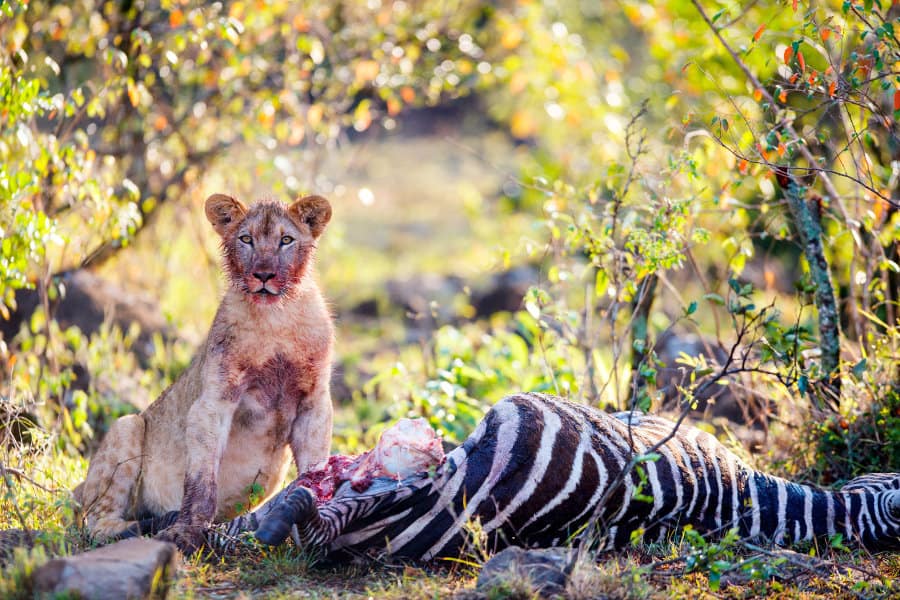
What Do Lions Eat and Drink in the Zoo and Savanna
What Do Lions Eat: Lions are obligate carnivores, relying entirely on meat for nutrition. Their primary food is animal flesh, rich in proteins and fats they need to survive. They consume large herbivores for the bulk of their calories, but can supplement with smaller prey.
For drinking, lions need water but aren’t as dependent as many animals. They often get sufficient moisture from the blood and tissues of their kills. When water is available, they drink regularly—up to several liters after a big meal to aid digestion.
In arid areas like parts of the savanna, they can go days without drinking by relying on prey moisture or even plants like tsamma melons in extreme cases.
What Do Lions Eat the Most?
Lions eat meat almost exclusively, with the majority coming from medium to large ungulates. What do lions eat the most depends on their habitat, but across African populations, top prey includes:
- Zebras
- Wildebeest
- Buffalo (especially Cape buffalo)
These species often make up the bulk of their diet due to size, abundance, and nutritional payoff. In many ecosystems, 2–3 key species dominate, with lions feeding on over 40 types overall but prioritizing high-biomass options.
What Do Lions Eat in the Savanna?
In the African savanna—the classic habitat for lions—prey is abundant in open grasslands. What do lions eat in the savanna mirrors their overall wild diet: large herbivores thriving in these ecosystems.
Common savanna prey:
- Zebras (a frequent target due to herds and visibility)
- Wildebeest (especially during migrations)
- Buffalo
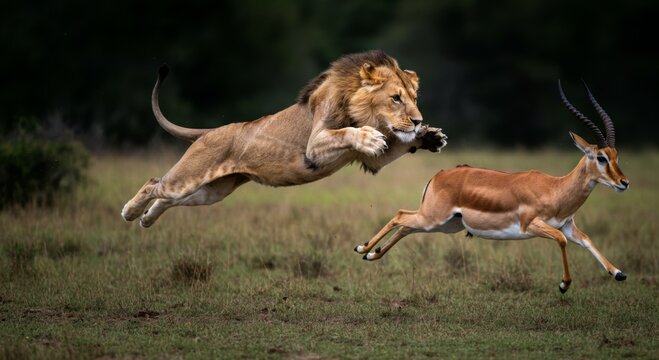
- Antelopes like impala and gazelles
- Giraffes (juveniles or vulnerable adults)
Savanna lions hunt opportunistically, ambushing from grass cover or coordinating pride attacks.
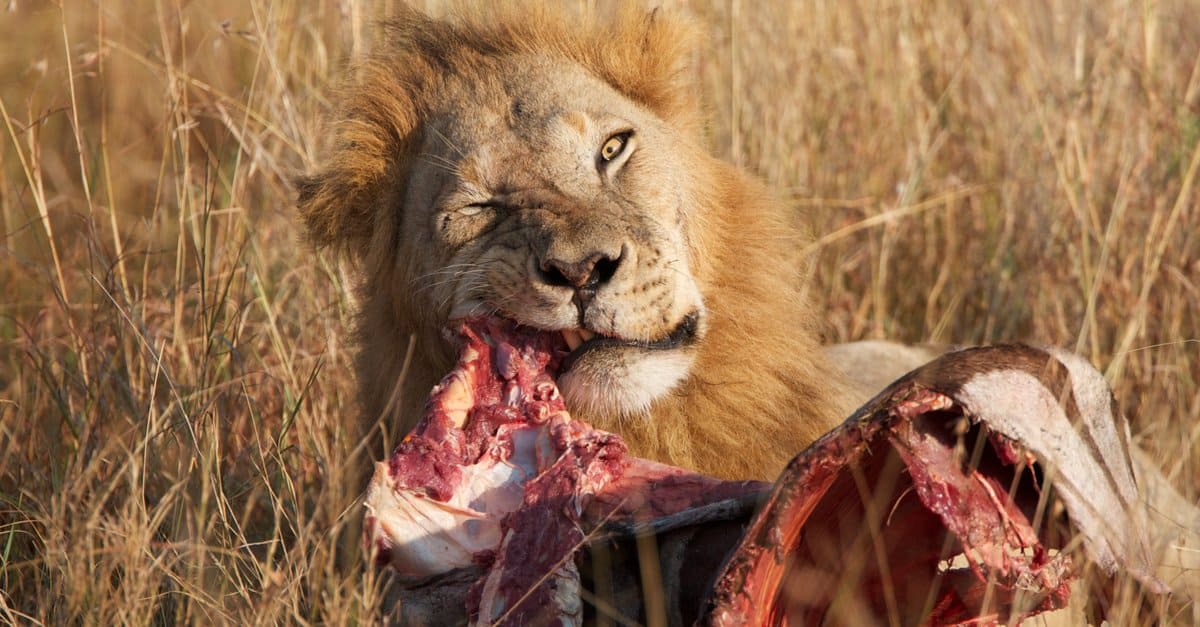
Main Foods Lions Eat
Lions’ diet is primarily composed of medium to large ungulates (hoofed herbivores). They are opportunistic feeders, but certain prey species form the core of their nutrition across most populations.
Large Herbivores (Primary Diet)
These make up the bulk of a lion’s intake due to their size, abundance in key habitats, and nutritional value. Lions target animals that provide substantial meat for the pride.
- Zebras: A favorite in many regions, with their distinctive stripes offering no real protection. Zebras weigh around 300 kg on average and are often hunted in herds.
- Buffalo (especially Cape buffalo): These are powerful and aggressive, weighing 300–900 kg, but lions tackle them in groups. Buffalo often rank high in dietary biomass.
- Wildebeest: Abundant during migrations, weighing 250–630 kg. They are a staple in ecosystems like the Serengeti.
Other large prey can include giraffes (juveniles or vulnerable adults) and occasionally even young elephants or hippos in desperate times.
Medium-Sized Animals
When larger prey is scarce, lions shift to these more agile but easier-to-catch options.
- Antelopes (e.g., impala, sable, roan, greater kudu): These provide reliable meals, with impala being common in many areas.
- Gazelles (e.g., Thomson’s or Grant’s): Swift and smaller (12–75 kg), they require quick ambushes but are frequent targets.
Smaller Animals (Occasionally)
Lions rarely rely on these but will eat them opportunistically.
- Warthogs: A preferred smaller prey in some areas, often hunted skillfully.
- Hares, birds, rodents, or reptiles: These serve as snacks during lean periods but contribute little to overall nutrition.
Lions have been documented feeding on over 40 species, but most prides depend on 2–3 key prey types in their ecosystem.
Do Lions Eat Humans?
Lions do not typically eat humans as part of their normal diet. Humans are not natural prey, and attacks are rare, usually occurring when lions are injured, old, starving, or when prey is scarce due to factors like disease outbreaks or habitat loss.
Famous cases include the Tsavo man-eaters of 1898 in Kenya, where two lions killed and consumed an estimated 35 people (not the exaggerated 135). Other historical incidents, like in Njombe, Tanzania (1930s–1940s), involved higher numbers, often linked to weakened prides or environmental stress.
Modern statistics show human-lion conflicts are more about livestock predation or territorial defense than habitual man-eating. Overall, lions prefer wild herbivores and avoid humans unless circumstances force them.
How Lions Hunt for Food
Lions are social hunters, with prides (groups of related females and their young, plus a few males) excelling at coordinated attacks. Females do most of the hunting, using stealth and teamwork.
They often hunt at night or during cooler hours to conserve energy and take advantage of low visibility. Tactics include:
- Stalking low to the ground, using grass or cover for ambush.
- Forming a semicircle or “pincer” to encircle prey, with some lionesses driving the target toward others waiting in ambush.
- Targeting weak, young, or isolated individuals in herds.
Success rates are low (around 20–30%), so prides rely on persistence and strategy. Males join for larger prey or to defend kills.
How Much Do Lions Eat
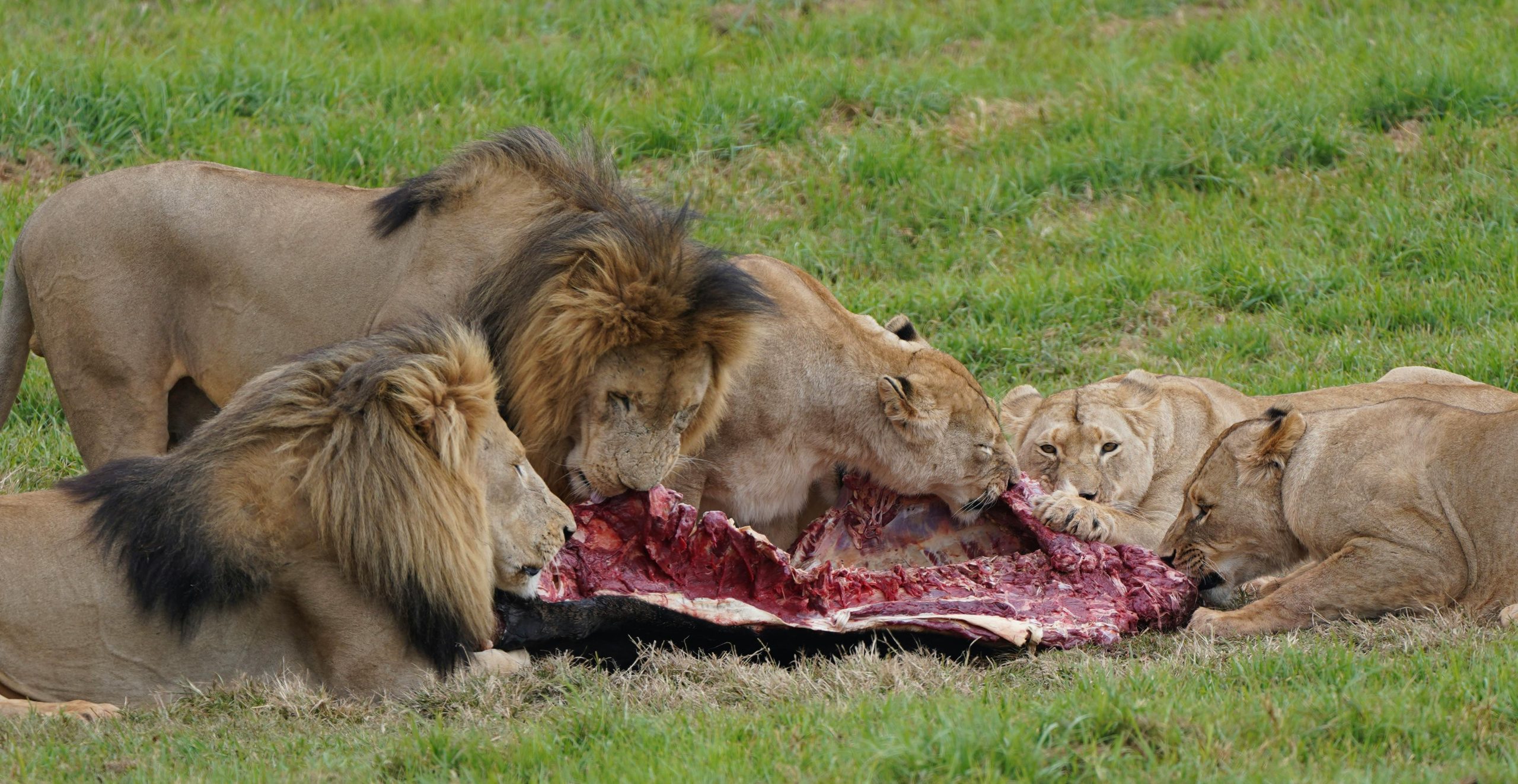
An adult lion needs 5–10 kg of meat per day on average, though intake varies. Males can consume up to 40 kg (about a quarter of their body weight) in one sitting after a big kill, while females eat around 20–25 kg.
Lions feast heavily when food is available, then rest and digest for days. They may hunt every 3–4 days, going without food for extended periods if unsuccessful. Prides share kills, with dominant males eating first, followed by females and cubs.
Do Lions Scavenge Food?
Yes, lions are opportunistic and frequently scavenge. They steal kills from other predators like hyenas, cheetahs, or leopards (kleptoparasitism) and feed on carcasses from natural deaths. Scavenging can make up a significant portion of their diet in lean times, saving energy compared to hunting.
Where Lions Find Food (Habitat Link)
Lions thrive in savannas, grasslands, and semi-arid areas with abundant herbivores. Prime locations include:
- Serengeti National Park (Tanzania): Famous for massive wildebeest migrations, providing seasonal feasts.
- Maasai Mara National Reserve (Kenya): Connected to the Serengeti, offering year-round prey like zebras and buffalo.
These ecosystems support large prides through diverse, migratory prey.
Lion Diet in the Wild vs Captivity (What do Lions Eat in the Zoo?
In the wild, lions actively hunt or scavenge fresh meat, consuming bones, organs, and hide for balanced nutrition (though they avoid horns and tough parts).
In captivity (zoos or sanctuaries), diets are controlled: raw meat (beef, horse, or chicken), supplemented with vitamins and bones for dental health.
Feeding mimics wild patterns—large meals every few days—to prevent obesity and encourage natural behavior. Wild diets are more varied and demanding.
Seasonal Changes in Diet
Prey availability shifts with seasons. In wet seasons, abundant grazing supports large herds, making hunting easier. Dry seasons concentrate animals at waterholes, increasing ambush opportunities but also competition.
Migrations (e.g., wildebeest in Serengeti-Mara) drastically alter diets—lions follow herds for peak abundance. In droughts, lions may target more browsers (giraffe, kudu) or scavenge more.
Interesting Facts About Lion Diet
- Lions can eat 30–40 kg in one meal, gorging until their bellies swell.
- They may go days or a week without eating after a feast.
- Females do most hunting, while males protect territory and eat first at kills.
- Lions digest hair poorly, often expelling it in feces.
- As obligate carnivores, they need high protein from meat—no vegetation sustains them.
FAQ about What do lions eat?
What animals do lions eat most?
Primarily large herbivores like zebras, buffalo, and wildebeest, depending on the region.
Do lions eat humans?
Rarely—only in exceptional cases, not as normal prey.
How often do lions eat?
Every 3–4 days on average, with large meals followed by rest.
Do lions hunt alone or in groups?
Mostly in pride groups for efficiency, though solitary hunts occur.
What is a lion’s favorite prey?
Varies by location, but zebras, wildebeest, and buffalo top the list in many ecosystems.
For those planning to witness lions in action, consider booking an African safari tour through trusted operators like us at Hail Tours Uganda. Contact us to today to get a free quote quote for an Africa Big Five Safari