
Gombe National Park Tanzania: Location, Photos, Why Famous & More
Nestled in the heart of western Tanzania, Gombe Stream National Park stands as a genuine jewel of biodiversity and scientific discovery. Often simply called Gombe National Park, this compact wilderness spans just 52 square kilometers, making it one of Africa’s smallest protected areas — yet its impact on our global understanding of primate behavior is genuinely immense. What country is Gombe National Park in?
It’s firmly rooted in Tanzania, hugging the eastern shores of Lake Tanganyika, the world’s second-deepest lake and longest freshwater body.
Famed for its chimpanzee population, Gombe has drawn researchers, adventurers, and nature enthusiasts since the mid-20th century. Dr. Jane Goodall’s pioneering fieldwork here revolutionized how science views chimpanzees, revealing their tool-using intelligence, complex social bonds, and even, controversially, evidence of coordinated intergroup violence.
As part of the wider Eastern African biodiversity hotspot, Gombe offers far more than chimpanzee tracking alone — pristine forest, striking lake views, and over 200 bird species round out a genuinely complete Tanzania safari destination.
Whether you’re chasing striking Gombe National Park photos or plotting your route on a Gombe National Park map, this guide covers everything worth knowing before you go.
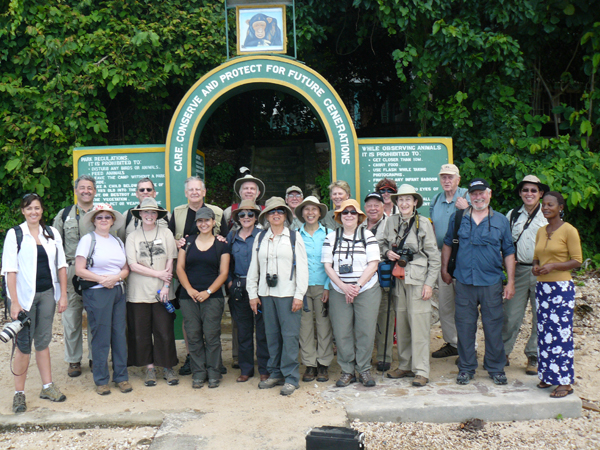
Why Is Gombe National Park Famous?
Why is Gombe National Park famous? The answer lies in its unmatched role in ethology — the scientific study of animal behavior — and in Dr. Jane Goodall’s groundbreaking contributions.
In 1960, at just 26 years old, Goodall arrived at what was then Gombe Stream Chimpanzee Reserve, a narrow strip of forest along Lake Tanganyika.
With no formal scientific training but genuine, patient curiosity, she embedded herself in the forest and observed the chimpanzees without interference.
What she found reshaped the field entirely: these weren’t simple, instinct-driven animals, but intelligent beings crafting tools from twigs to fish for termites, forming lifelong social bonds, and displaying emotional range that echoed joy, grief, and rage.
Gombe’s fame spread globally through Goodall’s writing — including In the Shadow of Man (1971) — and the documentaries that brought individual chimp families into living rooms worldwide. The park’s chimpanzees, belonging to the eastern subspecies Pan troglodytes schweinfurthii, became genuine icons of primate conservation.
But it isn’t only the peaceful discoveries that define Gombe’s legacy. The now-infamous Gombe chimpanzee war added a darker, more complicated layer to the story — from 1974 to 1978, researchers documented a sustained territorial conflict that forced science to confront the more aggressive side of our closest living relatives.
Today, Gombe remains a genuine pilgrimage site for anyone interested in Jane Goodall’s chimpanzees, and the nearby Jane Goodall Institute continues her research and habituation work, giving travelers the chance to witness these primates firsthand.
That blend of rigorous science and genuinely accessible adventure has cemented Gombe’s reputation as a must-visit for anyone drawn to evolution, ecology, or simply the raw beauty of untamed Africa — drawing over 1,000 visitors a year who leave with stories as rich as the park’s history.
Gombe National Park Location and Map
Tucked into Tanzania’s Kigoma Region, Gombe Stream National Park occupies a narrow rift valley strip, climbing from the lake’s edge up to forested hills at roughly 1,500 meters. It sits about 16 kilometers north of Kigoma town, the nearest urban hub, and feels genuinely remote from mainland Tanzania’s bustle.
What country is Gombe National Park in? Tanzania, specifically — where it forms part of the wider Lake Tanganyika ecosystem shared with Burundi, Zambia, and the Democratic Republic of Congo.
A Gombe National Park map reveals its distinctive elongated shape: a 15-kilometer lakeside ribbon flanked by steep escarpments, centered around roughly 4°40′S 29°20′E and reachable primarily by water.
The park borders Lake Tanganyika itself, whose crystal-clear water plunges to depths of 1,470 meters and teems with cichlid fish, offering a genuinely striking backdrop for boat arrivals.
From Kigoma’s harbor, a motorized boat crosses the lake in 1–2 hours, docking near Kwa Dyia village before a short hike to park headquarters.
This remote positioning is part of Gombe’s real appeal — it’s nothing like the crowds of Serengeti or Ngorongoro. Instead, it rewards travelers willing to make the journey with genuine solitude among ancient trees and vine-draped trails.
A Gombe National Park map also highlights nearby Mahale Mountains National Park to the south — a natural pairing for travelers building a multi-park Tanzania chimpanzee itinerary.
Gombe National Park Photos
Nothing captures Gombe’s essence quite like its visuals — intimate, vivid images that transport you straight to the forest floor. Gombe National Park photos are a genuine draw for wildlife photographers and armchair travelers alike: close-ups of a mother chimp cradling her infant in the misty early morning light, panoramic shots of Lake Tanganyika at sunset with the water’s deep blue mirroring the sky, and dynamic mid-leap shots of a troop swinging through the canopy during a guided tracking session.
Olive baboons grooming on sun-warmed rocks and African fish eagles diving over the lake round out the kind of imagery that makes Gombe a genuinely rewarding destination for photography-focused travelers.
Animals in Gombe National Park
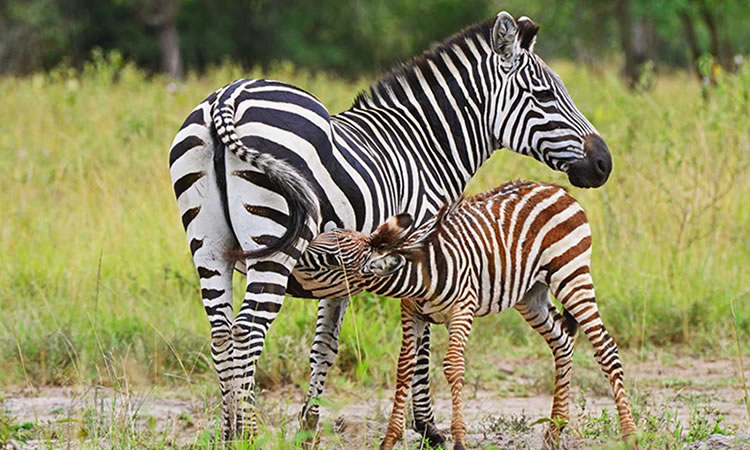
Gombe National Park’s animals form a compact but genuinely captivating cast, where nearly every rustle in the undergrowth hints at hidden life. Chimpanzees sit at the center of it all — roughly 100 individuals across six habituated communities, including the well-known Mitumba and Kahama groups.
Weighing 40–60 kg, these intelligent primates move through the forest with real acrobatic grace, foraging for figs and honey while maintaining social alliances that echo human community structures.
Beyond chimps, Gombe supports a genuinely diverse primate community: troops of olive baboons patrol the lakefront, red-tailed monkeys move through the mid-canopy, and blue monkeys — with their distinctive dark, velvety coats — are often spotted in mixed-species groups for added protection against predators.
On the forest floor, bush pigs root through the underbrush, and tiny dik-dik antelope freeze motionless in dappled light.
The park’s wildlife extends well beyond primates. Over 200 recorded bird species include the palm-nut vulture — Africa’s only fruit-eating eagle — alongside hornbills and African fish eagles diving for tilapia in Lake Tanganyika.
Rock pythons occasionally appear coiled in hollow logs, and while leopards are rarely sighted directly, their tracks are a regular reminder of Gombe’s wilder edge.
This entire ecosystem is protected through active anti-poaching patrols and the Jane Goodall Institute’s ongoing conservation advocacy.
The Gombe Chimpanzee War
The Gombe chimpanzee war stands as one of the most significant events in primatology — a conflict that unfolded from 1974 to 1978 and permanently changed how science understands non-human aggression.
Within Gombe, the Kasakela chimpanzee community split, giving rise to a rival Kahama group. What began as minor territorial disputes escalated into organized raids and lethal ambushes — behavior unsettlingly similar to coordinated human conflict.
Researchers, including graduate student David Bygott, documented the events in detail: Kasakela males systematically targeted Kahama individuals over several years, resulting in the deaths of at least six members of the rival group.
The conflict wasn’t random violence — it involved scouting, coalition-building, and deliberate strategy, forcing Goodall to reconsider her early view of chimpanzees as largely peaceful.
The implications reached well beyond Gombe itself, challenging assumptions about primate behavior and drawing real parallels to patterns in human conflict. Goodall documented the events in The Chimpanzees of Gombe (1986), sparking lasting debate over nature versus nurture in the roots of violence.
Visiting Gombe today, guided hikes sometimes trace the rough boundaries of this historic conflict — a genuinely sobering layer that adds real depth to the park’s story rather than diminishing its appeal.
Vegetation and Habitat
Gombe’s vegetation forms a genuinely layered ecosystem. Semi-evergreen riverine forest dominates much of the landscape, thick with strangler figs, wild date palms, and vine tangles that form natural pathways for the park’s tree-dwelling species.
Along streams feeding toward the Malagarasi tributary, these forest galleries burst with ferns and epiphytes, creating humid microclimates that support a wide range of insects and amphibians.
Flanking the forest, open miombo woodland — dominated by Brachystegia and Julbernardia trees — gives way to grassland valleys dotted with acacia and seasonal wildflowers, drawing large butterfly populations after the rains.
Gombe’s entire habitat is closely tied to Lake Tanganyika itself, whose water level fluctuations influence everything from fish-dependent birdlife to the floodplain plants along its shore.
As part of the Albertine Rift’s montane forest system, Gombe supports genuine botanical rarities, including specialized trees that in turn support unique fungi and lichen communities.
Facing pressure from both climate shifts and historical logging, the park now benefits from active restoration work — TANAPA’s ongoing reforestation program plants thousands of seedlings annually, strengthening both carbon capture and wildlife corridors across the park.
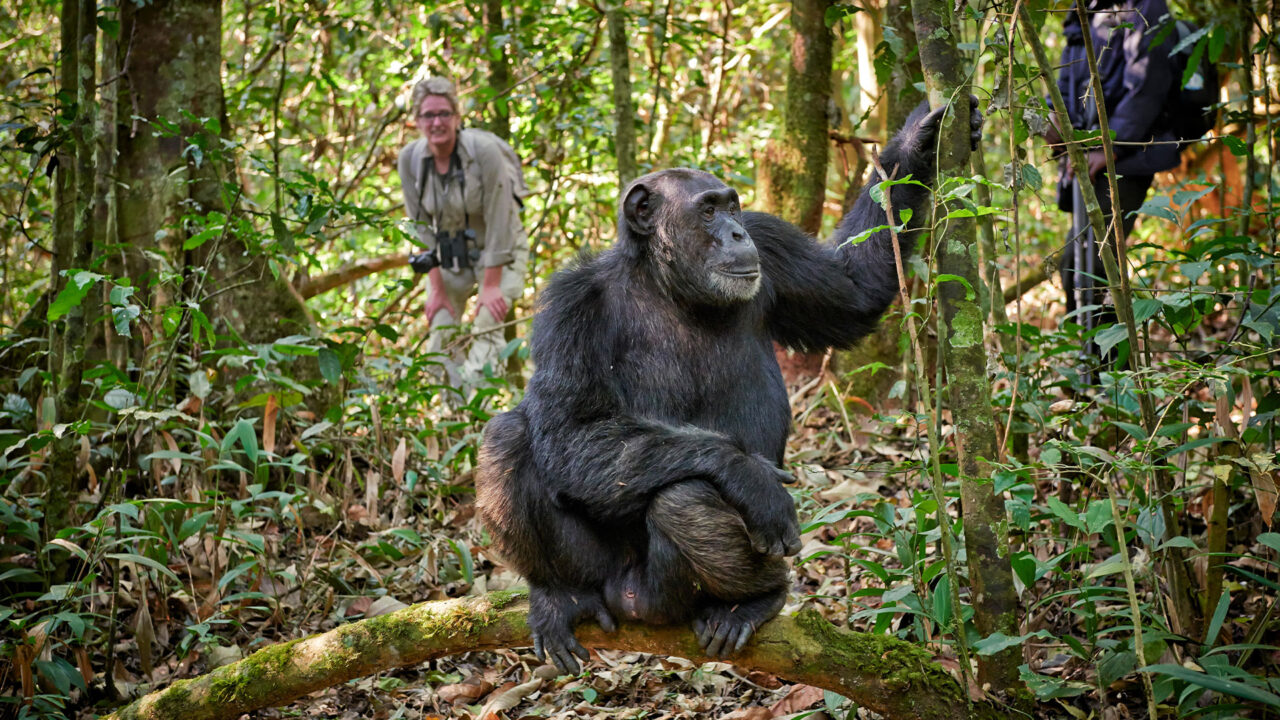
Gombe vs. Mahale Mountains National Park: Which Chimp Safari Is Right for You?
Travelers researching Tanzania chimpanzee trekking often find themselves choosing between Gombe and Mahale Mountains National Park, its larger neighbor further south along the same lake.
Gombe is smaller, easier to reach from Kigoma, and carries the historic
al weight of Jane Goodall’s original research site — a strong pull for anyone specifically drawn to that scientific legacy. Mahale, by contrast, is considerably larger and wilder, with a bigger chimpanzee population and a more remote, immersive feel, typically reached by boat or light aircraft rather than a short lake crossing.
Neither destination is objectively “better” — Gombe suits travelers who want a compact, historically rich chimp encounter with easier logistics, while Mahale rewards those with more time and budget for a deeper wilderness experience. Some travelers combine both parks into a single Tanzania primate circuit for the fullest possible comparison.
Comparison With Other Primates
To fully appreciate Gombe’s chimpanzees, it helps to compare them with Africa’s other great apes. Gombe’s chimps, Pan troglodytes schweinfurthii, contrast sharply with the western lowland gorilla (Gorilla gorilla gorilla) found in Central Africa’s Congo Basin, or with the mountain gorillas trekked in Uganda’s Bwindi Impenetrable National Park.
While chimps weigh 40–60 kg with lean, agile builds suited to Gombe’s steep forested slopes, gorillas can weigh up to 200 kg, with barrel chests and silverback males adapted to a very different, denser forest environment.
Habitat and social structure diverge too. Gombe’s chimps range widely — up to 10 km daily — in fluid “fission-fusion” groups that split and merge over time, while gorillas stick to more stable family units of 5–30 individuals led by a single dominant silverback.
Diet differs as well: Gombe’s chimps are opportunistic omnivores, occasionally hunting colobus monkeys and using tools to crack nuts, while gorillas rely almost entirely on leaves and shoots.
Both species display real intelligence and social complexity, but the aggression documented during the Gombe chimpanzee war stands in sharp contrast to gorillas’ comparatively rare intra-group conflict — a genuinely interesting point of comparison for anyone who’s also done gorilla trekking in Uganda and wants to understand how the two great ape experiences differ.
How to Visit Gombe National Park
Visiting Gombe requires a bit of planning, but the reward is genuinely worth it. Start with transport to Kigoma — a roughly 1.5-hour flight from Dar es Salaam or Arusha, or the scenic (if long) TAZARA train route through Tanzania’s miombo woodland. From Kigoma’s port, a park-contracted boat crosses Lake Tanganyika in 1–2 hours, occasionally passing hippos along the way.
On arrival, you’ll need a chimpanzee tracking permit — around $100 USD per person, bookable through TANAPA, with daily numbers capped to keep habituation sustainable.
Guided treks, often led by local researchers, run 2–4 hours starting around 6:30 AM, following chimp calls through sometimes-slippery forest trails. Sturdy boots and insect repellent are essential. Stick close to your ranger throughout — Gombe’s forest is still genuinely wild.
The dry season, June through October, offers the easiest trekking conditions, though the wetter months from November to May bring lush greenery and a real chance of spotting young chimps.
Budget roughly $200–500 per day including permits, meals, and transfers. As always with primate tourism, maintain a minimum 7-meter distance from the chimps and pack out everything you bring in.
Accommodation Options
Gombe’s accommodation spans the full range from luxury to budget, with Lake Tanganyika views a common thread throughout. Gombe Forest Lodge, perched on a hilltop above the park, is the standout tented option — eight spacious canvas suites with en-suite bathrooms and solar power, hosting just 16 guests at a time for a genuinely intimate experience, at around $250 per night full board.
For more affordable mid-range comfort, Kigoma Hilltop Hotel offers lakefront rooms in town, roughly a 20-minute boat ride from the park — a solid choice for day-trip-style visits.
Inside the park itself, the TANAPA rest house offers simple, no-frills bandas from around $30 a night, while camping under Gombe’s genuinely striking night sky is available for the cost of your permit alone. Booking 3–6 months ahead is worth doing for peak season, and shoulder-season travelers can often find better rates.
Things to Do in Gombe National Park
Chimpanzee tracking is, unsurprisingly, the headline activity — dawn treks following habituated groups through their daily routines, from grooming and social interaction to genuinely impressive termite-fishing displays. Birdwatching is a strong secondary draw, with over 200 species recorded across the park’s trails.
Beyond primates, nature walks take in Gombe’s full range of habitat, from lakeside grassland to escarpment viewpoints, while swimming or snorkeling in Lake Tanganyika’s clear, cichlid-rich shallows offers a genuinely refreshing way to spend an afternoon.
A visit to Jane Goodall’s original research site and small museum — including her early field notebooks — adds real historical depth to the trip, especially when paired with the hike up to the park’s panoramic overlook.
Combining Gombe With a Broader Tanzania Safari
Given its remote location, Gombe works best as part of a larger Tanzania itinerary rather than a standalone trip. Many travelers pair it with the Serengeti and Ngorongoro Crater for a fuller contrast between primate tracking and classic savanna game viewing — our 5 Days Serengeti and Ngorongoro Safari and longer 9 Days Tanzania Wildlife Safari both offer strong starting points for building Gombe into a wider circuit.
For a full overview of the country’s top destinations, see our guide to Tanzania’s best safari parks and best time to visit Tanzania.
FAQs – Gombe National Park
What country is Gombe National Park in? Gombe National Park is in Tanzania, specifically the Kigoma Region in the west of the country.
Why is Gombe National Park famous? It’s famous for Jane Goodall’s chimpanzee research, which began in 1960 and revealed tool use, complex social bonds, and — through the Gombe chimpanzee war — evidence of organized intergroup conflict.
What lake does Gombe National Park border? Gombe borders Lake Tanganyika, Africa’s deepest lake and the world’s second-deepest, along its eastern shore.
What animals are found in Gombe National Park? Key species include chimpanzees, olive baboons, red-tailed and blue monkeys, bush pigs, dik-dik antelope, and over 200 bird species, including African fish eagles and palm-nut vultures.
How can tourists visit Gombe National Park? Fly or take the train to Kigoma, then cross Lake Tanganyika by boat, and book a TANAPA chimpanzee tracking permit in advance.
What was the Gombe Chimpanzee War? A sustained territorial conflict between rival chimp communities from 1974 to 1978, observed and documented by Jane Goodall’s research team, showing organized, strategic violence closely resembling human warfare.
Plan Your Gombe National Park Safari With Us
Gombe National Park delivers a genuinely rare combination — rigorous scientific history, intimate chimpanzee encounters, and the striking backdrop of Lake Tanganyika, all in one of Africa’s smallest but most significant protected areas.
Whether you’re drawn by Jane Goodall’s legacy, the raw drama of the Gombe chimpanzee war, or simply the chance to track wild chimps up close, this park earns its place on any serious Tanzania safari itinerary.
Hail Tours Uganda builds Gombe into wider East Africa itineraries, whether you want to pair it with Mahale, the Serengeti, or a cross-border primate circuit that includes gorilla trekking in Uganda or Rwanda.
Contact us today to start planning your Gombe National Park safari, or explore our full range of Tanzania safaris to see how it fits into a complete East Africa adventure.
Related Pages
- Gombe National Park
- Mahale Mountains National Park
- Tanzania Safaris
- Best Tanzania Safari Parks
- Best Time to Visit Tanzania
- Best Tanzania Safari Lodges
- 5 Days Serengeti and Ngorongoro Safari
- 9 Days Tanzania Wildlife Safari
- Serengeti National Park
- Ngorongoro Conservation Area
- Kibale National Park
- 3 Days Chimpanzee Trekking in Kibale
- Bwindi Impenetrable National Park
- Uganda Gorilla Trekking
- About Hail Tours Uganda