How Big Is a Silverback Gorilla Hand? Size, Strength & Amazing Facts
How Big is a Silverback Gorilla Hand: The silverback gorilla stands as one of the most imposing and majestic animals on Earth.
As the dominant male of a mountain or lowland gorilla troop, this powerful primate commands respect with its massive size, muscular build, and intelligent demeanor.
Among its most striking features is the silverback gorilla hand — a symbol of raw strength, remarkable dexterity, and evolutionary adaptation.
If you’ve ever wondered how big a silverback gorilla hand is, you’re not alone. Wildlife enthusiasts, safari travelers, and researchers alike are fascinated by these oversized appendages.
In this comprehensive guide, we explore the anatomy, dimensions, strength, and functions of a silverback gorilla’s hand, complete with comparisons to human hands and insights into their role in the wild.
Anatomy and Characteristics of a Silverback Gorilla Hand
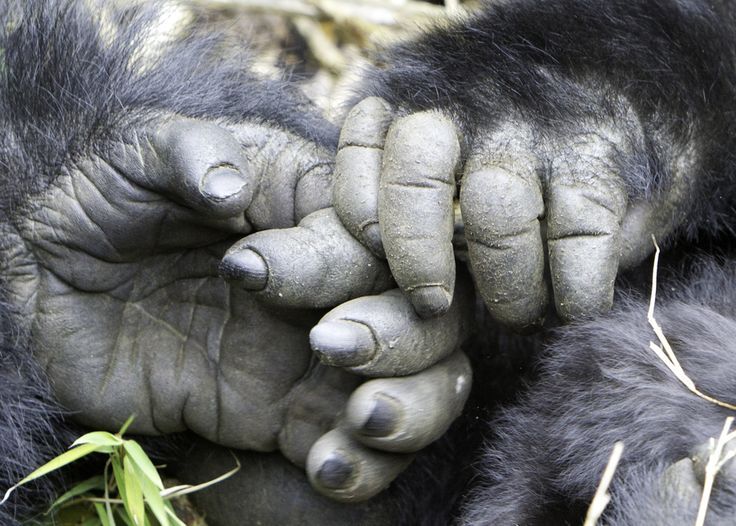
A silverback gorilla’s hand shares a basic structure with the human hand: five digits consisting of four fingers and a fully opposable thumb. This opposability enables precision gripping, object manipulation, and fine motor tasks essential for survival in dense African forests.
However, significant differences set gorilla hands apart. Their fingers are notably longer, thicker, and more robust, while the palms are broad and heavily padded with tough, calloused skin.
This design supports their primary mode of terrestrial locomotion — knuckle-walking — and their arboreal lifestyle of climbing and foraging.
The skin on the palms and knuckles lacks hair, similar to humans, but features thickened pads that protect against abrasion from rough bark, branches, and the forest floor.
Strong ligaments and robust bones reinforce the structure, allowing the hand to bear substantial body weight while retaining flexibility for grasping vegetation.
Gorillas also possess opposable big toes on their feet, giving them a “four-thumbed” advantage when navigating trees, though their hands remain the primary tools for daily activities.
Exact Size: How Big Is a Silverback Gorilla Hand?
On average, an adult male silverback gorilla’s hand measures approximately 11 to 12 inches (28 to 30 cm) in length from the tip of the middle finger to the base of the palm (wrist crease).
Some sources cite up to 12–14 inches for larger individuals, though 12 inches is the most consistently referenced figure for mature males.
When fully spread, the hand spans roughly 6 to 8 inches (15–20 cm) in width across the palm, with thick, muscular fingers contributing to an impressive overall size.
For context, a silverback’s hand is often described as roughly the size of a large dinner plate or equivalent to two large human hands combined.
In comparison:
- Average human male hand length: 7.6 inches (19.3 cm)
- Average human female hand length: 6.8 inches (17.3 cm)
This means a silverback gorilla hand can be nearly twice as long as an average man’s hand. The longest recorded human hand (Guinness World Record) measured about 11.22 inches — still falling short of many adult gorillas.
Silverback gorillas themselves weigh 300–430+ pounds (135–195+ kg) and stand 5.5–6 feet tall when upright, with arm spans reaching 7.5–8.5 feet. Their oversized hands are perfectly proportioned to support this powerful frame.
Silverback Gorilla Hand vs. Human Hand: Key Differences
While both species share an opposable thumb — a trait highlighting our common primate ancestry — the gorilla hand prioritizes strength and durability over the fine precision humans have refined for tool use.
Gorilla fingers are longer relative to the palm in some proportions, aiding in powerful grips around thick branches or vegetation. Their thumbs, while opposable, work in tandem with robust finger strength rather than the delicate control seen in human writing or crafting.
Humans excel in intricate tasks like typing, sewing, or playing musical instruments. Gorillas, conversely, use their hands for high-force activities: stripping tough bark, breaking branches, cracking hard-shelled fruits, and supporting their heavy bodies during knuckle-walking.
Visually, placing a human hand next to a silverback’s reveals a dramatic size difference — the gorilla’s palm alone can dwarf an adult human’s entire hand.
Grip Strength and Power: The Unmatched Gorilla Grip
Estimates of gorilla grip strength vary because direct scientific measurements on wild silverbacks are limited and ethically challenging. Popular claims range from several hundred to exaggerated figures like 2,000 PSI, but more grounded analyses suggest a silverback’s crushing or pulling power far exceeds humans.
A typical human grip strength averages 100–120 pounds of force (often measured in dynamometer tests). Silverbacks are estimated to exert several times that — potentially 400–800+ pounds of force or more in practical applications like pulling or holding body weight.
Their overall muscular power allows them to lift or drag weights estimated up to 1,800 pounds in anecdotal reports, with forearms and hands playing a critical role.
This immense power supports behaviors like:
- Uprooting or bending sturdy vegetation
- Defending the troop through displays or charges
- Climbing and swinging through canopy layers
The hand’s reinforced structure, including locked wrist bones during knuckle-walking, distributes forces efficiently and prevents injury under heavy loads.
The Role of Hands in Feeding and Foraging
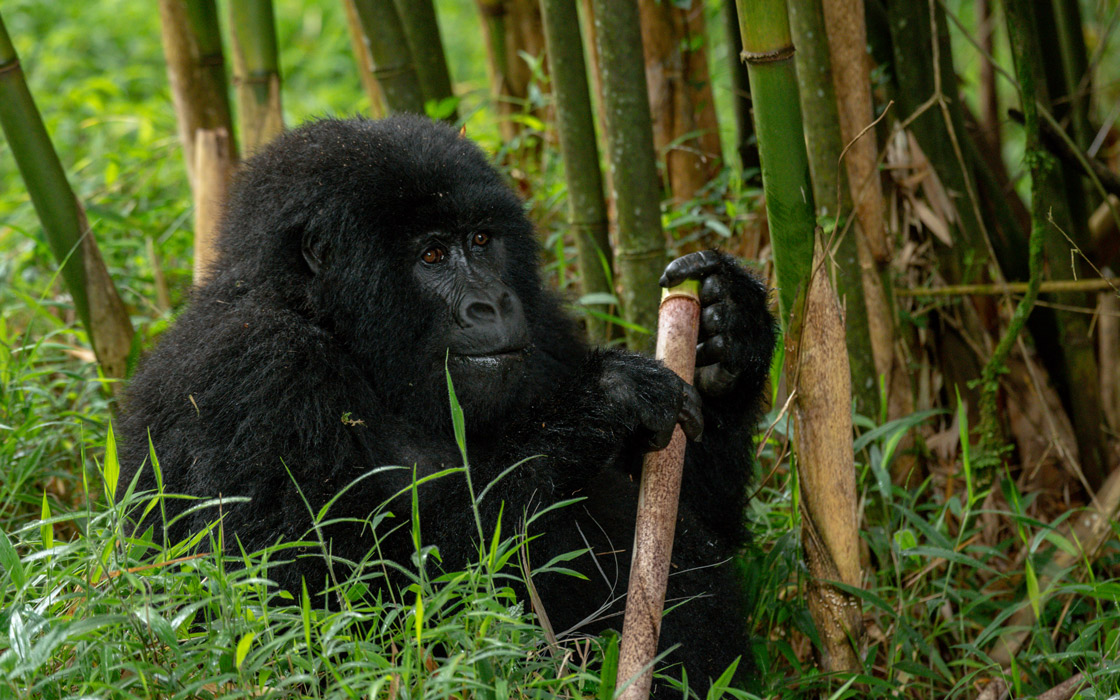
Silverback gorillas are primarily herbivores, consuming up to 40–50 pounds of vegetation daily, including leaves, stems, shoots, fruits, and bark. Their large hands are perfectly adapted for efficient foraging.
Long fingers strip leaves from branches in sweeping motions, while the opposable thumb allows precise plucking of berries or delicate fruits without damage.
They can peel tough skins, crush fibrous plants to release nutrients, and gather large bundles of food to carry back to a resting spot.
Observers often see silverbacks sitting calmly, using both hands methodically to process vegetation before bringing it to their mouth. This efficiency is vital in their energy-demanding lifestyle, where they must maintain massive muscle mass on a plant-based diet.
Hands in Social Interactions and Communication
Beyond survival, gorilla hands facilitate complex social lives. Grooming is a cornerstone of troop bonding; nimble fingers meticulously remove debris, ticks, or dead skin from family members’ fur, reinforcing alliances and reducing tension.
Silverbacks also use their hands in dominance displays. Famous chest-beating involves open palms striking the chest to produce a resonant sound that carries through the forest, signaling strength and warning rivals. They may slap the ground, throw vegetation, or make open-hand gestures during interactions.
These behaviors showcase the balance between power and control that gorilla hands provide.
Knuckle-Walking: A Unique Hand Adaptation
Gorillas are famous knuckle-walkers, spending most of their time on all fours with weight borne on the backs of their middle finger joints (dorsal surface of the middle phalanges).
This adaptation keeps their long, grasping fingers protected and curled safely while allowing stable, energy-efficient movement on the ground.
Specialized anatomy supports this:
- Stiff, columnar wrist posture
- Robust metacarpal bones
- Thickened skin and calluses on knuckles
- Alignment that minimizes stress on joints
Despite this terrestrial specialization, gorillas remain excellent climbers, using their large hands to encircle trunks and branches securely. Their hands represent a versatile compromise between ground travel and arboreal agility.
Evolutionary Significance and Human Connection
The similarities between gorilla and human hands offer a window into our shared evolutionary history within the great apes. Both descended from arboreal ancestors with grasping hands, but divergent paths emphasized different strengths: humans toward manipulation and tool-making, gorillas toward brute force and endurance.
Studying gorilla hand anatomy informs fields like biomechanics, robotics (designing strong, dexterous grippers), and even ergonomics.
It also underscores the importance of conservation — these magnificent primates face habitat loss and poaching threats in Central and East Africa.
Cultural Impact and Conservation
In popular culture, the silverback’s massive hands symbolize untamed power, frequently highlighted in documentaries like those from National Geographic or BBC. They inspire awe and remind us of humanity’s place in the natural world.
Organizations such as the Dian Fossey Gorilla Fund work tirelessly to protect mountain gorillas in Rwanda, Uganda, and the Democratic Republic of Congo. Gorilla trekking safaris in places like Bwindi Impenetrable Forest or Volcanoes National Park provide sustainable income for local communities while fostering global appreciation for these animals.
When planning your own gorilla safari in Uganda or Rwanda, witnessing a silverback gorilla up close (from a safe distance) offers an unforgettable perspective on the sheer scale of their hands and presence.
Conclusion: Marvel at Nature’s Engineering
The silverback gorilla hand — measuring up to 12+ inches long with extraordinary power and versatility — exemplifies evolutionary ingenuity.
From knuckle-walking across the forest floor to delicately selecting ripe fruit or grooming a troop member, these hands enable a life of strength, social complexity, and survival in challenging environments.
By understanding and protecting silverback gorillas, we safeguard not only a keystone species but also a living link to our own primate origins. Their mighty grip reminds us of nature’s remarkable designs and the urgent need for conservation.
Ready to experience these gentle giants firsthand? Contact us today for ethical gorilla trekking adventures in Uganda or Rwanda. Your visit supports habitat protection and local economies while creating memories that last a lifetime.